7 Best BambooHR Alternatives Reviewed for HR Teams in 2026
Key Takeaways
- brioHR is the best all-in-one alternative for Malaysia and Singapore teams, connecting payroll, leave, claims, attendance, performance, and engagement in one system with native local compliance. Best for growing SMEs and mid-sized companies that want one platform instead of three subscriptions.
- OmniHR is the strongest fit for multi-country Asia teams that need native regional payroll, Objectives and Key Results (OKRs), and 360-degree feedback in one place.
- Employment Hero suits companies wanting the widest HR ecosystem across Australia and Malaysia, though its payroll runs through a separate login and a partner setup.
- QuickHR and HReasily work well for Singapore-first and budget-conscious SMEs, while HR2000 and Workday sit at the legacy and enterprise ends of the market.
If you're running HR in Malaysia or Singapore, you've probably hit the wall with BambooHR: no native local payroll, no Employees Provident Fund (EPF) or Central Provident Fund (CPF) handling, and support hours that never quite line up with your payroll cutoff.
The short answer is that the best BambooHR alternatives are regional platforms built for how HR actually works here, with brioHR leading for teams that want everything connected in one system.
Below, we compare the seven strongest BambooHR competitors on features, pricing, and real user sentiment, so you can match the right tool to your team size, your market, and your compliance needs, then move forward with confidence.
Best 7 BambooHR Alternatives in 2026: A Quick Look
| Tool | Best For | Standout Feature | Price Starting Point |
|---|---|---|---|
| brioHR | All-in-one HR and payroll for MY and SG SMEs | Payroll, performance, and engagement connected in one system | From RM3 per employee per month |
| OmniHR | Multi-country Asia teams | Native MY and SG payroll with OKRs and 360 feedback built in | From S$3 per employee per month |
| Employment Hero | Broad HR ecosystems (AU and MY) | Wide feature breadth with strong employee self-service | From around $10 per employee per month (min USD $100 monthly) |
| QuickHR | Singapore SMEs standardizing HR operations | ISO 9001:2015 certification with strong shift and attendance handling | From S$5 per employee per month |
| HReasily | Budget-friendly MY and SG payroll automation | Mobile-first payroll and claims across two markets | From RM4 per employee per month |
| HR2000 | Companies comfortable with legacy Malaysian payroll | Proven statutory engine with 50+ local bank formats | Custom quote (on-premise) |
| Workday HCM | Global enterprise (10,000+ employees) | End-to-end Human Capital Management with succession and calibration | Premium enterprise pricing (custom) |
Try brioHR. One connected platform for payroll, HR, and engagement, built for Malaysia and Singapore. Request a demo.
Most teams reading this aren't shopping for the biggest feature list. They want payroll that pays people correctly, compliance that updates itself, and support that answers before month-end. That's exactly the gap brioHR was built to close for Malaysian and Singaporean businesses. If you'd rather see it than read about it, you can book a brioHR demo and walk through your own payroll and performance workflows with the team.
brioHR: Best for All-in-One HR and Payroll in Malaysia and Singapore

brioHR is an all-in-one human resource management system (HRMS) built for companies in Malaysia and Singapore that want a single system across the full employee lifecycle. It covers hiring, onboarding, payroll, leave, claims, attendance, performance, and employee engagement software in nine connected modules. More than 1,000 organizations across 50 countries use it. Its differentiator is simple: instead of stitching together separate tools, brioHR removes the administrative noise so HR teams can move from admin to impact, with local compliance built in and human support that actually picks up.
brioHR Key Features
brioHR brings together the tools HR teams need to run the day-to-day and still see the bigger picture. Three capabilities stand out from most BambooHR alternatives: connected local payroll, performance management tied to the employee record, and people analytics that turn scattered data into decisions.
Connected Payroll With Native Local Compliance
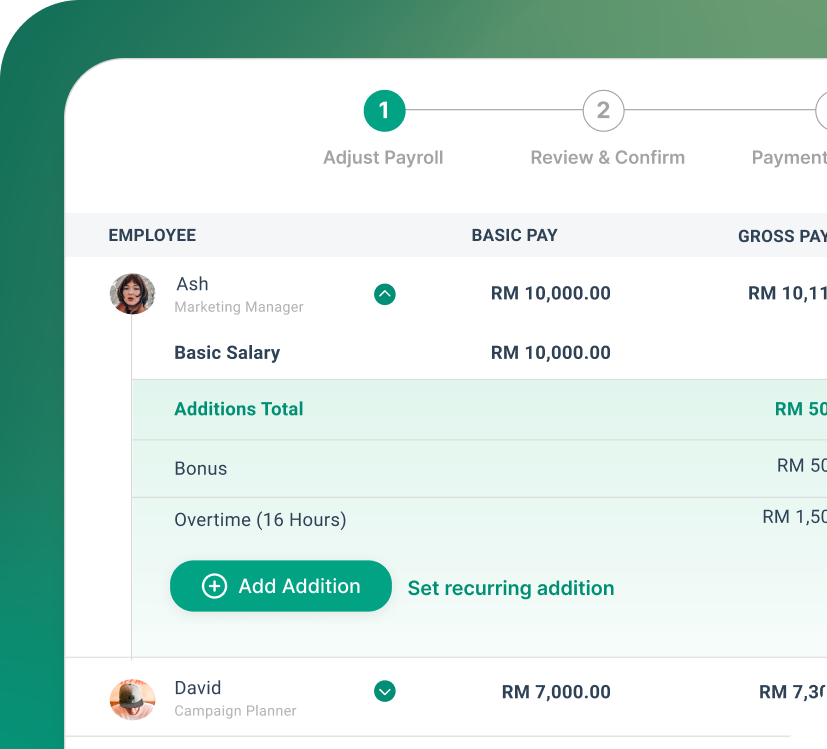
Payroll is where BambooHR leaves regional teams stranded, and where brioHR is strongest. Attendance, leave, and claims flow directly into payroll, so there are no manual uploads and no month-end reconciliation. Malaysian statutory requirements are handled natively, including EPF, the Social Security Organization (SOCSO), the Employment Insurance System (EIS), Monthly Tax Deduction (PCB), Human Resource Development Fund (HRDF), and Lembaga Hasil Dalam Negeri (LHDN) e-filing, with EA Form generation built in. Singapore payroll covers CPF, the Skills Development Levy (SDL), and IR8A and IR21 reporting. Statutory updates roll out automatically.
Statutory updates roll out automatically, so you're never caught off guard when the rules change.
One industry survey found that one in five payroll runs contains an error, each costing around $291 to fix, and errors that aren't caught quietly erode employee trust. Connecting time and attendance directly to payroll is the single best way to stop those errors before they reach a payslip. For teams comparing options market by market, brioHR keeps a dedicated LHDN-approved payroll setup for Malaysia and a separate Singapore payroll system, and larger teams can hand the whole run to the multi-country payroll outsourcing service.
Performance Management Connected to the Employee Record
Performance data is only useful when it sits next to everything else. brioHR's performance management tools let managers set goals and key performance indicators (KPIs), track progress, and run full review cycles, including self-assessments, peer reviews, manager reviews, and 360-degree feedback. You can build competency frameworks, run calibration sessions to keep ratings fair across teams, and keep continuous feedback flowing all year.
The real advantage over standalone review tools is the connection to the digital employee file. When it's time for a merit review, ratings, feedback history, and review notes sit alongside payroll history, attendance, and leave, all under one profile. So managers stop pulling data from three systems and start having better conversations, and HR can tie a rating to a raise without exporting a single spreadsheet. If you want to see why that integration matters in practice, our guide on how payroll system integration can help your business walks through the downstream effects.
People Analytics and Reporting
brioHR's reporting and analytics include headcount dashboards, attrition analytics, custom report builders, and scheduled report emails. Because the reports pull from the same database as payroll, attendance, and performance, you're never reconciling three exports to answer one question about turnover or overtime.
Engagement signals feed the same system too: teams can launch quick pulse surveys with anonymity controls and watch responses flow into a live dashboard. For a deeper look at what to expect from this category, see our overview of what to look for in people analytics software.
brioHR Pricing
brioHR uses modular, per-employee pricing, so you pay for the modules you actually use rather than a bloated all-or-nothing bundle.
| Plan | Details |
|---|---|
| Modular (Malaysia) | Per-employee pricing based on modules and company size, from RM3 per employee per month |
| Modular (Singapore) | Per-employee pricing from S$2 per employee per month |
| Custom quote | Tailored to headcount, module mix, and rollout needs. Productivity Solutions Grant (PSG) eligible in Singapore |
For an exact figure based on your headcount and module selection, book a demo and the team will scope it with you.
Where brioHR Shines
- One platform for all of HR: Payroll, leave, claims, attendance, performance, and engagement all sit in one connected system, with no tool-stitching and no double data entry.
- Malaysian and Singaporean compliance built in: EPF, SOCSO, EIS, LHDN, CPF, SDL, and IR8A workflows are handled natively, and statutory updates roll out automatically.
- A partner, not just software: Support response times average under three minutes with a 96% positive feedback rate. You're never left figuring things out alone during a payroll cutoff.
- Designed for company-wide adoption: A clean, simple interface that managers and employees use without training, which is where most HR systems quietly fail.
Where brioHR Falls Short
- Built for commitment, not a quick fix: brioHR is designed as a long-term HR and payroll system. Teams that only need a single-purpose tool for one review cycle will find it more platform than they need.
- Sized for real HR complexity: The platform is built for companies with genuine payroll and HR needs. Very small teams under five people may not use enough of it to justify the setup.
brioHR Customer Reviews
brioHR holds 4.7 stars from 31 verified G2 reviews and 4.9 stars on Capterra. Reviewers consistently highlight easy implementation, strong analytics, and responsive support. "We found BrioHR to be very comprehensive and configurable to suit us." (Edward Widjonarko, CEO, Cicil, on G2). "User-friendly and intuitive." (Verified reviewer, Capterra).


Who brioHR Is Best For
- Growing SMEs: Teams replacing spreadsheets or multiple disconnected tools who want one connected HR system that scales with them, including manufacturers looking for HR software for manufacturing.
- Mid-sized companies in MY and SG: Businesses that need local compliance, engagement signals, and stronger reporting in one place.
- Regional teams across Southeast Asia: Companies managing payroll, compliance, and people across multiple entities that want one unified platform.
You can see how teams like yours use it in the client success stories, or read our wider roundup of the best HR software in Malaysia for market context.
Experience how simple payroll can be
Reduce processing time and compliance risks with brioHR's intuitive payroll system built for Malaysia and Singapore.
"A CEO will not clap every time employees get their salaries. It's normal. But if there is a payroll error, big trouble for everyone, right?"
OmniHR: Best for Multi-Country Asia Teams

OmniHR is a Singapore-founded human resource information system (HRIS) built for companies operating across multiple Asian markets. It combines native regional payroll with a modern, well-designed interface and a broad feature set that covers recruitment, onboarding, performance, and engagement, making it one of the closest like-for-like BambooHR alternatives for regional teams.
OmniHR Key Features
Native Regional Payroll
OmniHR runs native payroll for Malaysia and Singapore, with EPF, SOCSO, EIS, PCB, and CPF automation. Current product evidence points to a native engine rather than a white-label setup, though teams expanding into new markets should confirm the payroll architecture directly for their specific countries.
Performance and Engagement
The platform includes OKRs, KPI tracking, 360-degree feedback, calibration, and continuous feedback, along with recognition, newsfeed, and pulse survey tools. It also offers workforce planning and a skills matrix, which sit a level above most local SME platforms.
No-Code Integrations
OmniHR supports Zapier and a growing integration ecosystem, which helps teams connect it to the rest of their stack without engineering time.
OmniHR Pricing
| Plan | Details |
|---|---|
| Modular | From S$3 per employee per month, scaling with modules and headcount. PSG eligible in Singapore |
Where OmniHR Shines
- True multi-country coverage: Native MY and SG payroll plus multi-entity and multi-currency support suit teams operating across borders.
- Modern, complete feature set: Recruitment, onboarding, performance, and engagement are all built in, with a clean interface reviewers tend to praise.
Where OmniHR Falls Short
- Pricing climbs with modules: The entry price is competitive, but the full suite lands at a premium tier, which can stretch very small teams that only need core payroll and leave.
- Payroll depth varies by market: Coverage is strong for MY and SG, but companies expanding further into Asia should verify local statutory depth before committing.
OmniHR Customer Reviews
Reviewers on G2 and Capterra praise the interface design and the breadth of features in one platform. Some note that the pricing tier and the pace of new-market payroll support are worth checking against your own roadmap.
Who OmniHR Is Best For
- Multi-country teams in Asia: Companies that need regional payroll, OKRs, and 360 feedback in a single modern system without moving to a heavy enterprise platform.
Employment Hero: Best for Broad HR Ecosystems

Employment Hero is an Australian-born platform with one of the widest feature sets in this comparison. It spans HR, payroll, recruitment, onboarding, performance, learning, benefits, and employee self-service, and it has expanded into Malaysia. For teams that value ecosystem breadth over deep local payroll, it is a serious BambooHR alternative.
Employment Hero Key Features
End-to-End HR Breadth
Employment Hero covers almost every module a growing company touches, from applicant tracking and structured onboarding to performance reviews, engagement, and an integration marketplace.
Compare the best employee onboarding software for growing teams.Employee Self-Service and Benefits
The platform leans heavily into employee self-service, with a strong mobile app, recognition features, and access to benefits and financial-wellness tools that many local platforms do not offer.
Employment Hero Pricing
| Plan | Details |
|---|---|
| Per employee | From around $10 per employee per month, with a minimum monthly fee of USD $100 |
Where Employment Hero Shines
- Widest feature breadth: Very few gaps across the HR suite, which appeals to teams that want one vendor for almost everything.
- Strong self-service and engagement: Recognition, newsfeed, and benefits tools support company-wide adoption.
Where Employment Hero Falls Short
- Malaysian payroll is partner-based, not native: Local statutory handling runs through a partner setup rather than a fully unified native engine, so EA Form and LHDN e-filing are not natively covered.
- HR and payroll use separate logins: The two products are not fully unified, which can add friction for teams that expect payroll and HR in one place. brioHR keeps both in a single connected system with native MY and SG compliance.
Employment Hero Customer Reviews
Reviewers on G2 highlight the sheer breadth of features and the polished employee app. Others point to the separate payroll login and the higher entry cost as trade-offs to weigh.
Who Employment Hero Is Best For
- Companies wanting a broad HR ecosystem across Australia and Malaysia, where feature breadth and self-service matter more than a single native local payroll engine.
QuickHR: Best for Singapore SMEs Standardizing HR Operations

QuickHR is a Singapore-first HR platform with broader module coverage than most payroll-only tools. It includes leave, claims, attendance, document management, and contract management, making it a good fit for SMEs that want more structure across daily HR. Its ISO 9001:2015 certification adds credibility for procurement teams with stricter audit requirements.
QuickHR Key Features
Structured Daily HR Coverage
QuickHR handles leave and time-off, expense claims, timesheets, document management, e-signatures, and contract management out of the box, with multi-level approval flows.
Advanced Attendance and Shift Handling
Mobile GPS clock-ins, geo-fencing, rotating shifts, and automatic overtime calculations make time tracking software well suited to retail and hospitality teams.
QuickHR Pricing
| Plan | Details |
|---|---|
| Modular | From S$5 per employee per month, based on company size and modules. PSG eligible |
Where QuickHR Shines
- Native Singapore payroll: Full CPF, SDL, IR8A, and IR21 support, with PSG grant eligibility for Singapore SMEs.
- Mature reporting for the tier: A custom report builder, people analytics, and headcount dashboards are available at a mid-market price.
Where QuickHR Falls Short
- Singapore-first, Malaysia through a partner: EPF, SOCSO, EIS, and PCB are partner-based rather than fully native, which can mean slower turnaround when Malaysian rules change.
- Gaps in recruitment, performance, and engagement: No applicant tracking, no review cycles or OKRs, and light engagement tooling, which limits it as teams grow.
- Singapore SMEs standardizing HR operations that want structured daily workflows and native SG payroll, and that do not yet need performance or recruitment modules.
See what the best time and attendance software includes.
QuickHR Customer Reviews
Reviewers on Capterra and G2 consistently praise the support team and quick setup. Some describe the interface as functional rather than intuitive, and note the missing performance and recruitment modules.
Who QuickHR Is Best For
HReasily: Best for Budget-Friendly Payroll Automation
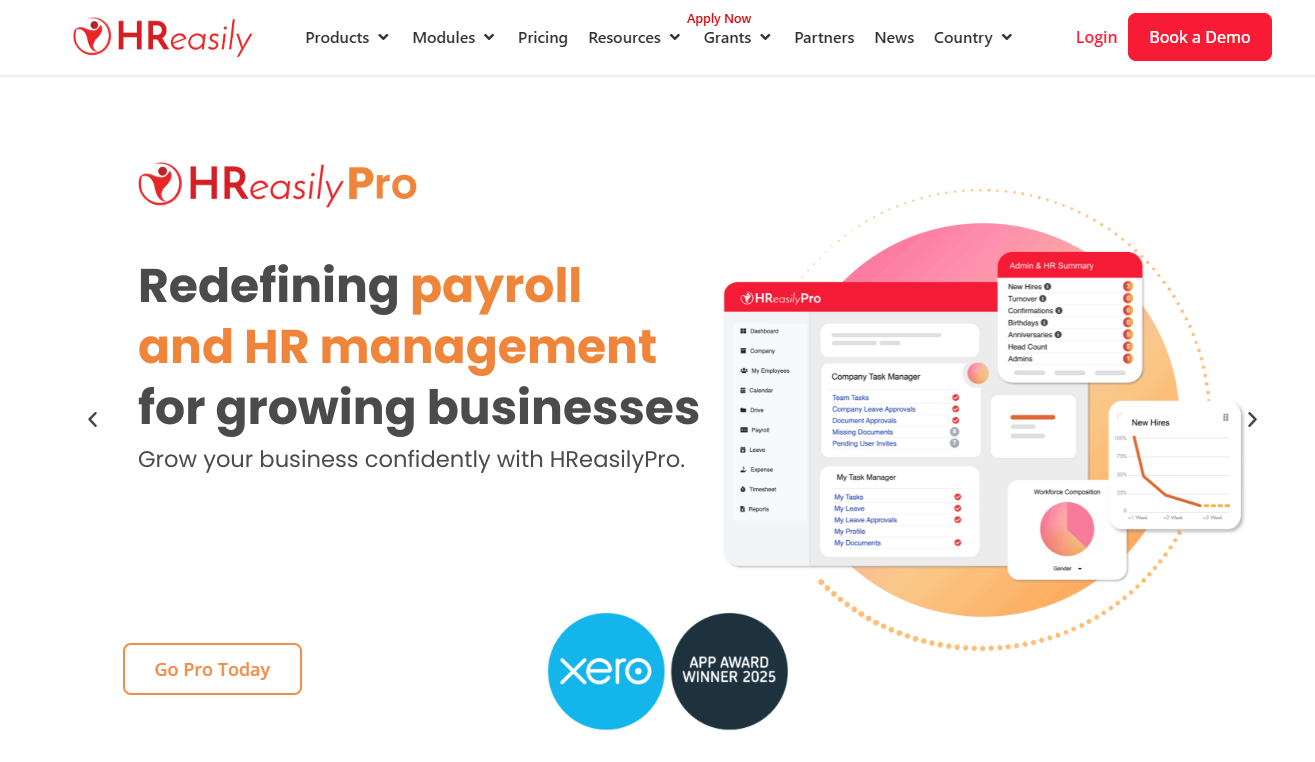
HReasily is a cloud-based, mobile-first HR and payroll platform serving SMEs across Malaysia and Singapore. It focuses on the essentials done well: automated payroll, claims, leave, and time attendance, at an entry-level price point.
HReasily Key Features
Dual-Market Payroll Automation
HReasily supports Malaysian and Singaporean statutory compliance, including EPF, SOCSO, CPF, and SDL, with automated, audit-ready payroll runs.
Mobile-First Claims and Leave
Employees submit expenses, apply for leave, and clock in from any device, with receipt photo upload and reimbursement through payroll.
Explore automated payroll software for connected HR workflows.
HReasily Pricing
| Plan | Details |
|---|---|
| Per employee | From RM4 per employee per month |
Where HReasily Shines
- Dual MY and SG compliance: Native statutory support across both markets suits cross-border SME teams on a budget.
- Genuine mobile-first access: Employees and managers handle payroll, leave, and claims from anywhere, with no training curve.
Where HReasily Falls Short
- Limited advanced modules: No recruitment, no performance management, and no learning and development, so it is lightweight for larger or growing teams.
- Basic analytics: Reporting depth is limited for teams that need detailed spend or people insights.
HReasily Customer Reviews
Users appreciate the mobile-friendly interface and reliable payroll automation. Some note the platform feels light once a team grows beyond core payroll and claims needs.
Who HReasily Is Best For
- Budget-conscious SMEs in Malaysia or Singapore that want dependable payroll and expense automation across both markets and do not yet need performance or recruitment tools.
HR2000: Best for Legacy Malaysian Payroll
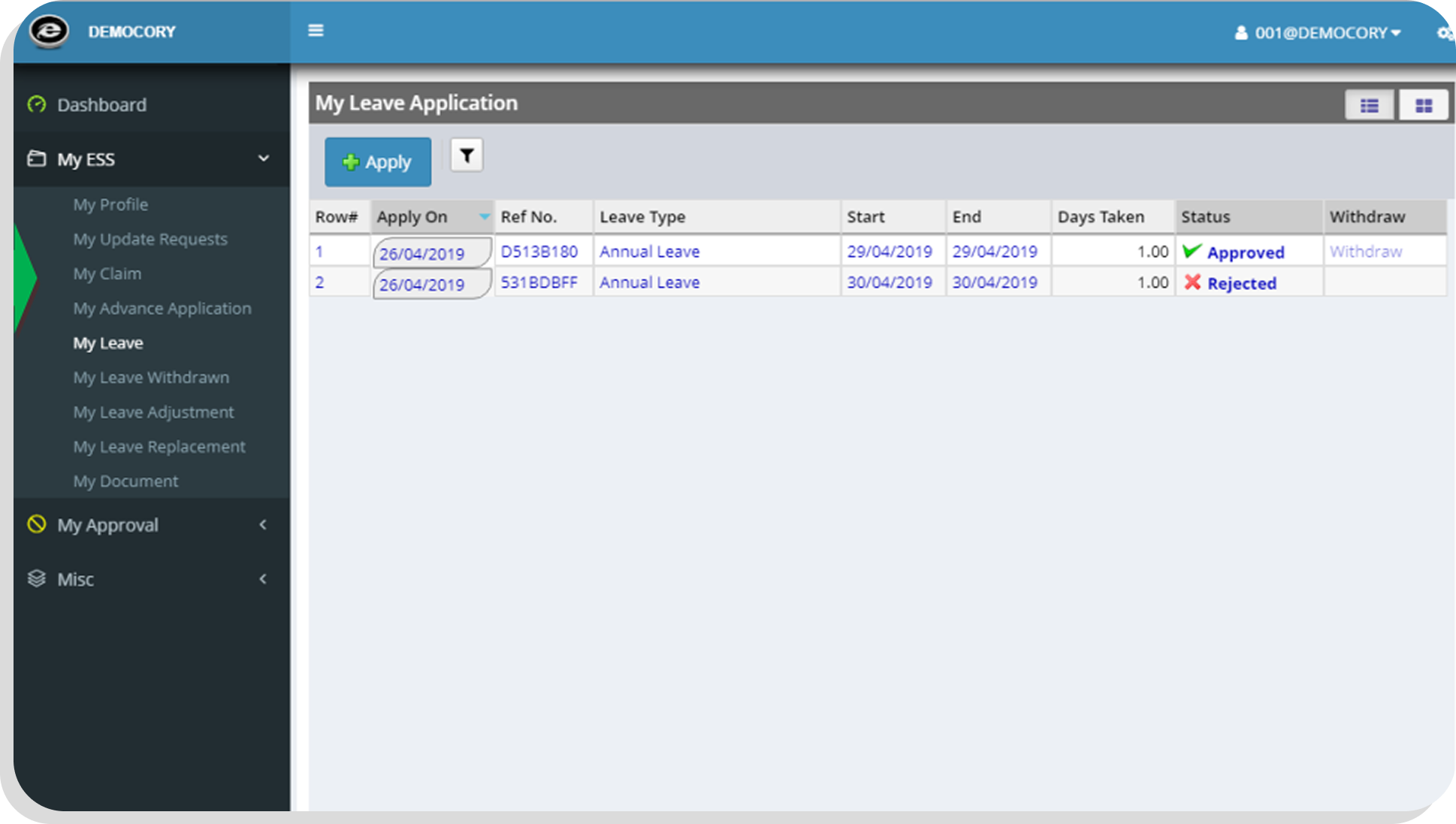
HR2000 is a long-standing Malaysian payroll and HR system that has served Malaysian businesses since 1999, with around 3,800 customers. It covers payroll, leave, claims, time management, and appraisal, with employee self-service on web and mobile. Its strength is a proven statutory engine that handles EPF, SOCSO, PCB, and EIS, plus integrations across 50 or more local bank formats for salary disbursement. The trade-off is evolution: the interface feels dated, users report slow performance, there is no recruitment, onboarding, or modern performance tooling, and it's not fully cloud-native. For teams that value proven payroll stability over modern features, and that are comfortable with legacy workflows, it remains a cost-effective entry point. Pricing is quote-based. Teams that want the same statutory reliability with a cloud-native, connected experience tend to look at brioHR instead.
Workday HCM: Best for Global Enterprise

Workday is a full enterprise Human Capital Management (HCM) platform trusted by Fortune 500 companies worldwide. It covers payroll, recruitment, onboarding, performance including OKRs, 360 feedback, succession planning, and Performance Improvement Plan (PIP) workflows, learning, and workforce planning across multi-entity, multi-currency, and multi-language operations. For most Malaysian and Singaporean SMEs, it's overkill. Pricing often starts around $35 per employee per month and can reach six or seven figures annually, implementation typically takes 12 to 24 months, Malaysian payroll is configured rather than native, and it needs dedicated HRIS and IT teams to run. It is best reserved for large enterprises with 10,000 or more employees and the internal resources to match.
Reasons to Find an Alternative to BambooHR
BambooHR is a capable, well-liked HR platform in its home market. The reasons teams in Malaysia and Singapore outgrow it have less to do with quality and more to do with fit. Here are the three that come up most often.
No Native Malaysian or Singaporean Payroll
This is the dealbreaker for most regional teams. BambooHR has no native MY or SG payroll engine, which means no EPF, SOCSO, EIS, PCB, CPF, SDL, or LHDN and Inland Revenue Authority of Singapore filing out of the box. You end up bolting on a separate payroll tool and reconciling between two systems every month, which is exactly where errors creep in. brioHR handles all of it natively, with statutory updates rolling out automatically, so payroll and HR live in one place.
The Cost of Disconnected Systems
When your HRIS doesn't run payroll, you pay twice: once for each subscription, and again in the hours your team loses moving data between them. Research from Deloitte found that HR professionals spend up to 57% of their time on administrative tasks, much of it re-entering the same information. A connected system removes that duplicate work. Because brioHR ties time and attendance, leave, and claims directly into payroll, the data only gets entered once, which is also how teams cut the payroll errors that damage trust and employee retention.
Support and Compliance That Fit Your Timezone
Global platforms rarely offer local support hours, and that gap bites hardest at month-end when a payroll question can't wait until a US morning. Local statutory changes also land faster than a global roadmap can absorb them. brioHR runs on Malaysian and Singaporean support hours with an average response time under three minutes and a 96% positive feedback rate, and its compliance updates track local rules as they change.
If you are still mapping your requirements, our guide to choosing HR software in Singapore and our breakdown of what functions your HRIS should have are useful starting points.
Everything HR.
One login
From payroll to onboarding, brioHR gives you everything you need in one place. Built for busy teams. Backed by people who care.
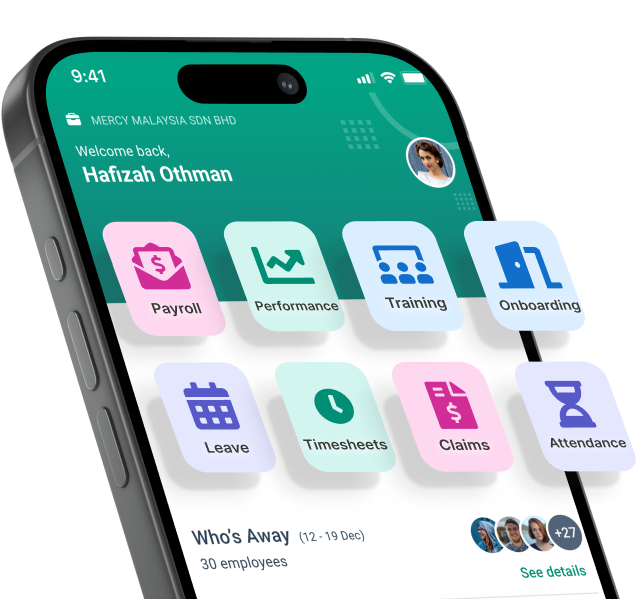
"HRMS is the only software that 100% of employees use in the company… everyone applies for leave, everyone clocks in, clocks out… Email is not even true for email, what I'm saying right now."
Final Words on brioHR
If you're leaving BambooHR because it was never built for how HR works in Malaysia and Singapore, brioHR is the most direct answer. It puts payroll, leave, claims, attendance, performance, and engagement in one connected system, handles EPF, SOCSO, EIS, CPF, and LHDN compliance natively, and backs it with human support that answers in minutes, not days.
The other tools here each fit a specific case: OmniHR for multi-country teams, Employment Hero for ecosystem breadth, QuickHR and HReasily for Singapore-first and budget needs, HR2000 for legacy payroll, and Workday for global enterprises. For most growing regional teams, though, the simplest path from admin to impact is one platform.
Conclusion
- For growing teams in Malaysia and Singapore, brioHR is the strongest BambooHR alternative — native payroll, connected HR, and compliance that updates itself in one system.
- OmniHR is the best call for multi-country Asia operations needing regional payroll alongside OKRs and 360 feedback in a single modern platform.
- Employment Hero suits teams that want the broadest HR ecosystem, but the separate payroll login and partner-based Malaysian compliance are real friction points to weigh.
- QuickHR and HReasily are solid fits for Singapore-first and budget-focused SMEs respectively — both cover statutory compliance well but have limited performance and engagement depth.
This is the title
If BambooHR was never built for your market, there's no reason to keep working around it. Book a free brioHR demo and see payroll, performance, and engagement running together for Malaysian and Singaporean teams.