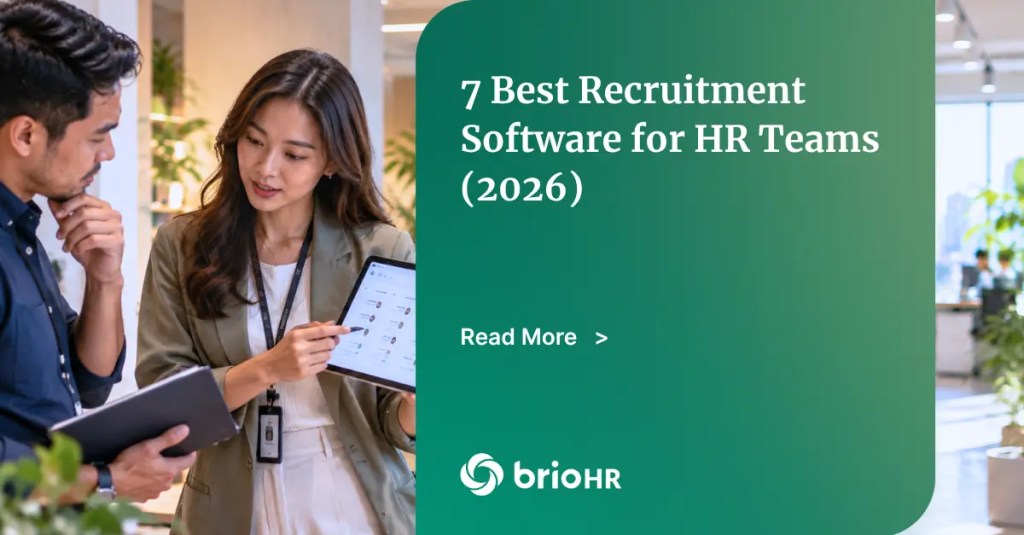
Best HR Software for Manufacturing Companies (2026 Ranked)
Key Takeaways
- brioHR is the best all-in-one HR software for manufacturers in Malaysia and Singapore: one connected system for shift-based time and attendance, payroll, onboarding, and performance across multiple sites.
- BossNet is best for complex Malaysian payroll and shop-floor hardware: a flexible payroll formula builder with biometric, RFID (radio-frequency identification), and facial recognition device support.
- HReasily is best for cross-border SMEs (small and medium enterprises): mobile-first payroll and attendance with native compliance in both Malaysia and Singapore.
- Workday HCM is best for large global manufacturers: enterprise-grade breadth for organizations with 10,000 or more employees and dedicated HR and IT teams.
Manufacturing HR runs on rotating shifts, variable hours, overtime, and headcount spread across plants, warehouses, and production lines. Office-first HR tools were never built for that, and spreadsheets quietly break as you scale. The best HR software for manufacturing in 2026 is brioHR for all-in-one operations in Malaysia and Singapore, BossNet for complex local payroll, HReasily for cross-border SMEs, and Workday HCM for global enterprises. Below, we compare features, pricing, and honest pros and cons across eight platforms, so you can match the right system to your factory floor rather than force-fit a desk-team tool.
Best HR Software for Manufacturing Companies: Quick Comparison
| Tool | Best For | Standout Feature | Price Starting Point |
|---|---|---|---|
| brioHR | All-in-one manufacturing HR (Malaysia and Singapore) | Shift-based time, payroll, onboarding, and performance in one system | From RM3 per employee per month |
| Kakitangan | Cost-focused Malaysian micro-SMEs | Affordable local payroll and statutory filing | Budget tier, by headcount and modules |
| HReasily | Cross-border Malaysia and Singapore SMEs | Mobile-first payroll with dual-market compliance | From RM4 per employee per month |
| altHR | Malaysian SMEs wanting leave plus performance | OKRs and 360 feedback alongside core HR | Custom quote (mid-market) |
| BossNet | Complex Malaysian payroll and shop-floor hardware | Flexible payroll formula builder with biometric and RFID support | Custom quote, by size and modules |
| QuickHR | Singapore SMEs standardizing HR operations | Native Singapore payroll with strong shift handling | From S$5 per employee per month |
| HR2000 | Teams comfortable with legacy workflows | Proven payroll engine with 50-plus bank formats | Custom quote (license-based) |
| Workday HCM | Large global enterprises | End-to-end HCM with workforce planning and analytics | Custom enterprise pricing (premium) |
Most manufacturers do not fail HR because a single feature is missing. They fail because attendance lives in one tool, payroll in another, and onboarding in a folder, so every payroll week turns into reconciliation. brioHR closes that gap with HR and payroll built for manufacturing operations, pulling shifts, overtime, allowances, and employee records into one platform. If you want to skip the tool-stitching entirely, that is the fastest place to start.
Run manufacturing HR without the manual chaos. See how brioHR handles shift work, variable hours, and multi-site payroll in one system. Book a demo with brioHR →
brioHR: Best for All-in-One Manufacturing HR and Payroll

brioHR is an all-in-one human resource management system (HRMS) built for companies in Malaysia and Singapore that want one system across the full employee lifecycle. For manufacturers, its edge is simple: shift work, overtime, and multi-site headcount are handled natively, not bolted on. More than 1,000 organizations across 50 countries already run on it.
brioHR Key Features
The three capabilities below matter most on a factory floor, where accuracy under pressure beats a long feature list. Each one connects directly to payroll, so hours worked on the line become correct pay without manual re-entry.
Standout Feature #1: Shift-Ready Time and Attendance
Manufacturing attendance is a 24/7 problem, and manual checks do not scale across rotating crews. For a broader look at time tracking software, brioHR's time and attendance system gives you facial recognition clock-ins, geo-fencing, biometric and RFID device support, rotating shift scheduling, and automatic overtime calculation. Hours and overtime are recorded against the right workday, so a night shift that crosses midnight does not throw off pay. Late and absent alerts flag gaps in real time, which is where most plants lose visibility. Because attendance links straight into payroll, there is no export, no reformatting, and no month-end scramble to reconcile timesheets. For a deeper look at how this plays out on the shop floor, brioHR has covered time attendance in manufacturing in detail. The result is stricter attendance control with far less supervisor admin, which frees your line leads to actually run the line.
Standout Feature #2: Payroll That Holds Every Shift
Payroll is the worst place to have downtime or confusion, especially when overtime, shift allowances, and holiday rates change every cycle. brioHR calculates all of it automatically and supports multiple pay frequencies, so monthly, weekly, and shift-based runs sit in one place. That flexibility is why operations-heavy teams rely on multi-cycle payroll. Malaysian compliance is native, covering Employees Provident Fund (EPF), Social Security Organisation (SOCSO), Employment Insurance System (EIS), Potongan Cukai Bulanan (PCB), Human Resource Development Fund (HRDF), EA Form, and Inland Revenue Board (LHDN) e-filing, and Malaysian payroll updates roll out automatically when the rules change. Cross-border teams get native Singapore payroll too, with Central Provident Fund (CPF), Skills Development Levy (SDL), IR8A, and IR21. Because attendance feeds payroll directly, you avoid the double entry that causes most errors, a payoff brioHR explains in its guide to connecting payroll with the rest of HR.
Standout Feature #3: Onboarding and Core HR Across Multiple Sites
High headcount and turnover make onboarding a production issue, not just an HR one, because every day a new hire is not ready is a day the line is short. brioHR's digital onboarding covers pre-boarding, checklists, document collection, and manager task assignment, so new joiners are ready faster on every shift. Structured onboarding matters more than most teams admit, and brioHR has written about why getting onboarding right pays off in retention. Above the shop floor, multi-entity support gives group HR a single source of truth across sites without blocking local teams, and performance management tools connect goals, key performance indicators (KPIs), and reviews to the same employee record as payroll and attendance. That connection is where standalone tools fall short, because performance data is only useful when it sits next to everything else HR does.
brioHR Pricing
| Plan | Details |
|---|---|
| Modular pricing | Per-employee pricing based on modules and company size, starting from RM3 per employee per month |
| Singapore entry | From S$2 per employee per month, per module |
| Custom quote | Tailored to headcount, workflows, and rollout needs, including payroll outsourcing |
Modular pricing means you pay for the modules a plant actually uses, and it scales as you add sites. If you need help building the business case internally, brioHR breaks down how to justify the cost of HR software.
Where brioHR Shines
- One platform for all of HR: payroll, leave, claims, attendance, onboarding, and performance sit in one connected system, so there is no tool-stitching and no double entry.
- Malaysian and Singapore compliance built in: EPF, SOCSO, EIS, PCB, HRDF, LHDN, CPF, SDL, IR8A, and IR21 workflows are handled natively, with statutory updates rolled out automatically.
- A partner, not just software: sub-three-minute support response times and a 96% positive feedback rate, which matters most during payroll cutoff when delays cost money.
- Shop-floor hardware and shifts handled natively: facial recognition, biometric and RFID clock-ins, rotating shifts, and overtime auto-calculation are built for frontline teams, not desk teams.
Where brioHR Falls Short
- Built for commitment, not quick fixes: brioHR is a long-term HR and payroll system. Teams looking for a single-purpose tool for one process will find it more platform than they need.
- Sized for real HR complexity: very small teams under 30 people may not use enough of the platform to justify the setup, because its value compounds across sites, shifts, and modules.
brioHR Customer Reviews
brioHR holds 4.7 stars from verified G2 reviews and 4.9 on Capterra, with reviewers consistently highlighting easy implementation, strong usability, and responsive support.

Who brioHR Is Best For
- Factories and production sites: shift-based teams, rotating schedules, and multi-site payroll handled without spreadsheets.
- Warehousing and logistics teams: shift coverage, attendance tracking, and overtime visibility without slowing operations down.
- Group HR and multi-entity operations: central visibility across sites, with control that does not block local teams.
Manufacturers weighing options across the wider market can also see how brioHR stacks up in the roundup of the best HR software in Malaysia.
Ready to see it on your own shift patterns? Book a walkthrough and we will map brioHR to your plant, warehouse, or line. Book a demo with brioHR →
Track every shift, clock-in, and overtime automatically
Built for rotating crews and multi-site plants. No manual timesheets, no month-end reconciliation.

"HRMS is the only software that 100% of employees use in the company... everyone applies for leave, everyone clocks in, clocks out... Email is not even true for email, what I'm saying right now."
Kakitangan: Best for Cost-Focused Malaysian Micro-SMEs

Kakitangan is a Malaysia-focused payroll and HR platform built for small businesses, and one of the more widely used options among SMEs moving off spreadsheets. It is affordable, locally compliant, and fast to deploy, with payroll, claims, leave, and statutory filing tightly connected. Implementation typically takes about a month, which suits teams that want to move quickly without a long project timeline.
Where Kakitangan Shines
- Genuinely affordable: sits at the budget end of the market and remains one of the lower-cost options for Malaysian small businesses.
- Full Malaysian statutory coverage: payroll, EPF, SOCSO, EIS, PCB, HRDF, EA Form, and LHDN e-filing are all natively supported.
- Practical attendance for distributed teams: mobile GPS (global positioning system) clock-in, geo-fencing, and overtime tracking suit field and shift-based teams.
Where Kakitangan Falls Short
- Not a full HR system: no performance management, applicant tracking, structured onboarding, or learning modules, which limits usefulness as headcount grows.
- Limited scalability: no multi-entity support, single sign-on (SSO), or application programming interface (API) access, a real constraint past roughly 100 employees.
Reviews are mixed but consistent. Reviewers on TrustedMalaysia and Capterra praise the affordability and helpful guidance for small teams. On the other side, some users flag slower support response times and feature gaps once the business scales.
Who Kakitangan Is Best For
- Small manufacturers with simple needs: teams that mainly need compliant payroll and basic attendance, not full HR.
- Cost-conscious companies: businesses prioritizing budget over feature breadth or multi-site scale.
HReasily: Best for Cross-Border Malaysia and Singapore SMEs
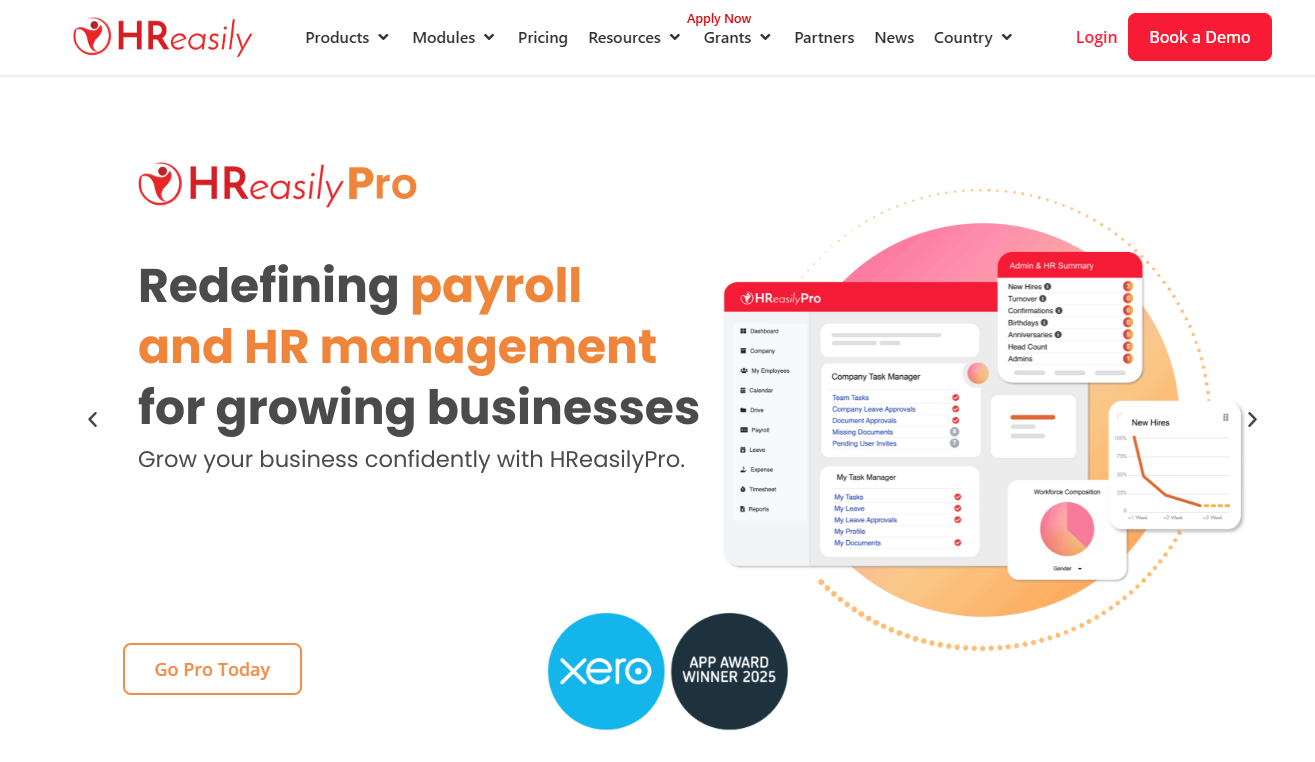
HReasily is a cloud-based HR and payroll platform serving SMEs across Malaysia and Singapore, with a mobile-first interface. It covers automated payroll tool, claims, leave, and time attendance, and its main draw is dual-market compliance for teams that operate on both sides of the causeway. Pricing starts from RM4 per employee per month, which keeps it accessible for smaller operations.
Where HReasily Shines
- Dual Malaysia and Singapore compliance: native EPF, SOCSO, CPF, and SDL support, useful for cross-border SME teams in both markets.
- Mobile accessibility: employees and managers handle payroll, leave, and expenses from any device, which suits distributed shift workers.
- Audit-ready automation: payroll runs are automated and stay aligned with statutory requirements in both countries.
Where HReasily Falls Short
- Limited advanced HR modules: no applicant tracking, performance management, or learning and development, so it stays lightweight as teams grow.
- Basic analytics: expense and reporting depth is limited for manufacturers that need detailed spend or workforce visibility.
Reviews are mixed but consistent. Users appreciate the mobile-friendly interface and reliable payroll automation. On the other side, some note the platform feels lightweight for larger, more complex teams.
Who HReasily Is Best For
- Cross-border SMEs: manufacturers with staff in both Malaysia and Singapore who want one payroll engine.
- Mobile-first teams: operations that prioritize on-the-go access over deep HR modules.
altHR: Best for Malaysian SMEs Wanting Leave and Performance Together
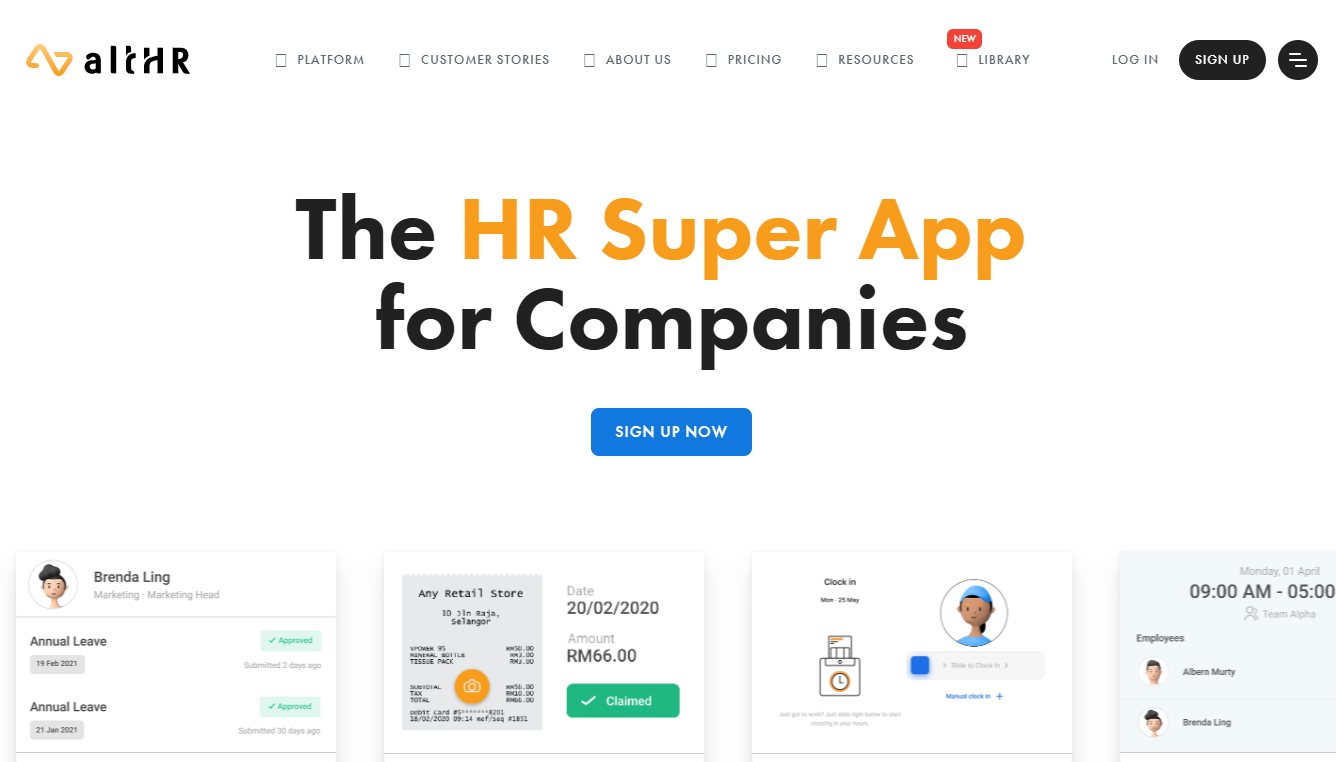
altHR is a Malaysian HR platform that pairs core leave, claims, and payroll with a genuine performance suite, including objectives and key results (OKRs), 360 feedback, KPI tracking, and performance dashboards. That makes it a meaningful choice for manufacturers that want to do more than track absence, though its time and attendance depth is lighter than the shift-first tools on this list.
Where altHR Shines
- Strong performance suite: OKRs, 360 feedback, self-assessment, calibration, and dashboards sit alongside core HR, which is rare in this price band.
- Clean, modern experience: a user-friendly interface rated well for ease of use across HR and employees.
- Solid leave and onboarding: multi-level approval, accrual rules, custom leave types, and digital onboarding flows are all supported.
Where altHR Falls Short
- Lighter shift and attendance handling: facial recognition, rotating shifts, and hardware device integration are not supported, which matters for 24/7 plants.
- Thinner deep-payroll and scalability: features like multi-currency payroll and broad integrations are missing for complex, multi-site operations.
Reviews are mixed but consistent. Reviewers on Capterra call out the depth of the performance module as a real differentiator over payroll-only local tools. On the other side, some note it is better suited to office-style teams than heavy shift environments.
Who altHR Is Best For
- Performance-driven Malaysian SMEs: manufacturers moving beyond admin toward active talent development.
- Office-heavy manufacturing teams: companies where leave and performance matter more than complex shift rostering.
BossNet: Best for Complex Malaysian Payroll and Shop-Floor Hardware
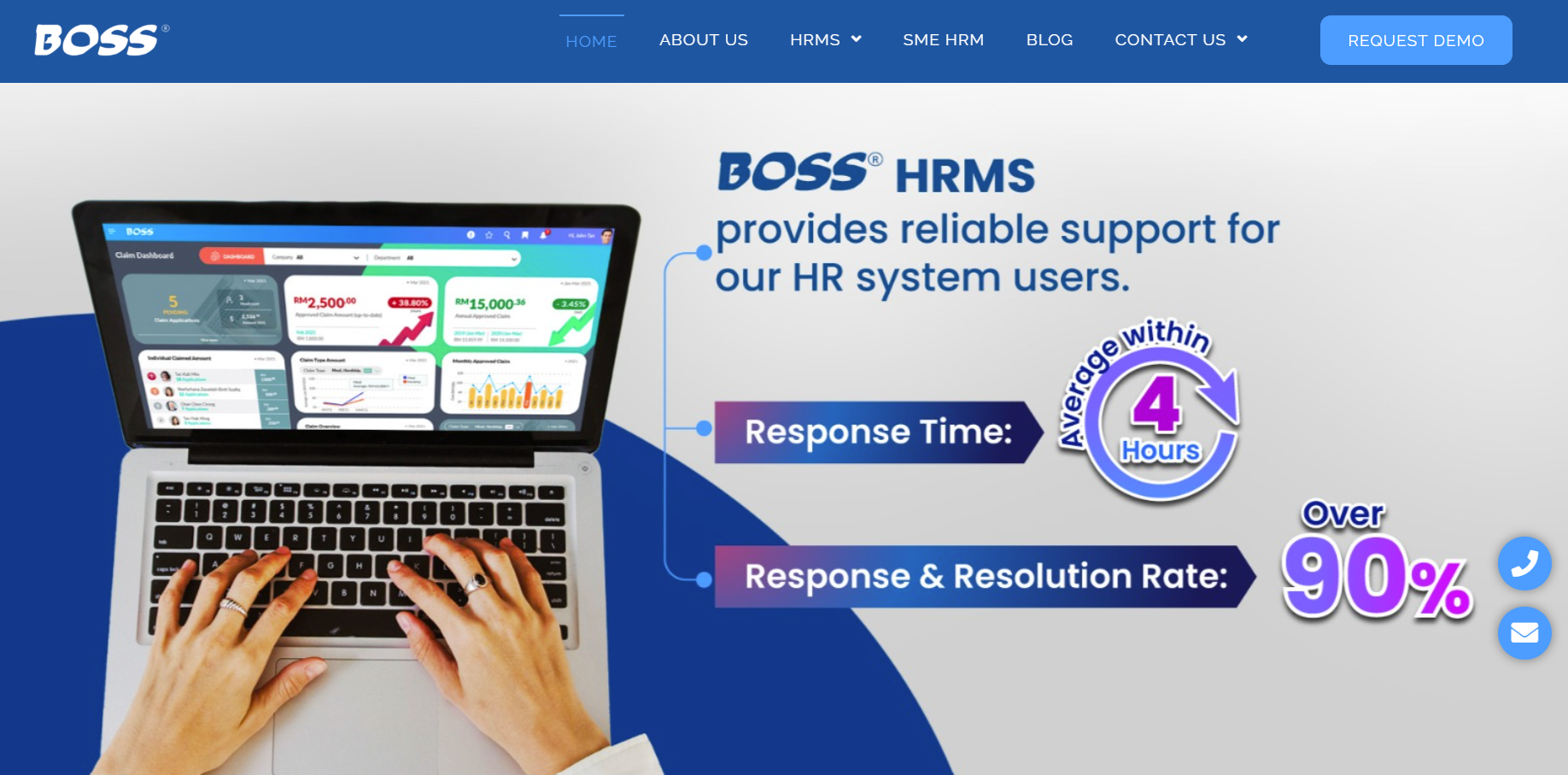
BossNet is a Malaysian HR and payroll platform for SMEs and mid-market companies, with particular strength in its payroll formula builder and local compliance. It is a practical all-rounder for manufacturers that run complex pay structures and rely on physical attendance hardware on the shop floor.
Where BossNet Shines
- Flexible payroll formula builder: handles complex pay structures with full Malaysian statutory support, which is its strongest asset.
- Strong hardware integration: supports biometric devices, RFID readers, and facial recognition, useful for manufacturing and shift-based workforces.
- Solid core HR coverage: payroll, time and attendance, leave, claims, and employee records handle daily operational needs.
Where BossNet Falls Short
- No engagement or recruitment tools: no pulse surveys, recognition, or applicant tracking, so it stays operational rather than strategic.
- Longer implementation and dated UX: rollout runs around six months, and ease of use is rated 3.0 out of 5, on the lower end for a modern local platform.
Reviews are mixed but consistent. TrustedMalaysia recognizes BossNet for a capable formula builder, with one reviewer calling it the most flexible local payroll tool they had used. On the other side, reviewers note the longer setup and a less modern interface.
Who BossNet Is Best For
- Manufacturers with complex payroll: companies that need strong compliance and a flexible formula builder.
- Hardware-dependent shift teams: plants that rely on biometric and RFID devices alongside core HR.
QuickHR: Best for Singapore SMEs Standardizing HR Operations

QuickHR is a Singapore-first HR platform with broader module coverage than most payroll-only tools, including leave, claims, attendance, document management, and contract management. Its International Organization for Standardization (ISO) 9001:2015 certification adds credibility for procurement teams with stricter audit requirements. Pricing starts from S$5 per employee per month.
Where QuickHR Shines
- Native Singapore payroll: full CPF, SDL, IR8A, and IR21 workflows, with multi-currency payroll and Productivity Solutions Grant (PSG) eligibility.
- Strong shift and attendance handling: mobile GPS clock-ins, geo-fencing, rotating shifts, and automatic overtime suit operations-heavy teams.
- Mature reporting for the price tier: custom report builder, people analytics, and headcount dashboards are unusual at this band.
Where QuickHR Falls Short
- Malaysia is partner-delivered: EPF, SOCSO, PCB, and HRDF are partner-based rather than fully native, which can slow turnaround when Malaysian rules change.
- No recruitment, onboarding, or performance: applicant tracking, structured onboarding, review cycles, and OKRs are all absent.
Reviews are mixed but consistent. Reviewers consistently praise the responsive support team and quick setup. On the other side, some describe the interface as functional rather than intuitive, and note limited flexibility as needs evolve.
Who QuickHR Is Best For
- Singapore-based manufacturers: teams that want native Singapore payroll with strong daily HR coverage.
- Process-driven operations: companies standardizing HR workflows with audit and procurement needs.
HR2000: Best for Teams Comfortable with Legacy Workflows
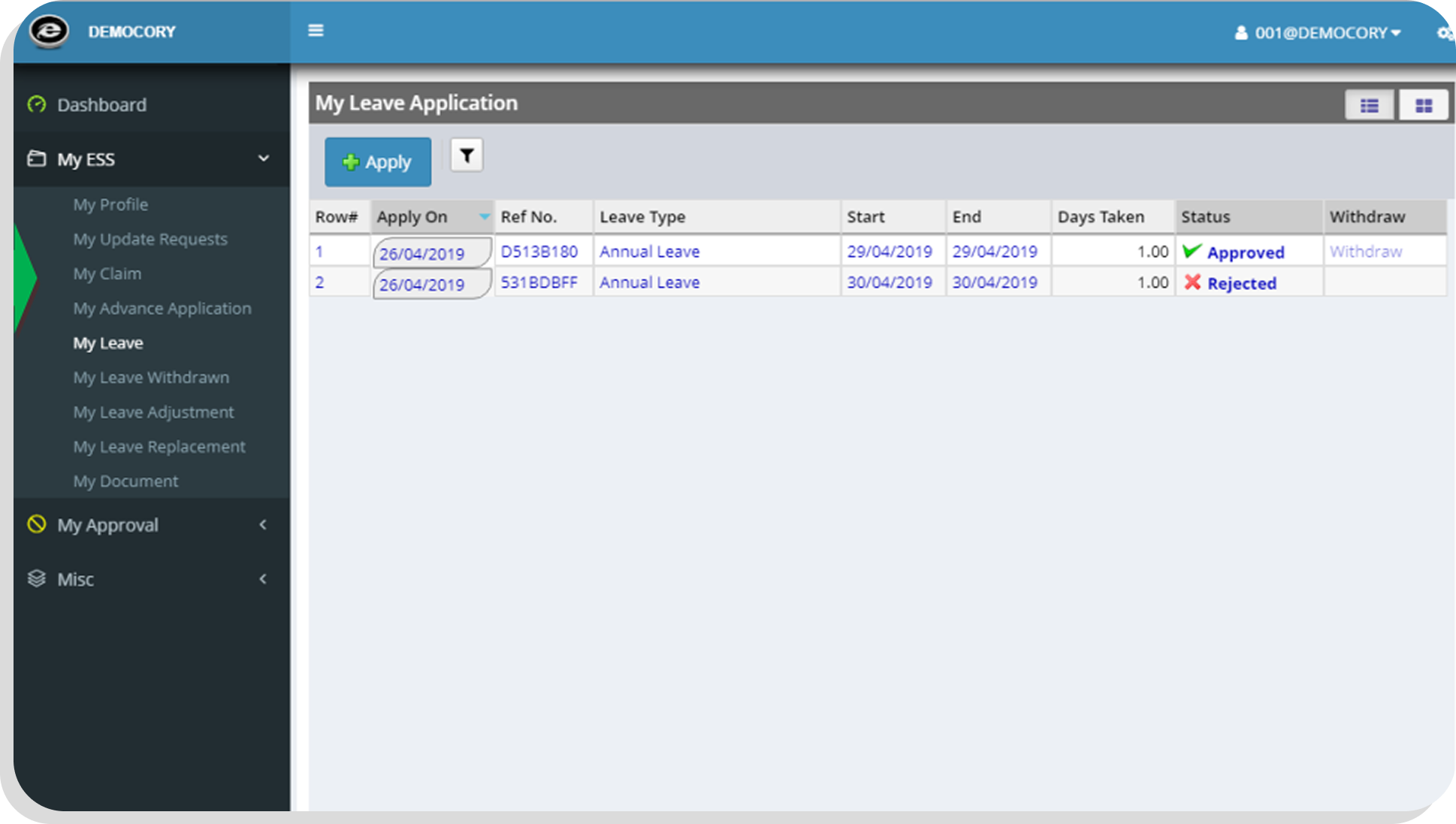
HR2000 is a long-standing Malaysian payroll and HR system covering payroll, leave, claims, time management, and appraisal, with employee self-service (ESS) on web and mobile. Its strength is a proven payroll engine and broad bank support; its trade-off is that the platform has not evolved much beyond traditional HR, and it is not fully cloud-native.
Where HR2000 Shines
- Proven payroll reliability: handles EPF, SOCSO, PCB, and EIS calculations dependably, which is its core track record.
- Broad bank compatibility: works with more than 50 local bank formats for salary disbursement.
- Lower entry cost: a cost-effective option for teams that prioritize payroll stability over modern features.
Where HR2000 Falls Short
- Dated experience and speed: the interface feels outdated and users report slow loading, with ease of use rated lowest in this comparison.
- Missing modern modules: no recruitment, structured onboarding, performance management, or learning and development.
Reviews are mixed but consistent. Long-time users appreciate reliable payroll processing and broad bank support. On the other side, feedback often highlights slow performance and an outdated interface.
Who HR2000 Is Best For
- Legacy-comfortable teams: manufacturers that prefer familiar workflows over modern user experience.
- Payroll-first, cost-sensitive companies: businesses prioritizing stable local compliance at a lower price point.
Workday HCM: Best for Large Global Enterprises

Workday HCM is a full human capital management (HCM) platform trusted by Fortune 500 companies globally, covering payroll, recruitment, onboarding, performance, learning, analytics, and workforce planning across multi-entity, multi-currency, multi-language operations. For most Malaysian and Singaporean manufacturers it is overkill, but for global enterprises with dedicated HR and IT teams it is the gold standard.
Where Workday Shines
- Total feature breadth: covers the entire employee lifecycle with almost no gaps, plus workforce planning and succession.
- Built for global complexity: multi-entity, multi-currency, and multi-language, with employer of record (EOR) and global payroll.
- Advanced analytics and AI: predictive analytics, AI candidate screening, and enterprise-grade dashboards.
Where Workday Falls Short
- Premium enterprise pricing: custom contracts that often reach six figures annually, far above what most regional manufacturers can justify.
- Local payroll is configured, not native: Malaysian EA Form and LHDN e-filing are only partial and HRDF training tracking is missing, and rollouts commonly take 12 to 24 months.
Reviews are mixed but consistent. Enterprise reviewers on G2 highlight centralized HR management, real-time data, and strong executive reporting. On the other side, many cite the cost, long implementation, and heavy internal resourcing required to run it.
Who Workday HCM Is Best For
- Large global manufacturers: organizations with 10,000 or more employees and dedicated HRIS and IT resources.
- Complex multi-country groups: enterprises that need workforce planning and deep analytics at scale.
How to Choose the Right HR Platform for Manufacturing
Manufacturing HR software lives or dies on a handful of realities that office tools ignore. Weigh these three considerations against your shift patterns, site count, and payroll complexity before you commit. For a broader framework, brioHR also has a guide to choosing HR software.
Consideration #1: Shift and Attendance Accuracy
Rotating shifts, night crews, and overtime are the core of manufacturing HR, so attendance has to tie every hour to the right workday and the right pay rule. Look for facial recognition or biometric clock-ins, geo-fencing for multi-site teams, rotating shift support, and automatic overtime calculation that flows into payroll. Anything that requires manual timesheet exports will break at scale. This is where brioHR does well: its time and attendance tools were built for frontline crews, with clock-ins recorded against the correct shift and overtime calculated automatically.
See shift-based attendance and overtime handled automatically, with hours tied to the right workday. Book a demo with brioHR →
Consideration #2: Payroll Depth and Local Compliance
Compliance is local and it changes yearly, so configured-not-native payroll becomes a liability the moment rules shift. For Malaysia, confirm native EPF, SOCSO, EIS, PCB, HRDF, EA Form, and LHDN e-filing; for Singapore, confirm CPF, SDL, IR8A, and IR21. Multiple pay frequencies matter for shift-based teams, and a clean link between attendance and payroll removes the errors that manual entry creates. brioHR covers all of it natively and pushes statutory updates automatically, and if your team would rather offload the run entirely, brioHR also offers payroll outsourcing.
Consideration #3: Multi-Site Visibility and Scale
Growth in manufacturing usually means more sites, not just more people, so central visibility without blocking local teams becomes essential. Check for multi-entity support, role-based permissions, and HR reporting software that rolls up across plants. You also want people analytics that surface attendance, overtime, and attrition trends before they become problems. brioHR gives group HR one source of truth across sites while letting each location run its own workflows, which is what teams need when they are streamlining HR across a group of companies. If you are still mapping requirements, brioHR's rundown of the functions your HRIS should have and what to look for in HR software are useful checklists.
Why Manufacturing Companies Need HR Software
Manufacturing is one of the most people-intensive sectors there is, and the operational stakes of getting HR wrong are unusually high. In Malaysia, manufacturing accounts for roughly 27% of all filled jobs and the largest single share of unfilled vacancies, according to government labour data. That scale is exactly why the right system pays for itself, and here are three reasons it matters.
Reason #1: Shift Complexity Breaks Spreadsheets
Rotating shifts, night work, and overtime create pay rules that spreadsheets cannot handle reliably at scale. A single miscalculated overtime rate, multiplied across hundreds of frontline workers, becomes a costly error and an eroded-trust problem in the same pay cycle. Automated time attendance in manufacturing ties hours to the right workday and calculates overtime automatically, removing the most common source of payroll disputes. Industry benchmarks put manufacturing turnover well above the national average, and inaccurate or late pay only accelerates it.
Reason #2: Compliance Is Local, High-Volume, and Unforgiving
Statutory contributions in Malaysia and Singapore are non-negotiable, high-volume, and updated yearly, so manual processes carry real legal and financial risk. Because payroll also holds sensitive employee data, enterprise-grade data security matters as much as accuracy. Native handling of EPF, SOCSO, EIS, PCB, and HRDF in Malaysia, or CPF, SDL, and IR8A in Singapore, keeps you aligned without last-minute scrambles. The Malaysian government has actively encouraged businesses to adopt HR software for exactly this reason, and brioHR has covered why that push matters for local employers.
Reason #3: Attendance and Engagement Protect Output
In a plant, an empty station is lost production, so attendance visibility is an operational metric, not just an HR one. Real-time late and absent alerts let supervisors fill gaps before the line falls behind, and connected leave management keeps coverage predictable. Engagement matters here too: long-running workplace research from Gallup has found that the most engaged teams see dramatically lower absenteeism than the least engaged, so employee engagement software and employee pulse surveys give manufacturers an early read on where morale, and attendance, may be slipping. Teams using brioHR's pulse surveys report up to 4x faster sentiment analysis than manual spreadsheet methods.
Everything HR.
One login
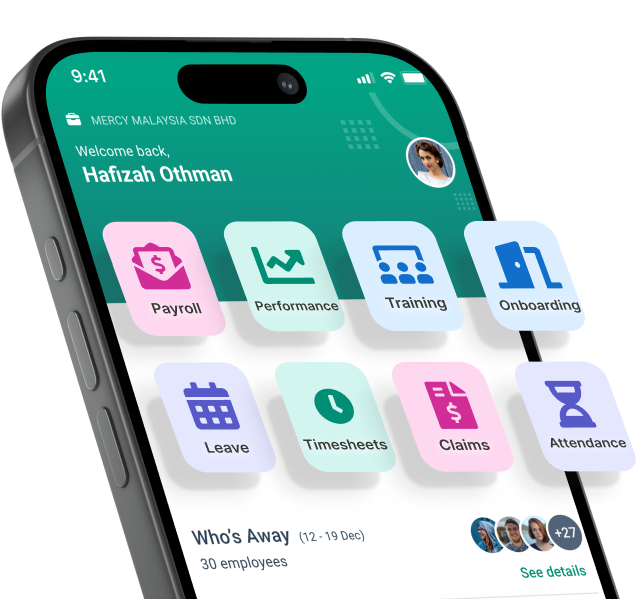
From payroll to onboarding, brioHR gives you everything you need in one place. Built for busy teams. Backed by people who care.
Improve Manufacturing Workforce Management With brioHR
If your HR runs on shift work, variable hours, and multiple sites, the right system is the one that treats those as the default, not the exception. brioHR brings shift-based attendance, native Malaysian and Singapore payroll, onboarding, and performance into one connected platform, so hours worked on the line become correct pay without manual chaos. Kakitangan and HR2000 remain sensible budget entry points, BossNet suits complex local payroll, and Workday HCM fits global enterprises, but for growing manufacturers that want one system that scales across plants, brioHR is the strongest all-around fit. See real results in brioHR's client success stories, then map it to your own operation.
Shifts change. Operations move. Choose an HRMS that keeps up. Book a demo and we will run it against your shift patterns and payroll. Book a demo with brioHR →
Conclusion
- brioHR is the strongest all-in-one fit for manufacturers in Malaysia and Singapore: native payroll, shift-ready attendance, and multi-site HR in one connected system.
- BossNet is the right call for complex local payroll and hardware-dependent shop floors; Kakitangan and HR2000 serve budget-first teams with simpler needs.
- HReasily handles cross-border SMEs well; QuickHR suits Singapore-first operations with strong shift and compliance needs.
- Workday HCM only makes sense above 10,000 employees with the budget and IT resources to match.