Best Workday Competitors & Alternatives (2026 Updated)
Key Takeaways
- brioHR is best for mid-market and SME teams in Malaysia and Singapore that want an all-in-one HRMS without Workday's enterprise price tag or rollout timeline.
- Darwinbox is best for large Asia-based enterprises that still need enterprise-grade scale, just with native regional payroll Workday doesn't offer out of the box.
- HiBob is best for global mid-market to enterprise teams that weight culture, engagement, and learning and development as heavily as core HR admin.
- One analysis of enterprise rollouts found that Workday implementations run with average timelines of 8.2 months and costs ranging from $300K to $800K, plus annual fees of $40 to $160 per employee per month, which is why so many mid-market teams start looking elsewhere before they've even finished onboarding.
Workday still dominates conversations about enterprise HR software, but it wasn't built for every company that finds itself comparing it. This guide breaks down nine platforms worth considering instead, what each one actually does well, where it falls short, and who it's genuinely built for.
Introduction
If you've been quoted a Workday implementation and the number made you close the laptop, you're not overreacting. A platform designed for organizations running 10,000-plus employees across a dozen countries carries a price tag and rollout timeline to match, and most companies evaluating HR software today aren't that. They're mid-market teams in Malaysia or Singapore, regional offices of larger groups, or SMEs that outgrew spreadsheets but never needed an enterprise resource planning suite bolted onto their HR function.
This article compares nine Workday alternatives across pricing, features, and who each one actually fits, so you can find a platform sized to your company rather than one built for a Fortune 500 rollout.
9 Best Workday Competitors & Alternatives in 2026: A Quick Look
| Tool | Best For | Standout Feature | Price |
|---|---|---|---|
| brioHR | MY/SG SMEs and mid-market teams wanting an all-in-one alternative | Full employee lifecycle in one connected system | From RM3/employee/month |
| Darwinbox | Large Asia-based enterprises needing enterprise scale | Native MY/SG payroll built in from day one | Custom quote |
| HiBob | Global teams prioritizing culture and L&D | Full succession planning plus a genuine LMS | From ~$16–25/employee/month |
| Employment Hero | Teams wanting broad HR + payroll breadth | Wide horizontal feature coverage in one ecosystem | From USD $10/employee/month |
| Swingvy | SMEs modernizing HR for the first time | Mobile-first UX for distributed teams | From RM10/employee/month |
| PayrollPanda | Payroll-first micro-SMEs on a tight budget | Free plan with unlimited payroll runs | Free tier, custom paid plans |
| HReasily | MY/SG SMEs automating payroll and claims | Dual-market compliance in one mobile app | From RM4/employee/month |
| Kakitangan | Small, cost-focused Malaysian businesses | Full Malaysian statutory coverage at low cost | Custom, budget tier |
| altHR | Malaysian SMEs wanting leave plus performance | Built-out OKR and 360-degree feedback suite | From RM8/employee/month |
Want to see how an all-in-one HRMS actually compares to Workday for a company your size? The breakdown below covers features, pricing, and honest trade-offs for each platform.
Streamline leave approvals and absence tracking
Stop managing leave in spreadsheets. Automate approvals, track balances, and ensure policy compliance.

brioHR: Best for MY/SG Mid-Market Teams Wanting a Right-Sized Alternative
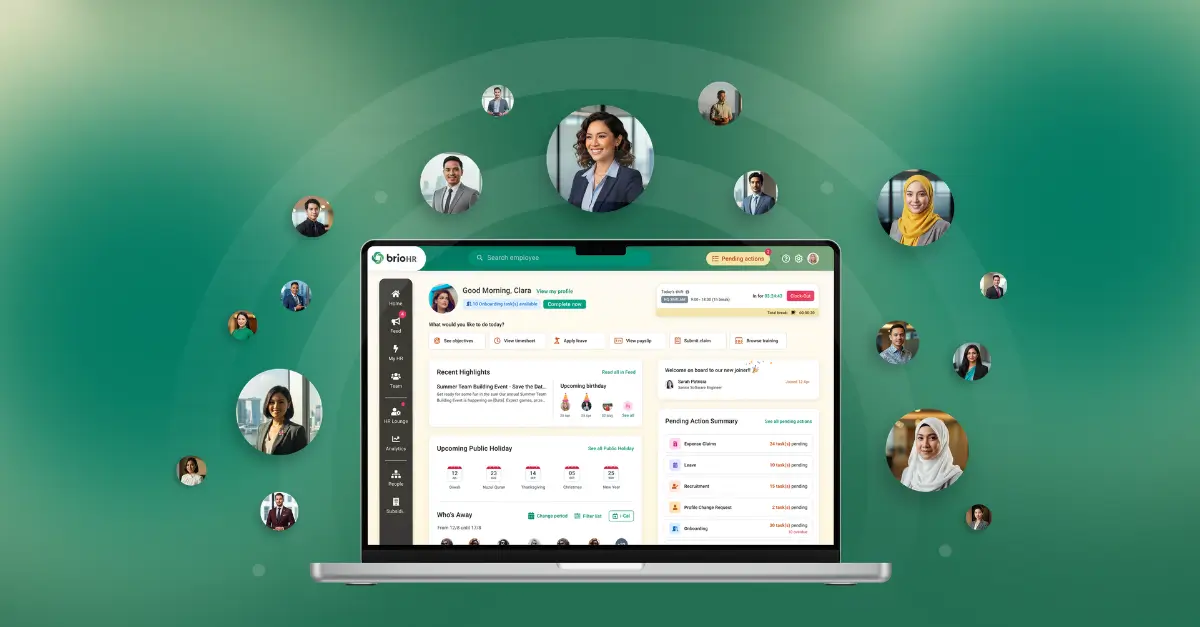
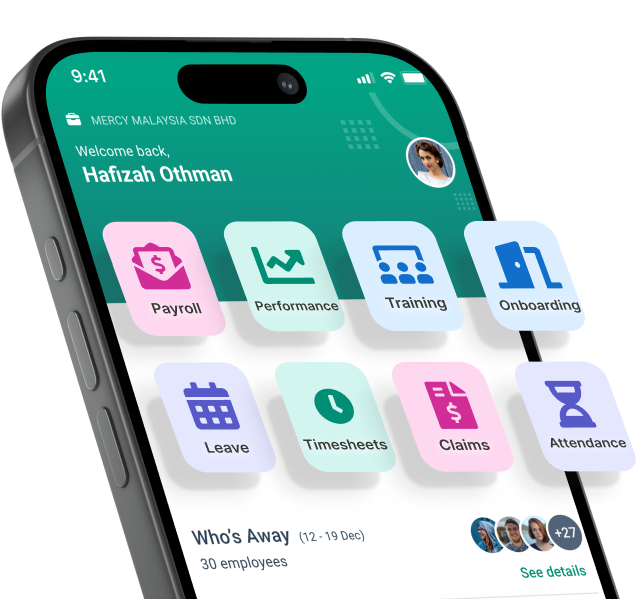
brioHR is an all-in-one HRMS covering recruitment, onboarding, payroll, leave, claims, time and attendance, performance, and engagement in one connected system. It's used by more than 1,000 organizations across 50 countries, with the bulk of that client base sitting in the 30 to 3,000 employee range that Workday's enterprise pricing and rollout model typically prices out.
Where Workday asks companies to adapt to enterprise-grade complexity, brioHR is built around the opposite premise: one system, sized for how mid-market HR teams in Malaysia and Singapore actually operate.
brioHR Key Features
brioHR's feature set spans the full employee lifecycle, but three areas stand out most clearly against Workday for mid-market buyers: connected performance management, built-in reporting, and native regional payroll.
Performance Management Connected to Real Employee Data
brioHR's performance management module runs full review cycles, 360-degree feedback, self-assessments, peer reviews, and continuous check-ins on the same employee record as payroll and attendance data. That matters more than it sounds like on paper: a manager reviewing someone's year doesn't have to cross-reference a separate system to see attendance patterns or comp history.
"it's not necessary to have a super advanced process. What's important is to have something. And I actually am an advocate of simpler, better."
For a company evaluating Workday's much heavier performance suite, that's a genuinely different starting point.
HR Reporting and People Analytics
Instead of a separate business intelligence layer bolted onto HR data, brioHR's reporting and analytics tools include custom report builders, headcount dashboards, attrition analytics, and scheduled report emails, all pulling from the same core employee dataset. For teams that have relied on manual spreadsheet exports until now, this is often the single biggest efficiency gain, and it's worth reading through what to look for in people analytics software if reporting depth is your main reason for shopping.
Native Malaysia and Singapore Payroll
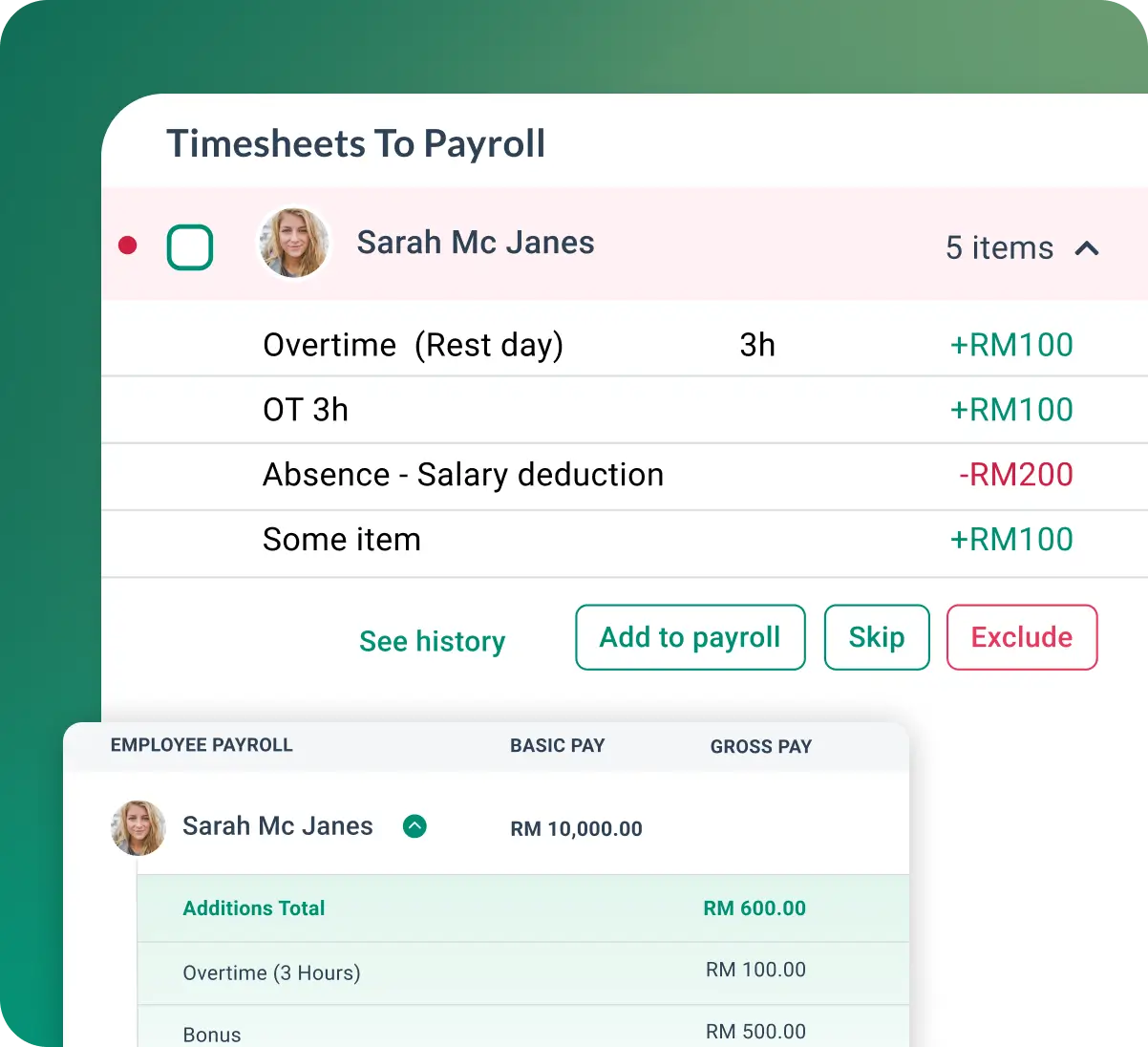
Unlike Workday, where Malaysia and Singapore compliance sits on top of a global framework rather than being native to it, brioHR's payroll module handles EPF, SOCSO, EIS, LHDN, CPF, SDL, IR8A, and IR21 as core functionality, with statutory updates rolling out automatically rather than requiring a support ticket.
brioHR Pricing
| Plan | Details |
|---|---|
| Modular pricing | Per-employee pricing based on modules and company size, starting at RM3 per employee per month |
| Custom quote | Tailored based on headcount, workflows, and rollout needs |
Where brioHR Shines
- One platform instead of five: Payroll, leave, claims, attendance, performance, and reporting connect in one system, cutting the duplicate data entry that comes with stitching tools together.
- Malaysia and Singapore compliance handled natively: EPF, SOCSO, EIS, LHDN, CPF, SDL, IR8A, and IR21 all work out of the box, with statutory updates applied automatically.
- Support that actually responds: Sub-three-minute average response times and a 96% positive feedback rate, which matters a lot more once payroll deadlines are involved.
Where brioHR Falls Short
- Not built for very small teams: A company with fewer than about 30 employees may not use enough of the platform's breadth to justify the switch from simpler point tools.
- Smaller learning and development suite than global HCM platforms: Certification tracking and skills matrices exist only partially, so companies that need a full course catalog and LMS will still want a dedicated L&D tool alongside it.
brioHR Customer Reviews

Who brioHR Is Best For
- Mid-market teams replacing Workday-level complexity with something right-sized: Companies with 30 to 3,000 employees that want enterprise-grade compliance without an enterprise-grade rollout.
- HR teams in Malaysia or Singapore consolidating tools: Organizations currently running payroll, leave, and performance across three or four disconnected systems.
- Growing SMEs that want room to scale: Teams that expect to double headcount over the next few years and want a platform that won't need replacing at that point.
See how brioHR compares for your headcount with a free demo, browse real client outcomes, or read how brioHR stacks up against other automated payroll software if payroll is your main pain point.
Darwinbox: Best for Large Enterprises Across Asia
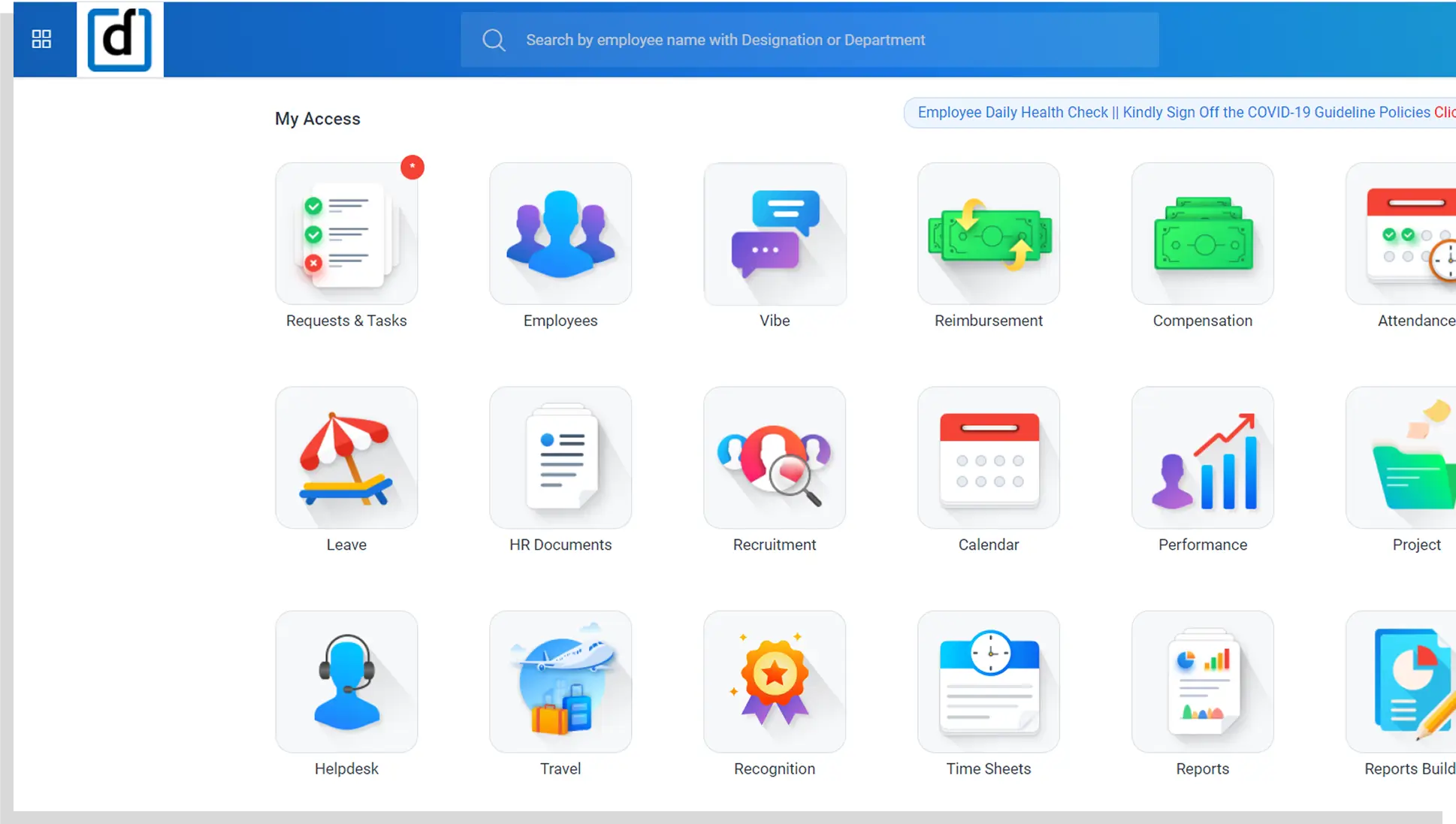
Darwinbox is an enterprise HR platform built for larger organizations, particularly across Asia. It's the closest genuine peer to Workday in scale and ambition, with one meaningful difference: native Malaysia and Singapore payroll built in from the start, rather than configured after the fact.
Key Features
- Native regional payroll: Full EPF, SOCSO, EIS, PCB, HRDF, CPF, SDL, and IR8A support, a real gap in Workday's regional coverage.
- Mature talent and L&D suite: OKRs, KPI tracking, succession planning, e-learning, and skills matrices are all built in, not add-ons.
- Enterprise-scale analytics: Predictive analytics, attrition analysis, and custom report builders designed for large headcounts.
Pricing
| Plan | Details |
|---|---|
| Enterprise | Custom quote, premium tier, typically out of reach for SMEs and smaller mid-market companies |
Where Darwinbox Shines
- Faster rollout than Workday for a comparable scale: Implementation typically runs three to six months, well under Workday's 8.2-month average.
- Regional payroll depth most global platforms skip: A genuine differentiator against Workday, SAP SuccessFactors, and other global HCM suites operating in Southeast Asia.
- Mature talent management: Succession planning and calibration tools that hold up against Workday's equivalent modules.
Where Darwinbox Falls Short
- Partial Malaysian compliance depth: EA Form, LHDN e-filing, and religious leave types are only partially supported, and HRDF/SBL-Khas tracking is missing entirely.
- Overbuilt for mid-sized teams: Designed for enterprise complexity that can feel heavy for organizations under about 500 employees.
- No payroll outsourcing service: Companies wanting managed payroll alongside the software need a separate provider.
Darwinbox Customer Reviews
Who Darwinbox Is Best For
Large enterprises and regional organizations across Asia that need Workday-level scale and talent management depth, and can absorb enterprise pricing plus a multi-month rollout. For teams weighing that trade-off, it's worth reading how to choose HR software in Singapore before committing to either platform.
HiBob: Best for Culture-First Global Teams
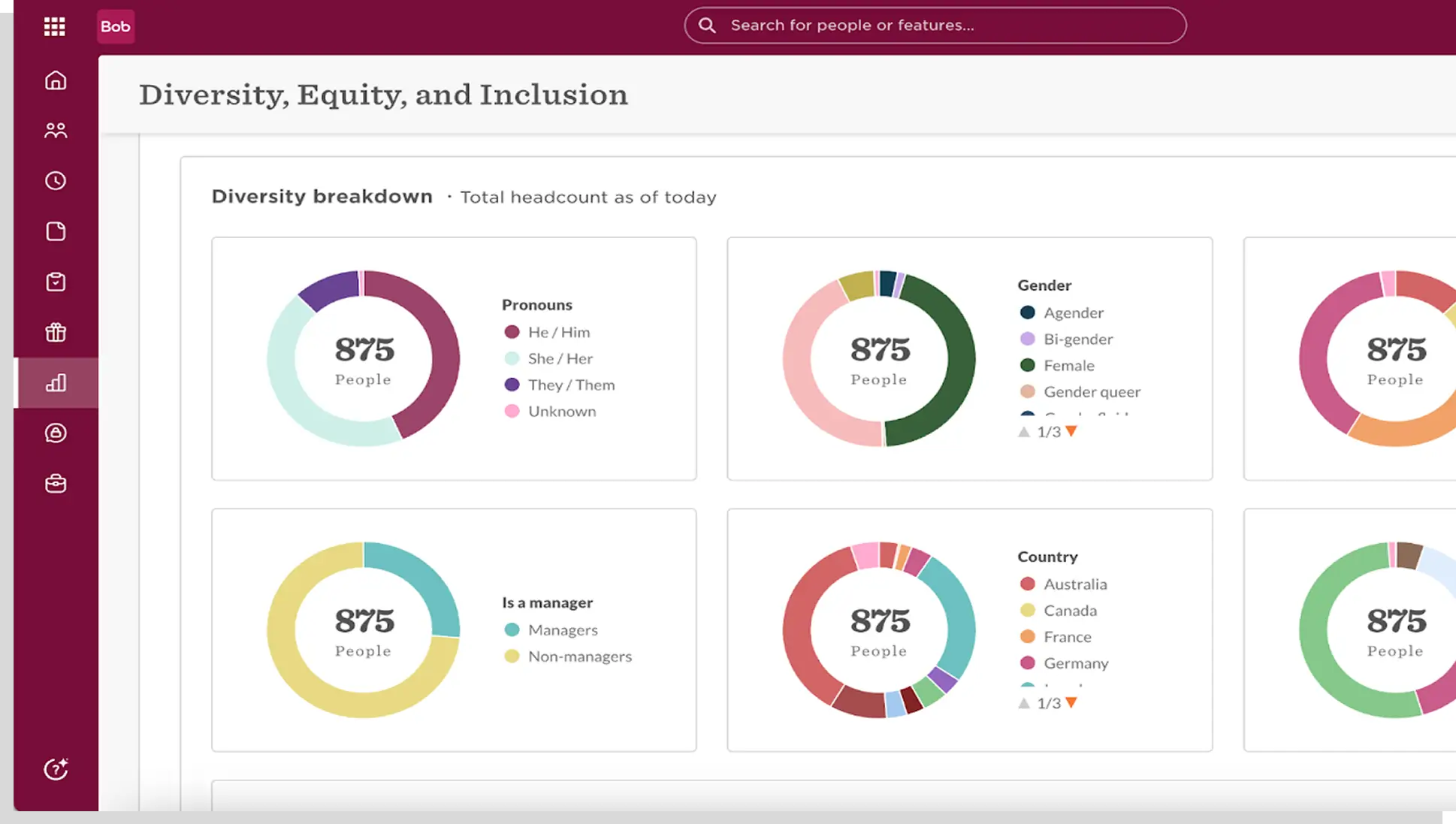
HiBob (Bob) targets modern, culture-driven companies typically running 100 to 5,000-plus employees. On paper, it carries the most complete performance and learning suite of any alternative in this comparison, closer to Workday's depth than most mid-market tools attempt.
Key Features
- Full performance and succession suite: Goal setting, 360-degree feedback, calibration, PIP workflows, and the only true native succession planning outside Darwinbox and Workday.
- Deepest L&D suite in this comparison: Full course catalog, certification tracking, and skills matrix.
- Culture and engagement tools: Recognition, internal messaging, and pulse surveys sit alongside the performance suite, an area worth comparing against why businesses run employee pulse surveys if engagement is a priority.
Pricing
| Plan | Details |
|---|---|
| Pricing model | Quote-based, no published rate |
| Typical range | Roughly $16–25 per employee per month, plus a 10–20% implementation fee |
Where HiBob Shines
- Most complete performance checklist outside Workday and Darwinbox: Native succession planning alongside calibration and PIP workflows.
- Strongest L&D suite in this comparison: Course catalog, certification tracking, and skills matrix, features most mid-market alternatives don't offer at all.
- High overall satisfaction: 4.6 out of 5 on Capterra from 179 verified reviews.
Where HiBob Falls Short
- No native Malaysia or Singapore payroll: Regional teams need a separate local payroll provider, undercutting one of the main reasons to leave Workday in the first place.
- Performance tools feel thinner in practice than the feature list suggests: Reviewers report the actual experience needs work, particularly around competency frameworks.
- Pricing isn't transparent: Quote-based with an added implementation fee makes it harder to budget upfront than platforms with published rates.
HiBob Customer Reviews
Who HiBob Is Best For
Global and multi-national companies from 100 to 5,000-plus employees that don't need Malaysia or Singapore statutory payroll, and want engagement and L&D depth weighted as heavily as core performance tracking.
Employment Hero: Best for Broad HR and Payroll Coverage
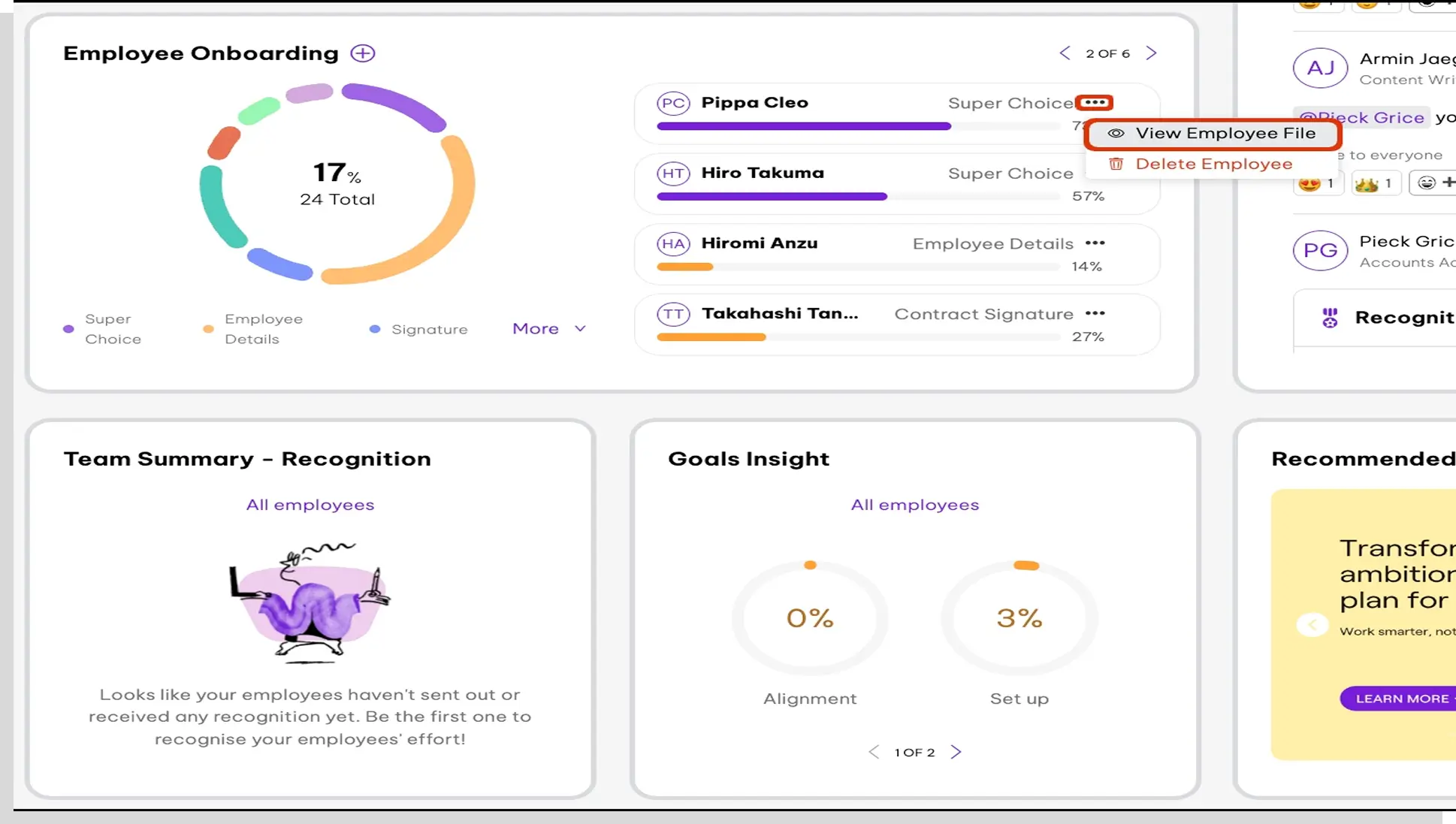
Employment Hero is built around a wide HR and payroll ecosystem, better suited to companies wanting payroll as part of a broader HR stack than a tightly integrated payroll-first system. It's strongest in Australia and the UK, so Southeast Asian teams should weigh localization depth carefully against Workday's global reach.
Key Features
- Wide platform coverage: Recruitment, onboarding, performance, payroll, and reporting all live in the same ecosystem.
- 360-degree feedback inside the performance module: Not a standalone product, but genuinely present.
- Employee self-service portal: Reduces routine admin for both employees and HR, a benefit worth checking against the broader reasons companies use HR software.
Pricing
| Plan | Details |
|---|---|
| HR Premium | From USD $10 per employee per month, subject to a USD $100 minimum monthly contract |
| Malaysia guidance | Around RM8–12 per employee per month, RM160–240 monthly minimum |
Where Employment Hero Shines
- Wide feature breadth for the price: Recruitment through payroll in one ecosystem, more horizontal coverage than most alternatives at this price point.
- Modern employee self-service experience: A genuine improvement over the manual processes it replaces.
Where Employment Hero Falls Short
- Payroll and HR aren't fully unified: Payroll was acquired separately, and it shows in a separate login and occasional friction between modules.
- Weaker Malaysia and Singapore localization than regional-native tools: Support depth and compliance coverage can be inconsistent, and implementation typically takes around six months.
Employment Hero Customer Reviews
Who Employment Hero Is Best For
HR-first organizations that want a broad platform with payroll included as part of the ecosystem, particularly teams with a footprint in Australia or the UK where Employment Hero's support is strongest.
Swingvy: Best for SMEs Modernizing HR for the First Time

Swingvy pairs HR admin and payroll in a clean, mobile-first package, usually chosen by SMEs moving off spreadsheets without wanting to step straight into anything close to Workday's complexity.
Key Features
- Modern mobile experience: iOS and Android apps for leave, claims, and clock-in, which drives adoption across the whole company rather than just HR.
- Core HR and payroll: Full Malaysian statutory support (EPF, SOCSO, EIS, PCB, HRDF, LHDN) alongside leave, claims, and employee records.
- Shift-based attendance: Mobile GPS clock-in, geo-fencing, and shift scheduling suited to distributed teams, an area also covered in how HRMS tools transform productivity measurement.
Pricing
| Plan | Details |
|---|---|
| Modular pricing | From RM10 per employee per month |
Where Swingvy Shines
- Cleaner UX than most legacy local tools: Independent comparisons rate the interface at 4.0 out of 5.
- Good fit for distributed and shift-based teams: Mobile clock-in and geo-fencing work well outside a single office location.
Where Swingvy Falls Short
- Light performance management: No OKRs, KPI tracking, 360 feedback, or succession planning, features that matter if you're comparing against Workday's talent suite.
- No recruitment or ATS: Job posting, resume parsing, and interview scheduling all require separate tools.
- Thin learning and development: No training records, course catalog, or certification tracking.
Swingvy Customer Reviews
Who Swingvy Is Best For
SMEs starting HR automation for the first time, and people-first teams that care more about day-to-day usability than talent management depth.
PayrollPanda: Best for Payroll-First Micro-SMEs
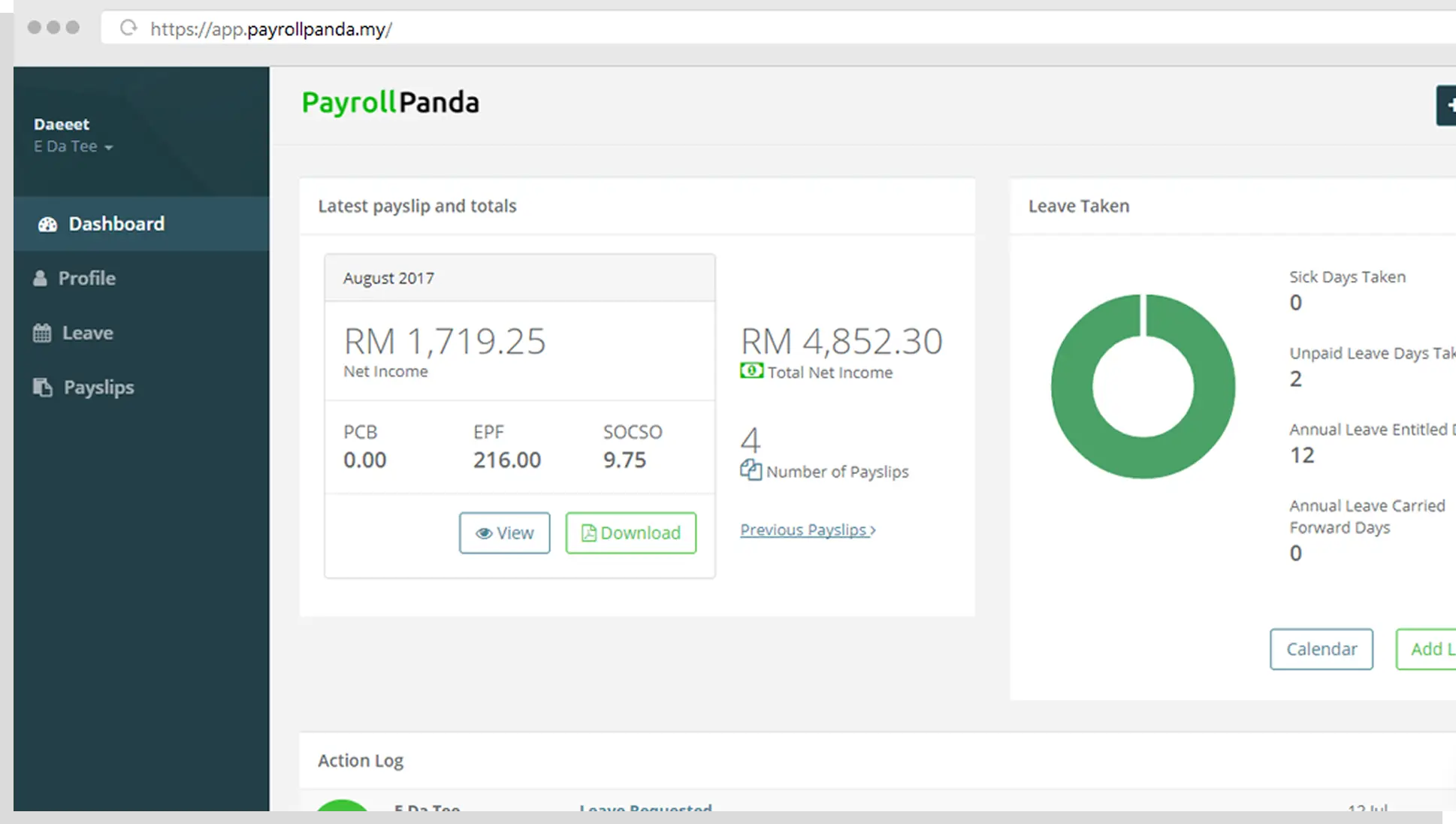
PayrollPanda is a payroll-first platform built for Malaysian SMEs, known for simple processing and a free plan that genuinely covers unlimited payroll runs. It pairs with Jibble for time and attendance rather than building that in natively.
Key Features
- Payroll automation: Salary calculations, payslips, and statutory deductions handled automatically.
- Statutory compliance: EPF, SOCSO, PCB support, plus EA Form and Form E.
- Basic HR coverage: Employee records and leave, kept intentionally simple.
Pricing
| Plan | Details |
|---|---|
| Payroll pricing | Custom quote based on company size and package; a free plan covers unlimited payroll runs, statutory calculations, payslips, and EA/Form E support |
Where PayrollPanda Shines
- A free plan that actually delivers: Unlimited payroll runs and statutory support at no cost, rare for the Malaysian market and a stark contrast to Workday's six-figure entry point.
- Responsive support: Users frequently call out fast, helpful responses.
Where PayrollPanda Falls Short
- Narrow product scope: Beyond payroll, leave, and basic time tracking, separate tools are needed for claims, performance, onboarding, and recruitment.
- Payroll built for Malaysia only: No multi-currency, regional, or outsourced payroll option for cross-border teams.
- No custom report builder or people analytics: Reporting stays basic even on paid tiers.
PayrollPanda Customer Reviews
Who PayrollPanda Is Best For
Small businesses around 5 to 20 employees, and payroll-first teams that mainly want payroll and compliance without broader HR workflows attached.
HReasily: Best for Automated Payroll and Claims Across MY and SG
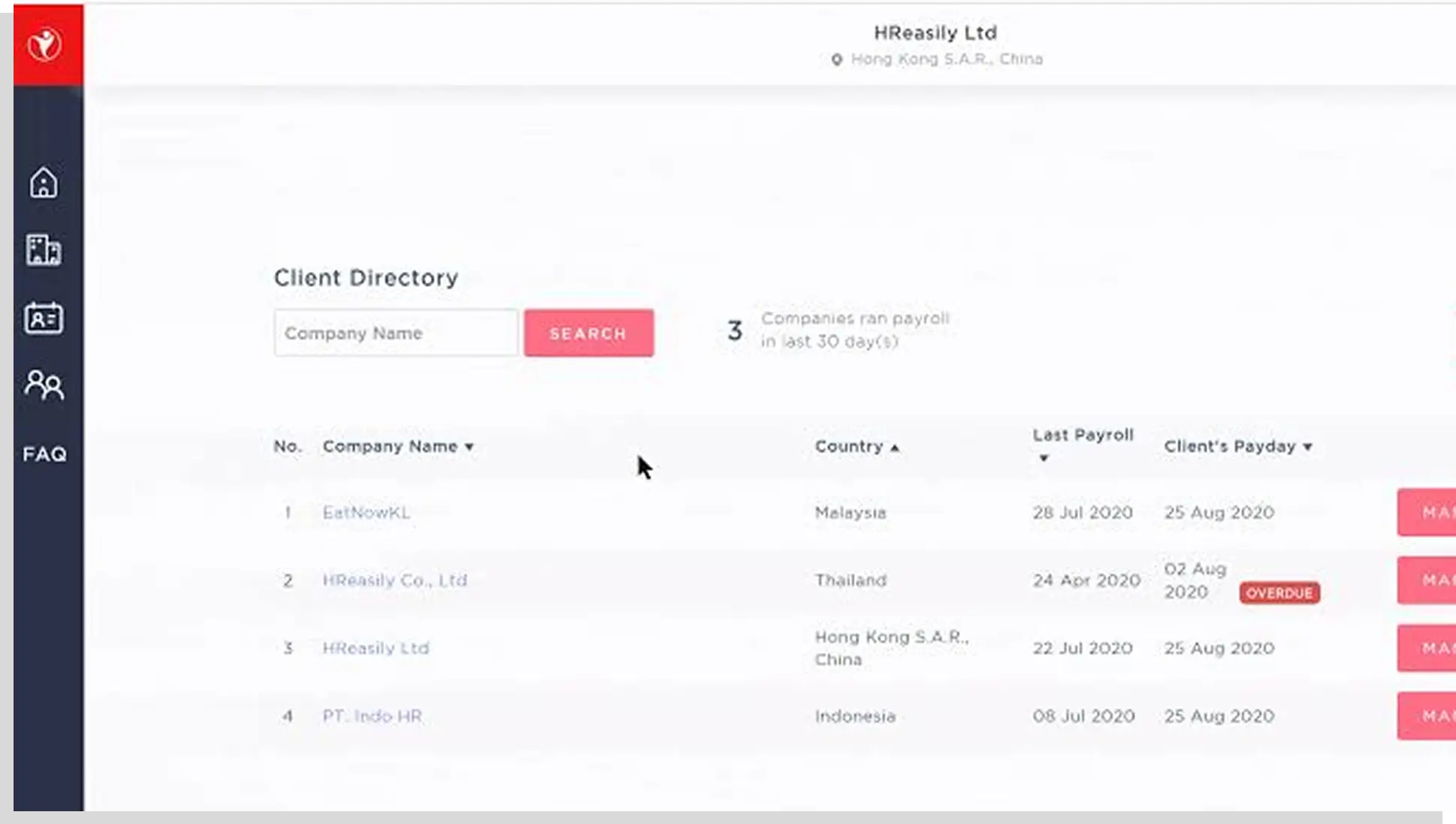
HReasily is a cloud-based HR and payroll platform serving SMEs across Malaysia and Singapore, covering automated payroll, claims, and time and attendance through a mobile-first interface.
Key Features
- Automated payroll: Full MY and SG statutory compliance (EPF, SOCSO, CPF, SDL) with audit-ready payroll runs.
- Expense claims processing: Mobile receipt upload, claim categories, multi-level approval, reimbursement via payroll.
- Leave and attendance: Mobile leave applications and GPS attendance tracking with shift scheduling.
Pricing
| Plan | Details |
|---|---|
| Pricing | From RM4 per employee per month |
Where HReasily Shines
- Dual Malaysia and Singapore compliance: Useful for cross-border SME teams that don't want two separate payroll providers.
- Mobile accessibility: Employees and managers handle expenses, leave, and payroll from any device.
Where HReasily Falls Short
- Limited advanced HR modules: No recruitment, performance management, or learning and development.
- Basic expense analytics: Limited reporting depth for teams needing detailed spend visibility.
HReasily Customer Reviews
Who HReasily Is Best For
SMEs in Malaysia or Singapore that want payroll and expense automation across both markets, and mobile-first teams that prioritize on-the-go access over deep feature breadth.
Kakitangan: Best for Small, Cost-Focused Malaysian Businesses

Kakitangan is a Malaysia-focused payroll and HR platform for small businesses that want affordability and simplicity over feature breadth, with optional HR advisory support alongside the software.
Key Features
- Payroll processing: Salary calculations, payslips, and full statutory submissions (EPF, SOCSO, EIS, PCB, LHDN e-filing).
- Expense claims: Receipt photo upload, multi-level approval, mileage tracking.
- HR advisory support: Access to HR guidance built into the plan.
Pricing
| Plan | Details |
|---|---|
| Payroll pricing | Based on number of staff and module selected |
Where Kakitangan Shines
- Genuinely affordable for SMEs: One of the lower-cost options for Malaysian small businesses.
- Full Malaysian statutory coverage: EPF, SOCSO, EIS, PCB, HRDF, EA Form, and LHDN e-filing all natively supported.
- Fast rollout: Implementation typically takes about a month, a fraction of Workday's timeline.
Where Kakitangan Falls Short
- Not a full HR system: No performance management, recruitment, onboarding, or learning modules.
- Limited scalability: No multi-entity support, SSO, or API access, a real constraint past roughly 100 employees.
Kakitangan Customer Reviews

Who Kakitangan Is Best For
Small businesses with simple payroll and HR needs, and cost-conscious companies that would rather pay for exactly what they use than for feature breadth they'll never touch. It's worth reading what functions your HRIS should actually have before deciding how much you genuinely need.
altHR: Best for Malaysian SMEs Wanting Leave and Performance Together
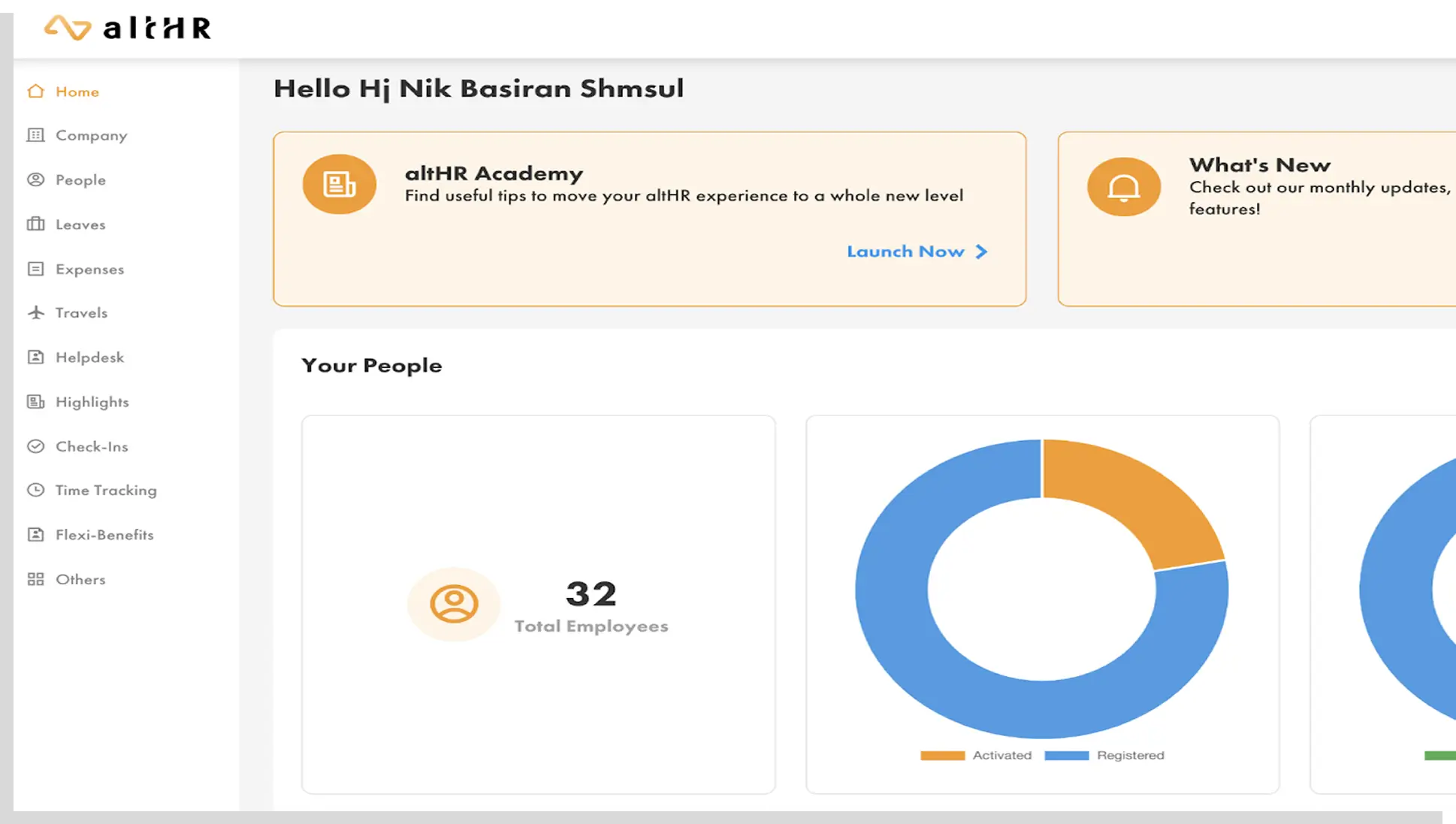
altHR combines leave management with a genuine performance suite, OKRs, 360-degree feedback, and KPI tracking, alongside core leave, claims, and payroll. It's a solid option for companies that want to track performance, not just absence, without Workday-level cost.
Key Features
- Leave and attendance: Full leave application, multi-level approval, accrual rules, custom leave types, and Malaysian public holiday sync.
- Performance management: OKRs, KPI tracking, 360-degree feedback, peer review, self-assessment, and performance dashboards.
- Onboarding: Digital onboarding flow, checklists, task assignment, and pre-boarding.
Pricing
| Plan | Details |
|---|---|
| Pricing | From RM8 per employee per month, custom quote based on company size and modules |
Where altHR Shines
- Strong performance suite for the price tier: OKRs and 360-degree feedback are genuinely built out, not token additions.
- Good onboarding coverage: Pre-boarding and task assignment make new-hire workflows cleaner than most local tools.
- Malaysian-first compliance: Full EPF, SOCSO, EIS, PCB, and HRDF support with religious leave types.
Where altHR Falls Short
- No pulse surveys or eNPS: No built-in engagement survey tools, a real gap if continuous sentiment tracking matters to you.
- No Singapore payroll support: Built for Malaysia only, so companies with Singapore headcount need an additional tool.
- No recruitment or applicant tracking: Candidate sourcing and tracking require separate systems.
altHR Customer Reviews
Who altHR Is Best For
Malaysian SMEs that want leave and performance management combined in one local platform, and performance-driven HR teams moving beyond admin toward active talent development. Compare it against other leave management software if leave tracking is your starting point.
Reasons to Find a Competitor to Workday
Workday earned its enterprise reputation, but that reputation comes with trade-offs that matter a lot more once you're the one signing the contract.
The Implementation Timeline Doesn't Match Your Runway
Enterprise Workday deployments run with average timelines of 8.2 months, and complex, multi-entity rollouts can stretch well past a year. For a mid-market team that needs payroll running correctly next quarter, not next year, that timeline alone rules Workday out. Platforms sized for mid-market complexity, like brioHR, typically implement in about two months.
The Cost Structure Assumes Enterprise Budgets
Between costs ranging from $300K to $800K, plus annual fees of $40 to $160 per employee per month, Workday's pricing model is built around companies that can absorb that spend without blinking. Modular, per-employee pricing from platforms like brioHR (starting at RM3 per employee per month) makes the same category of software accessible to teams an order of magnitude smaller.
Regional Compliance Is Configured, Not Native
Workday's Malaysia and Singapore statutory support exists, but it's layered onto a global framework rather than built around EPF, SOCSO, EIS, LHDN, CPF, SDL, IR8A, and IR21 from the ground up. That gap is exactly where regionally native platforms, including brioHR, tend to close deals against Workday for Southeast Asian buyers.
Compare regional-native alternatives against expense management systems, employee engagement software, and HR software in Singapore if you're evaluating multiple categories at once.
Streamline leave approvals and absence tracking
Stop managing leave in spreadsheets. Automate approvals, track balances, and ensure policy compliance.
How We Selected These Workday Competitors and Alternatives
We evaluated platforms against three criteria that matter most for teams actually comparing Workday to something else.
Genuine Feature Overlap With Workday's Core Modules
Every tool on this list needed to cover at least some combination of Workday's core areas: HR admin, payroll, performance management, and reporting, rather than being a single-purpose point solution. That's why platforms like Darwinbox and HiBob, which carry genuine talent management depth, sit alongside more focused regional tools like Kakitangan and PayrollPanda that compete on cost and simplicity instead. For a deeper look at how these platforms stack up on reporting specifically, see our reporting software comparison.
Real, Published Pricing or a Clear Quote Path
We included pricing for every platform on this list, using published rates where available and clearly marking custom-quote models where they aren't. Workday's own pricing opacity is one of the top complaints buyers raise, so we didn't want to replicate that here.
Verified Reviews and Honest Trade-Offs
Every platform's shines and falls-short sections reflect genuine trade-offs, not marketing copy. Where a platform has a real gap (no Singapore payroll, no recruitment module, thinner reporting), we said so directly rather than softening it.
Final Word on brioHR
If you're comparing Workday alternatives because the price or timeline doesn't fit your company, and you're operating in Malaysia or Singapore, brioHR is worth a serious look. It covers the same core ground (payroll, performance, reporting, compliance) in one connected system, sized for a two-month rollout instead of eight.
That said, it's not the right fit for every reader here. If you're running a 10,000-person global enterprise with complex multi-country finance needs, Darwinbox or Workday itself may still be the more complete answer. If you're a five-person team that just needs clean payroll, PayrollPanda's free tier will get you further for less.
Request a demo to see brioHR against your actual headcount and workflows, or browse brioHR's full service offering if you're still comparing implementation support across platforms.
Everything HR.
One login
From payroll to onboarding, brioHR gives you everything you need in one place. Built for busy teams. Backed by people who care.