The Strategic Role of an All-in-One HRMS in Onboarding
Laying the Foundation: Why Onboarding Matters
Onboarding is not just about introducing a new hire to their workspace; it’s the crucial first step in integrating them into your company’s culture and ensuring their long-term success. In our previous article Setting the Stage for Success: Why Proper Onboarding Matters, we highlighted the difference between onboarding and orientation—while orientation might cover the basics like office tours and policy reviews, onboarding is a comprehensive, strategic process that spans several months. It’s about setting the tone for your employee’s entire journey with the company.
Planning Ahead: Engagement Before the First Day
The onboarding process should start well before a new hire’s first day. When you begin engaging with new employees as soon as they accept the job offer, you lay the groundwork for a smooth transition. By using an integrated HRMS, like BrioHR, you can provide new hires access to an onboarding portal where they can complete paperwork, learn about the company culture, and even connect with their future colleagues. This early engagement significantly reduces the likelihood of no-shows on the first day, making them feel like part of the team from the very beginning.
Centralising Information: Streamlining the Administrative Load
First days can often be overwhelming and unproductive, filled with endless forms and administrative tasks. For many new hires, this can be a dull and alienating experience. However, with an HRMS, you can streamline these processes by centralising all necessary information. New employees can log into their onboarding portal before their start date to complete forms, review policies, and familiarise themselves with the company. This ensures that when they arrive, they can hit the ground running, focusing on building relationships and understanding their role.
Moreover, integrating payroll into the HRMS adds an additional layer of efficiency. Employees can enter their banking details, tax information, and other payroll-related data directly into the system. This reduces the chance of errors and ensures that everything is set up for timely payment, further easing the transition for both the employee and HR.
Ensuring No Step Is Missed: A Guided, Collaborative Process
A well-structured onboarding process leaves no room for oversight, and it’s not just HR that plays a role in this. An HRMS acts as a central hub, guiding HR, the new hire, and other departments through each step of the process. From sending out welcome emails to scheduling necessary training sessions, and coordinating with IT for setting up workstations or with finance for payroll setup, everything is tracked and managed within the system. This collaborative approach ensures that every department is aligned, no critical step is overlooked, and the new employee has a seamless and well-supported experience from day one.
Continuous Support: Beyond the First Week
Onboarding doesn’t stop after the initial introduction. For true integration, it’s essential to provide ongoing support. This is where an HRMS, with its long-term planning features, really shines. You can schedule training sessions tailored to the employee’s role, set up regular check-ins, and automate the probation review process, ensuring that new hires receive continuous support as they adapt to their new environment.
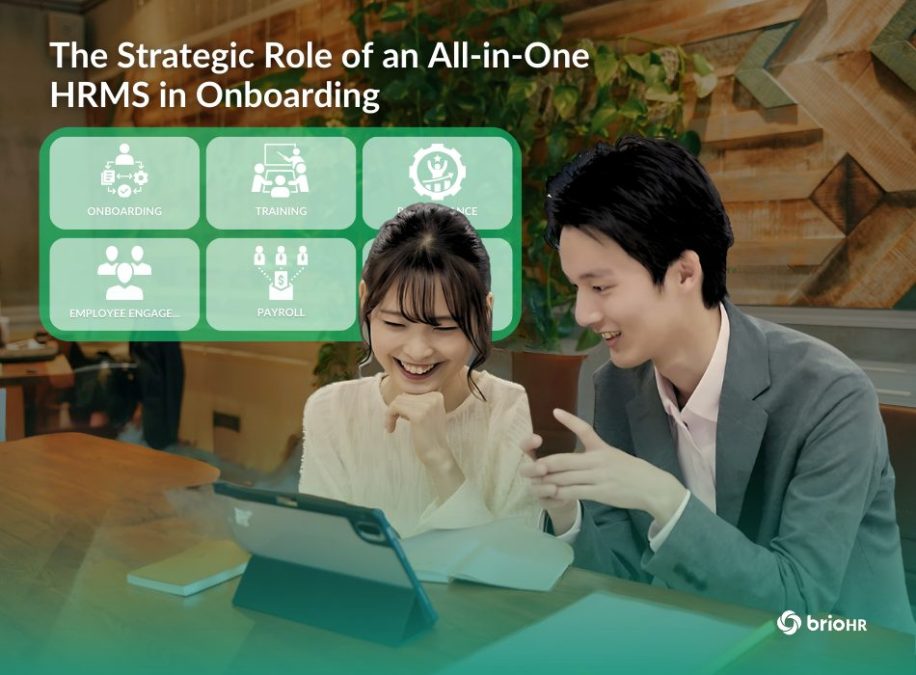
BrioHR’s Training Management module, for example, allows you to plan and track the progress of training programs, ensuring that new employees develop the skills they need to succeed. This not only helps in their immediate integration but also in their long-term development within the company.
Seamless communication is just as important. An HRMS facilitates ongoing dialogue between HR, managers, and the new hire. Whether it’s providing feedback, answering questions, or coordinating tasks across departments, the platform ensures that everyone stays connected.
Performance management can also be seamlessly integrated into the onboarding journey through BrioHR’s Performance Management module, ensuring that new hires stay on track from day one.
Having such a system in place means new hires have the support they need to ask questions, find the right information, and stay aligned with their goals from the start. In short, an integrated HRMS such as BrioHR, helps prevent new hires from feeling frustrated and lost, and always know where to turn for support.
The Employee’s Perspective: Making the First Day Count
From an employee’s viewpoint, the first day is often filled with uncertainty. The typical scenario involves sitting in a room, filling out forms, and trying to absorb a flood of information, which can be both boring and isolating. By utilising an HRMS, you can transform this experience. With most administrative tasks already completed beforehand, the first day can focus on meaningful introductions, team-building activities, and role-specific training. This approach helps the new hire feel more connected and less like a stranger, setting the stage for a productive and engaging start.
The Big Picture: An Integrated HRMS as a Strategic Asset
An integrated HRMS is more than just a tool—it’s a strategic asset that enhances every aspect of the onboarding process. By engaging employees early, automating routine tasks, ensuring no steps are missed, and providing continuous support, an HRMS like BrioHR allows companies to focus on what truly matters: helping new employees succeed and grow within the organisation.
Investing in a robust onboarding process not only improves employee retention and satisfaction but also boosts overall productivity. Watch out for our next article in the onboarding series, where we will continue to explore how to create the best onboarding experience for your employees.
In the meantime, if you’d like to see how BrioHR’s Employee Onboarding module can work for your organisation, feel free to request a demo.
Related article: Setting the Stage for Success: Why Proper Onboarding Matters