What HR Gets Wrong About Employee Engagement – Wan Ezrin Sazli Wan Zahari

Key Takeaways
- Engagement is not an activity. Retreats and town halls can help, but they are not a substitute for people actually caring about the work.
- The company-as-family metaphor creates expectations the organization was never built to meet. Honest relationships hold care and accountability at the same time.
- Culture is built through observation, not messaging. Leaders who model the behavior get more than leaders who preach it.
There is a line Wan Ezrin Sazli Wan Zahari uses early in the conversation that sets the tone for everything that follows.
"Now many people think engagement is balloons, running around, doing retreats. To me, that is not engagement."

Ezrin is a former CHRO at Digital Nasional Berhad, Chief People Officer at TIME Dotcom and AirAsia, MBTI practitioner, and the author of 50 books. He left corporate life on 31 December 2023. He consults selectively. He writes full-time. And he does not soften things for the sake of making an audience comfortable.
The Gap Between Activity and Engagement
A retreat does not tell you whether people care about the mission. A pulse survey does not tell you whether employees trust their manager enough to be honest. A town hall does not close the distance between a revenue target on a slide and the life of the person looking at it.
"What's important to the employee? They don't care revenue targets. What they care about is their family."
This is where the communication breaks down. Organizations speak in the language of dashboards. Employees experience work in the language of life. The bridge between the two is not a campaign. It is a leader who understands that a five-month bonus means something different to a 28-year-old saving for his first home than it does to someone funding a child's university fees.
The Company Is Not Your Family
One of the sharper moments in the conversation is Ezrin's take on a phrase HR has been overusing for years. He is not against companies caring for their people. He is against the confusion that follows when the metaphor gets taken literally.
"They are not your family. They don't love you like your family. They don't hate you. You are being paid a job. Of course, it's not called transaction, but it is a transaction. You're expected to deliver."
When organizations use family language but make business decisions, people feel betrayed by something they were never actually promised. The gap between the metaphor and the reality is where resentment accumulates. The more honest version of the relationship holds care and expectation at the same time, without pretending they are the same thing.
Human motivation, you can't force, unfortunately. If the people don't care about it, then they won't do it
Motivation Cannot Be Forced, But It Can Be Designed Around
The most difficult part of Ezrin's argument is also the most clarifying.
"Human motivation, you can't force, unfortunately. If the people don't care about it, then they won't do it."
No initiative that guarantees people will suddenly care. But Ezrin's point is not that motivation is beyond reach. It is that the work of building it looks less like programming and more like fit. People perform better when there is a real connection between what they are good at, what they care about, and the problem the organization is trying to solve. HR can design better onboarding, clearer performance systems, more honest internal communication. Leaders can model the behavior they expect and stop waiting for engagement to appear before they model it.
Discipline May Matter More Than Talent
A thread that runs through the entire conversation is discipline, and Ezrin makes no apologies for how much weight he gives it. He has written 50 books. He structures his day from 5am to 10pm in half-hour blocks. He times his lunch at eleven minutes. And he is quick to point out that none of this comes naturally to him. His MBTI profile is INFP — artist, flexible, instinctively resistant to structure. He built discipline precisely because he knew his nature would work against him if he did not. For organizations, the lesson translates. High performance is not built by a small group of highly motivated people carrying everyone else.
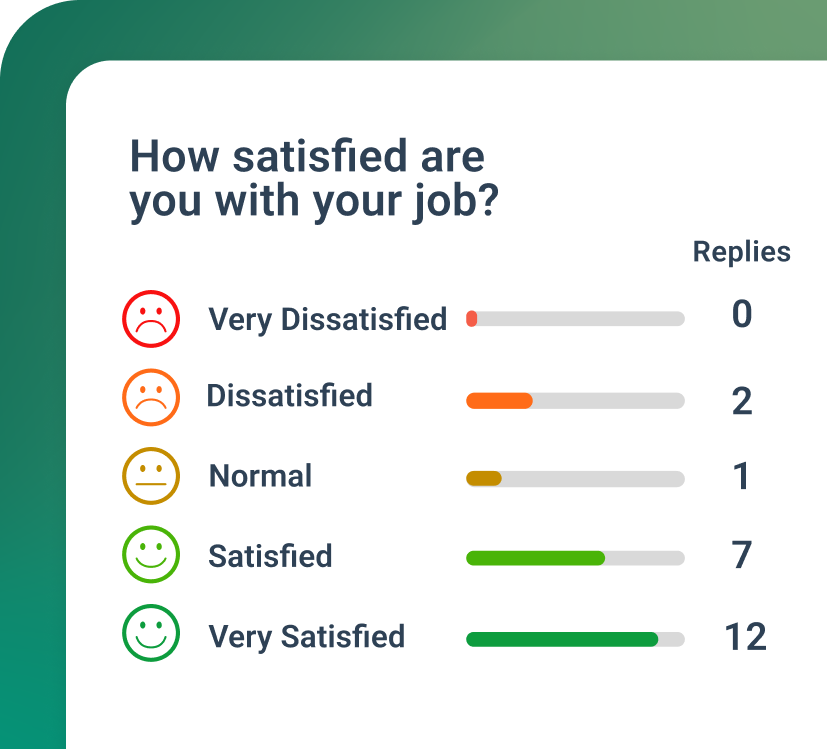
Experience simple pulse surveys
With automated pulses, real-time insights, and anonymous feedback, brioHR helps you understand employees and boost engagement faster.
Fear Kills Ownership
In bureaucratic organizations, Ezrin has seen the same pattern repeat: people pass decisions around until nobody can tell who approved what. The signature gets blurred. The ownership disappears.
Transformation needs ownership. Ownership needs trust. And trust needs room for imperfect attempts, especially in organizations trying to move fast on AI, new systems, or structural change. If every failure becomes a story used against someone, people stop experimenting. If every decision is punished, people stop deciding.
AI Can Make You Sound Smart Before You Understand Anything
Ezrin uses AI. He is also clear about where it becomes a problem. The danger is not that AI is useless. It is that people can use it to project confidence without understanding. He references the Dunning-Kruger effect directly: the peak of Mount Stupid, where someone knows very little but feels like they know everything, because the output looks polished. His position is not anti-AI. It is pro-fundamentals. Read. Think. Communicate. Validate. Use AI as a copilot, not as a replacement for the judgment that should be doing the flying.
Conclusion
- Wan Ezrin Sazli Wan Zahari spent over 20 years leading HR across AirAsia, TIME Dotcom, and Digital Nasional Berhad before leaving corporate life on 31 December 2023. In this episode, he challenges the way most organizations think about employee engagement, motivation, discipline, and leadership, without wrapping any of it in safe corporate language.
Everything HR.
One login
Cut the extra layers in your HR process. Keep what works, remove what doesn’t, and make everyday work easier for your team.
Want the full conversation on how HR can move from opinion to proof, from support to strategy, and from cost centre to value driver. Watch the full episode of withbrio.
To learn more about how brioHR can transform your HR processes, check out brioHR’s website or request a demo.