7 Best Employee Performance Review Software for Business Owners
Key Takeaways
- brioHR is the best all-in-one pick for growing small and medium-sized enterprises (SMEs) in Malaysia and Singapore. Goals, 360-degree feedback, and calibration sit in the same system as payroll.
- altHR suits Malaysian teams that want appraisal cycles bundled with leave. It also has a free plan to start on.
- HiBob fits engagement-first, mid-market companies that want peer recognition and continuous feedback, as long as payroll runs elsewhere.
- Workday and Darwinbox only pay off at thousands of employees, with the budget and rollout time to match.
Review season is late again.
Managers are chasing forms, and nobody remembers what happened back in March.
The right employee performance review software fixes that. It connects goals, feedback, and calibration to the rest of your HR data instead of stranding it in a spreadsheet.
brioHR does this best for growing teams in Malaysia and Singapore. But it isn't the only option worth your time.
Here's why the tool matters: weekly feedback and recognition from a manager lifts engagement to 61%, according to this research.
Below, we compare seven tools on features, pricing, and fit.
7 Best Employee Performance Review Software in 2026
Here's the short version before we dig in.
| Tool | Best For | Standout Feature | Price From |
|---|---|---|---|
| brioHR | All-in-one performance management (Malaysia/Singapore) | Goals, 360 feedback, and calibration connected to payroll | RM3 per employee/month |
| Swingvy | SMEs starting HR automation | Mobile-first HR admin with basic review cycles | RM10 per employee/month |
| altHR | Malaysian SMEs wanting leave and appraisals together | Appraisal cycles on a free core plan | Free plan; add-ons from RM1 per module/employee |
| HR2000 | Legacy, payroll-first Malaysian teams | Proven payroll with a basic appraisal module | RM100/month for up to 20 employees |
| HiBob | Engagement-first performance culture | Peer recognition and continuous check-ins | $5 per employee/month |
| Darwinbox | Southeast Asian enterprises needing local payroll and performance | Succession planning at regional scale | Custom enterprise pricing |
| Workday HCM | Global enterprises (10,000+ employees) | End-to-end platform with succession and calibration | Custom enterprise pricing |
Notice the split. Two tools are built for enterprises, two are built for basic admin, and only a handful genuinely run performance for a growing team. If that's you, brioHR is the one on this list built for your compliance rules and your company size.
Run goals, reviews, and 360 feedback in one system. Book a free brioHR demo →
brioHR: Best for All-in-One Performance Management

brioHR is an all-in-one human resource management system (HRMS) built for SMEs in Malaysia and Singapore. More than 1,000 organizations across 50 countries run on it. Performance lives in the same system as payroll, leave, and attendance, so review data is never stranded.
brioHR Key Features
Three things set brioHR apart for reviews specifically: goals that stay live all year, feedback from every direction, and a calibration step that keeps ratings honest across departments.
Goals and Competencies, Set Once and Tracked All Year
Most tools treat goal setting as a once-a-year form. brioHR treats it as a running conversation. Managers and employees build Objectives and Key Results (OKRs) together, top down and bottom up. Targets can be hard numbers or judgment calls.
Alongside goals, you set competencies: the skills and behaviors you expect, defined at company, team, or role level. Because a review that only measures output misses how someone got there.
Employees post progress as they go. Blockers and wins get logged when they happen, not reconstructed from memory in December. That progress feeds the performance management dashboard automatically. Managers stop chasing status updates. Regular one-on-ones are built in too, so coaching happens all year instead of as a single post-mortem.
360-Degree Feedback and Calibration That Doesn't Play Favorites
Your people work with peers and other leaders as much as their own manager. So a manager-only review misses most of the picture.
brioHR's 360-degree feedback pulls input from peers, leaders, and direct reports. It folds that into a self-appraisal and a manager appraisal, each on a five-point scale. Self-assessment comes first. Employees reflect on their own results before anyone else weighs in.
Then comes the part most tools skip: calibration. Leadership and HR compare ratings across departments in one view. brioHR summarizes goals, competencies, and feedback together, so leaders can spot outliers and bias before promotions or pay get locked in. Without that step, you just have a spreadsheet of scores that aren't comparable.
One Employee Record for Performance, Payroll, and Everything Else
Standalone review tools force you to export data and match it to payroll by hand. brioHR skips that step. Ratings, feedback history, and review notes sit in the same digital employee file as payroll, attendance, leave, and claims. So when a merit review lands, the numbers are already in one place.
The same applies to reporting. brioHR's HR reporting tools turn cycles into dashboards for completion rates, calibration spread, and performance trends. Custom report builders let you slice by department, grade, or tenure. Scheduled emails push those reports out without a manual export.
That sits next to the same headcount, attrition, and expense data HR already tracks.
For a closer look, see how brioHR handles people analytics.
brioHR Pricing
brioHR uses modular, per-employee pricing. You pay for the modules you turn on, sized to your headcount. That means a team running only performance and reporting pays less than one running the full payroll-to-performance suite. A free trial is available, and Capterra lists a base entry point of around $1.50 per module per month.
| Plan | Details |
|---|---|
| Modular pricing | Per-employee, based on modules and company size, starting at RM3 per employee per month |
| Custom quote | Tailored to headcount, workflows, and rollout needs |
| Free trial | Available — request a demo for an exact number |
Where brioHR Shines
- One connected system: Payroll, leave, claims, attendance, performance, and reporting share one platform. Feedback results and calibration scores land next to the data you already track, with no double entry.
- Local compliance built in: EPF, SOCSO, EIS, LHDN, CPF, SDL, IR8A, and IR21 all run natively. Statutory updates roll out on their own.
- Fast to implement, and support that answers: Rollout averages around two months. brioHR reports sub-three-minute response times and a 96% positive feedback rate, which matters when review season has a deadline.
Where brioHR Falls Short
- Built for the long haul, not one cycle: brioHR is a proper HR system, not a quick standalone survey tool. If you only need to run a single 360 round this quarter, it's more than you need.
- Sized for real HR complexity: Teams under 30 people usually won't use enough of the platform to justify the setup.
brioHR Customer Reviews
brioHR holds 4.7 stars from 31 verified reviews on G2 and 4.9 from 57 reviews on Capterra. Reviewers consistently flag easy implementation, strong analytics, and responsive support. Capterra's data shows small businesses make up 88% of brioHR's reviewer base.


Who brioHR Is Best For
- Growing SMEs (50 to 500 employees): Teams replacing spreadsheets or three disconnected tools with one system.
- Mid-sized companies in Malaysia and Singapore: Businesses that need local statutory compliance and real performance tools in the same place, without an enterprise contract.
- HR teams going strategic: Anyone who wants admin automated so they can spend time on performance, engagement, and retention instead of chasing forms.
See how goals, feedback, and calibration connect inside brioHR. Book a demo → | Read customer stories →
Turn performance reviews into meaningful development
Move beyond annual reviews. Continuous feedback, goal tracking, and development planning in one system.

"Performance management in most companies, again, more than 99% of companies, is backward-looking… it's all about reconstructing the past. The right way to look at performance management being forward-looking."
Swingvy: Best for SMEs Starting HR Automation
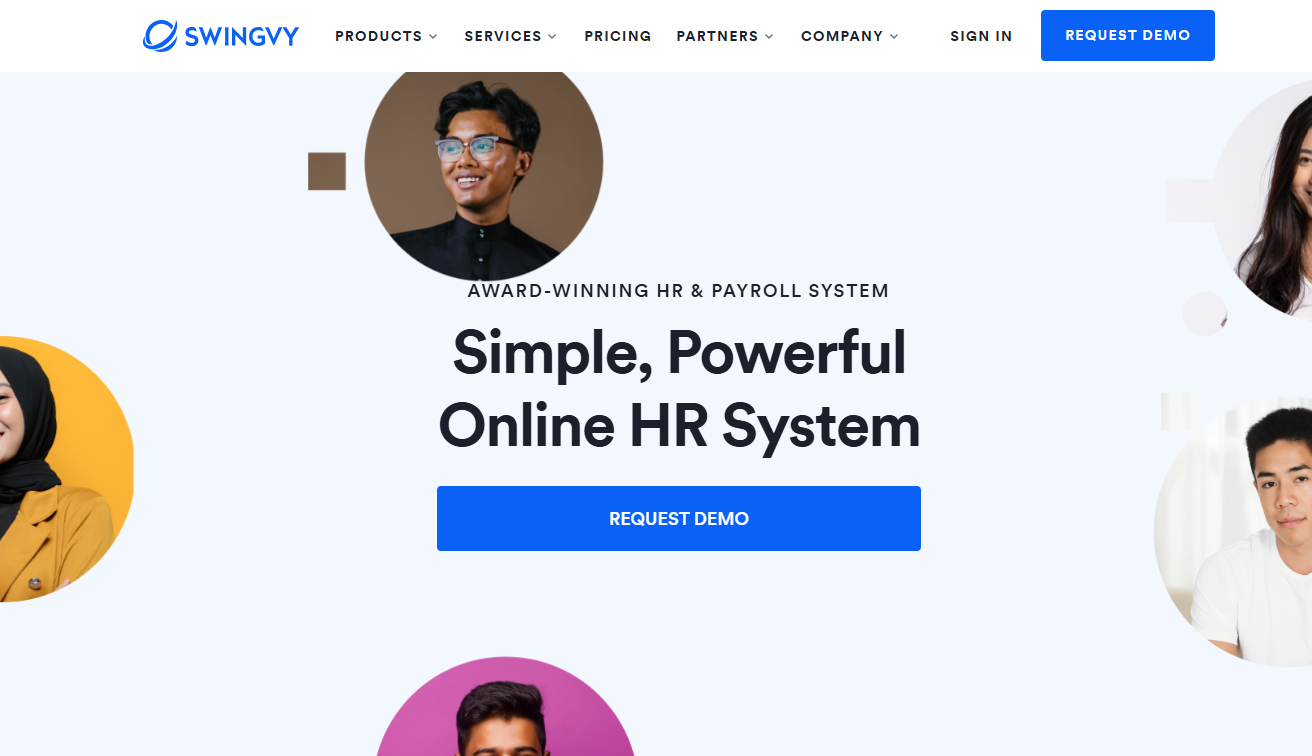
Swingvy pairs HR admin and payroll in a clean, mobile-first package. It's usually the first stop for SMEs leaving spreadsheets behind. It is not the tool teams pick for performance depth.
Swingvy Key Features
Mobile-First HR for Everyday Admin
Swingvy's iOS and Android apps handle leave, claims, and clock-ins in a few taps. That drives adoption, which is where most HR rollouts quietly die. Employee records, leave, claims, and core payroll all sit in one place. Malaysian statutory support for EPF, SOCSO, EIS, PCB, and HRDF is built in. Mobile GPS clock-in, geo-fencing, and shift scheduling round it out.
For distributed teams weighing their options, brioHR's guide to HR software for distributed teams is a useful comparison point.
Basic Review Cycles and Self-Assessments
Here's where it thins out. Swingvy supports review cycles and self-assessments. That's enough for a simple annual appraisal. What's missing is everything past that: no goal or Key Performance Indicator (KPI) tracking, no 360-degree feedback, no peer review, and no calibration.
So teams building a real performance program tend to outgrow Swingvy's review layer well before they outgrow its admin features.
Swingvy Pricing
| Plan | Details |
|---|---|
| Modular pricing | From RM10 per employee per month |
Where Swingvy Shines
- Modern, mobile-first experience: Leave, claims, and clock-ins are genuinely easy for employees, which lifts adoption across the whole company.
- Solid day-to-day HR coverage: Leave, claims, attendance, and core payroll in one place, with full Malaysian statutory support.
- Cleaner interface than legacy local tools: Independent comparisons rate its usability at 4.0 out of 5, well above older on-premise systems.
Where Swingvy Falls Short
- Light performance management: No goal or KPI tracking, no 360-degree feedback, no peer review, and no calibration. Basic appraisal cycles only.
- No recruitment or applicant tracking: Job posting, resume parsing, and interview scheduling all need separate tools.
- Thin learning and development: No training records or certification tracking, which is a real gap for SMEs claiming HRDF levies.
Swingvy Customer Reviews
Capterra shows Swingvy at 4.6 out of 5 from 7 reviews, a small sample worth weighing accordingly. The pattern is consistent: interface and support draw praise, while feature depth draws the criticism.
Who Swingvy Is Best For
- SMEs starting HR automation: Teams moving off spreadsheets for the first time, where basic appraisals are enough for now.
- People-first teams: Companies that weigh employee experience and mobile access heavily and don't yet need goals, 360 feedback, or calibration.
altHR: Best for Malaysian SMEs Wanting Leave and Appraisals Together
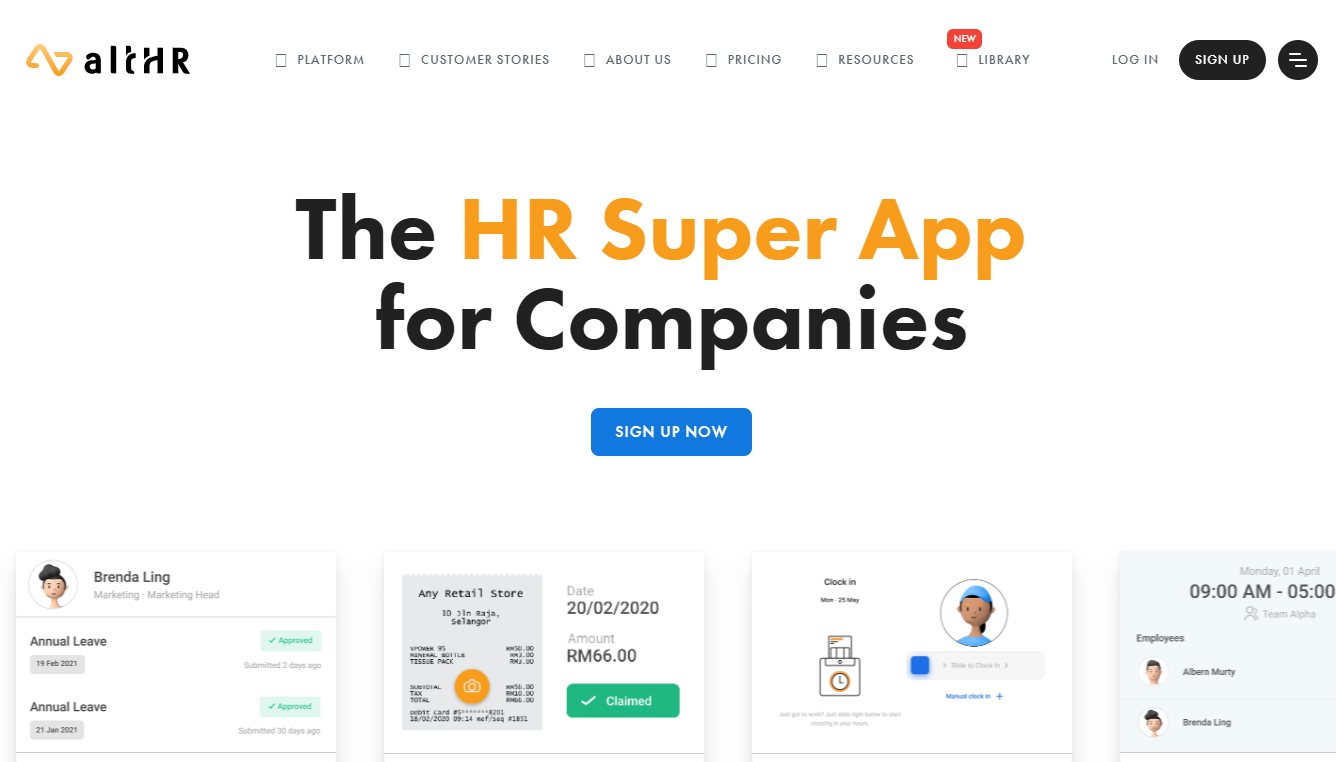
altHR is a Malaysian HR platform from CelcomDigi, built mobile-first around leave, claims, and onboarding. Its performance module is a genuine add-on, not an afterthought. But it's lighter than the marketing around it suggests.
altHR Key Features
Appraisal Cycles With Goals and Manager Feedback
altHR's performance module runs appraisal cycles end to end. Admins set cycle start and end dates, eligibility rules, rating settings, and the review questions employees answer. Employees see their own goals and reviews, plus feedback from their manager, in the same app they use for leave.
What altHR's own documentation does not describe is peer review, upward feedback, or a calibration step. So if multi-rater input is the reason you're shopping, verify it on a demo before you commit.
Leave and Onboarding That Actually Connect
This is altHR's real strength. Leave covers multi-level approval, accrual rules, custom types, and Malaysian public holiday sync, including religious leave types that matter locally. Onboarding is equally thorough: digital flows, checklists, task assignment, document collection, and pre-boarding before day one.
Payroll is worth a closer look. altHR retired its own payroll module and now delivers it through a PayrollPanda integration, which needs a separate subscription. So "all-in-one" means two contracts. Our guide on HR software features covers how to test that during a demo.
altHR Pricing
| Plan | Details |
|---|---|
| Free plan | Ten core modules including leave, expenses, onboarding, and time tracking |
| Add-on modules | From RM1 per module, per employee, per month |
| Other modules | Recommended retail price of RM8 per employee per month |
| Payroll | Via PayrollPanda integration, separate subscription required |
Where altHR Shines
- A free plan that genuinely starts you off: Ten modules at no cost is rare in the Malaysian market, and it lowers the barrier for teams digitizing HR for the first time.
- Strong onboarding coverage: Pre-boarding, checklists, and task assignment make new-hire workflows cleaner than most local tools manage.
- Malaysian-first, mobile-first: Religious leave types, local holiday sync, and a polished app that employees actually open.
Where altHR Falls Short
- Performance depth is unclear: Appraisal cycles and goals are documented. Peer review, upward feedback, and calibration are not, so multi-rater reviews may need a demo to confirm.
- No Singapore payroll, and Malaysian payroll is a partner product: Cross-border teams need another tool, and even Malaysian payroll means a second PayrollPanda subscription.
altHR Customer Reviews
altHR has no meaningful verified presence on G2 or Capterra, so treat any single review with caution. Positive themes across app store and third-party listings center on ease of use and onboarding.

Who altHR Is Best For
- Malaysian SMEs on a tight budget: Teams that want leave, claims, and onboarding free, with appraisals added cheaply on top.
- Mobile-first workforces: Companies where employees live in the app and formal reviews are a once-a-year event, not a continuous program.
HR2000: Best for Companies Comfortable With Legacy Workflows
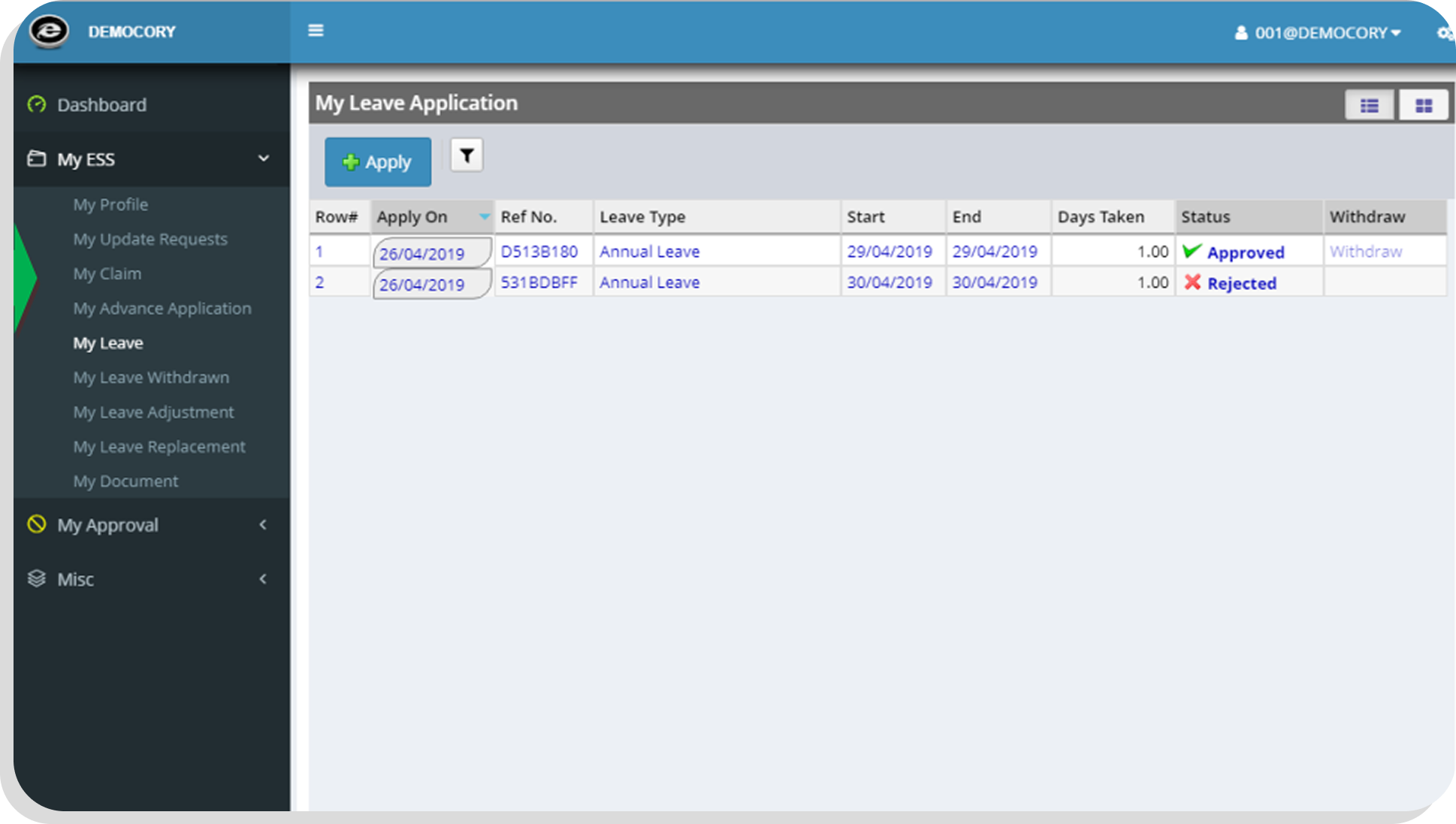
HR2000 has served Malaysian businesses since 1999, with around 3,800 customers. It covers payroll, leave, claims, time management, and appraisal. It's chosen for stability, not for modern performance tools.
HR2000 Key Features
Proven Payroll and a Basic Appraisal Module
Payroll is the reason anyone buys HR2000. The engine handles EPF, SOCSO, PCB, and EIS reliably, with support for more than 50 local bank formats. Statutory reports generate for government submission without drama.
The appraisal module is where it stops. You get basic review cycles and self-assessment. There's no goal or OKR tracking, no 360-degree feedback, no peer review, and no calibration. For a payroll system that happens to include appraisals, that's fair. For a performance program, it isn't a starting point.
Employee Self-Service, Built for Familiar Workflows
Employees manage payslips, leave, and claims through web and mobile self-service. That covers the basics well, and long-tenured HR teams tend to like the familiarity. Past core HR, the gaps widen. No recruitment, no onboarding workflows, and no learning and development. The platform also isn't fully cloud-native, and users report slow loading compared with newer systems.
HR2000 Pricing
| Plan | Details |
|---|---|
| Entry pricing | From around RM100 per month for up to 20 employees, plus roughly RM5 per additional employee |
| Deployment | i-Payroll (web-based) or QuickPay (Windows-based); custom quote by modules |
Where HR2000 Shines
- Proven payroll reliability: Nearly three decades of Malaysian statutory handling, with broad local bank compatibility and dependable monthly runs.
- Strong employee self-service: Payslips, leave, and claims are straightforward for employees to manage themselves.
- Cost-effective entry point: Lower upfront cost than most cloud-native platforms, which matters for price-sensitive teams.
Where HR2000 Falls Short
- No real performance management: Basic appraisal cycles only. No goals, no 360-degree feedback, no calibration.
- Dated and not fully cloud-native: Independent comparisons score its usability at 1.0 out of 5, and users report slow loading.
- Missing modern modules: No recruitment, onboarding, or learning and development.
HR2000 Customer Reviews
HR2000 has no meaningful verified review presence on G2 or Capterra, which is itself telling for a vendor of its age and size. Positive themes from third-party listings: dependable payroll runs and wide bank format support. Negative themes: a dated interface and slow performance against cloud-native alternatives.
Who HR2000 Is Best For
- Teams comfortable with legacy systems: Companies that value familiar workflows over a modern interface.
- Payroll-first, cost-sensitive organizations: Businesses prioritizing stable statutory compliance, where appraisals are a formality rather than a program.
HiBob: Best for Modern Engagement-First Cultures

HiBob is a mid-market platform built for fast-growing, people-first companies. Its performance and engagement tools rank among the strongest here. The catch is payroll: there's no native Malaysia or Singapore engine.
HiBob Key Features
360 Feedback, Engagement Surveys, and Recognition in One Place
HiBob runs 360-degree feedback, peer reviews, and continuous feedback in a single workflow. Employee Net Promoter Score (eNPS) and pulse surveys sit in the same engagement module. A recognition and kudos system lets people flag each other's contributions in real time. All of it feeds the same dashboards HR uses for goals and calibration. So sentiment and performance sit side by side instead of in two tools.
A Modern Interface That Drives Response Rates
HiBob's interface is one of the cleanest on this list. That shows up in the numbers, not just the demo. Teams report stronger completion rates on 360 cycles than they saw with older, form-heavy tools. A 360 review is only as good as the share of raters who finish it. Two responses out of five tells you very little.
HiBob Pricing
| Plan | Details |
|---|---|
| Core platform | From $5 per employee per month |
| Model | Custom global contracts based on headcount, with tiered implementation fees |
Where HiBob Shines
- Engagement and performance depth: eNPS, recognition, peer feedback, and continuous check-ins are natively connected, not stitched together.
- Modern experience that drives adoption: A clean interface lifts response rates on 360 cycles, which is the whole ballgame for multi-rater feedback.
Where HiBob Falls Short
- No native Malaysia or Singapore payroll: You'll run a separate payroll system for statutory compliance, and performance data won't connect to it.
- Higher price point: Hard to justify for SMEs that don't need the full engagement suite on top of reviews.
HiBob Customer Reviews
The trade-off shows up consistently in reviews. Reviewers rate the product highly and question the price against a separate payroll bill.
Who HiBob Is Best For
- Mid-market companies with a strong people culture: Teams where engagement, recognition, and continuous feedback are the priority.
- Teams already running separate payroll: Companies that want a dedicated performance platform alongside an existing payroll tool.
Darwinbox: Best for Southeast Asian Enterprises
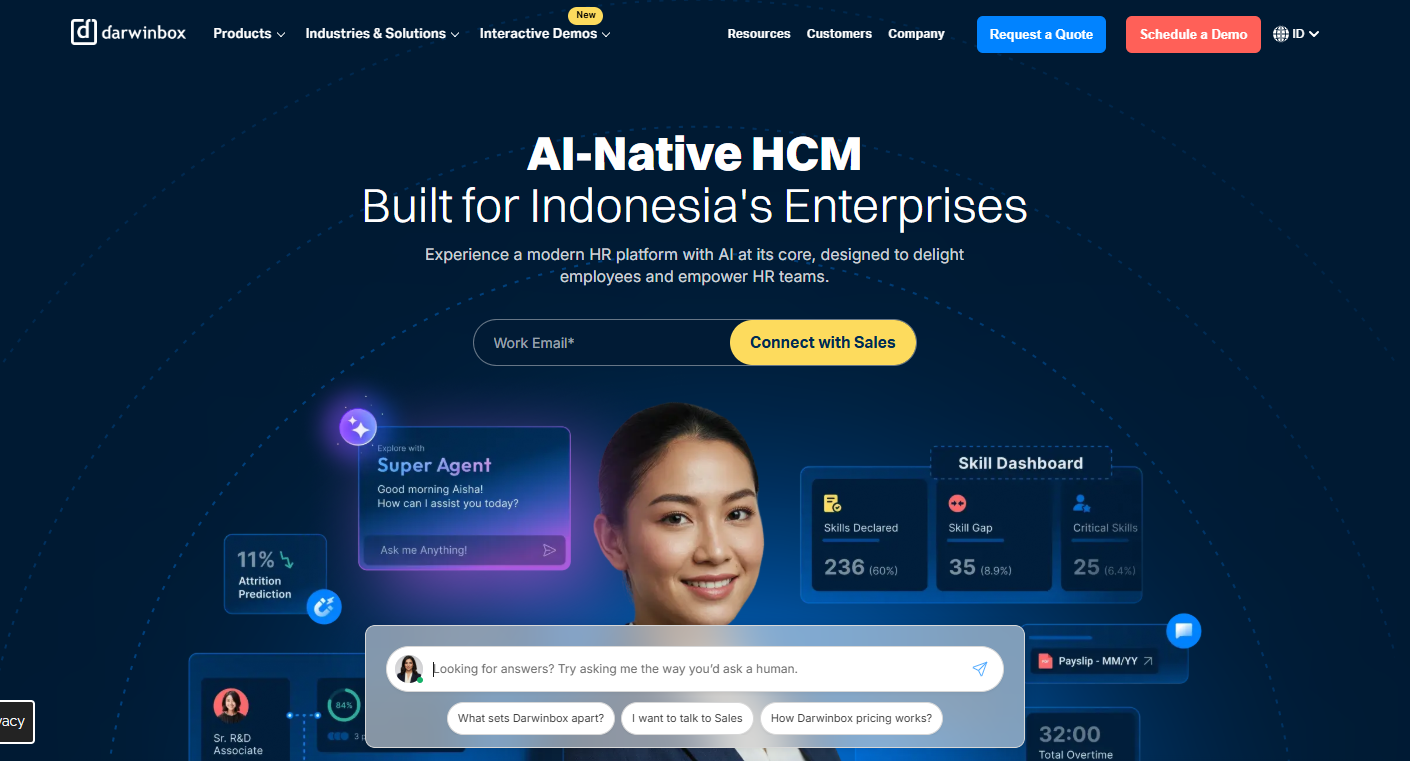
Darwinbox is enterprise software with a regional advantage: native Malaysia and Singapore payroll, which most global platforms lack. Its talent suite is mature. Goals, KPI tracking, reviews, succession planning, and a skills matrix are all built in, backed by predictive analytics. Rollout runs three to six months, faster than most enterprise peers.
The trade-offs are cost and fit. Pricing is premium and custom, out of reach for most Malaysian SMEs. Malaysian compliance is only partial, with EA Form, LHDN e-filing, and HRDF tracking incomplete.
Best for: Organizations above 500 employees with genuine multi-entity complexity, not growing teams building a first performance program.
Workday HCM: Best for Global Enterprises

Workday is a Human Capital Management (HCM) platform trusted by Fortune 500 companies, and its performance suite is the most mature on this list. Goals, 360-degree feedback, succession planning, calibration, and Performance Improvement Plan (PIP) workflows are all deeply configurable, across multi-entity and multi-currency operations.
For most Malaysian and Singaporean businesses, it's overkill. Pricing starts around $35 per employee per month and reaches six or seven figures a year. Rollout takes 12 to 24 months. Malaysian payroll is configured rather than native, and it needs dedicated Human Resource Information System (HRIS) and IT teams to run.
Best for: Enterprises above 10,000 employees with the internal teams and budget to match.
How to Choose the Best Employee Performance Review Tools?
Feature lists only get you halfway. Here's what actually separates employee performance reviews software that gets used from software that gathers dust after one cycle.
Connected to Your HR System, Not Bolted On
If your stack is already fragmented, a standalone review tool just adds one more system to reconcile at bonus time. Ask one question on every demo: can review outcomes feed compensation decisions directly? Most standalone tools stop short. You export a spreadsheet and match it by hand, which is exactly the work you were trying to remove. All-in-one platforms avoid that by keeping performance data next to payroll, leave and time off, and the employee record.
brioHR's performance management module connects review outcomes straight to the digital employee file, so nothing needs exporting. See goals, reviews, and payroll in one connected system. Book a demo →
Review Cycle Flexibility and Continuous Feedback
Rigid annual cycles don't match how teams actually work. Look for tools that let you set your own cadence, competency frameworks, and rating scales. More importantly, look for continuous feedback alongside formal reviews. Not instead of them.
That distinction matters more than it sounds. Weekly feedback and recognition from a manager lifts engagement to 61%, as this research shows. An annual form can't produce that.
brioHR supports custom cycles and continuous one-on-one coaching alongside annual reviews, so quarterly check-ins don't mean rebuilding the process each time.
Local Compliance and Data Privacy
For teams in Malaysia and Singapore, this isn't optional. A review tool that doesn't connect to local payroll, leave and time off, and time and attendance creates reconciliation work during merit and bonus cycles.
Check whether compliance is native or delivered through a partner. Partner coverage tends to lag when rules change, as altHR's payroll shift shows. Privacy matters just as much for 360 feedback and pulse surveys, where anonymity drives honest answers. It's worth knowing where the legal line sits on monitoring employee data before you roll anything out.
brioHR handles EPF, SOCSO, EIS, CPF, SDL, and IR8A natively, including CPF contribution updates as they land. Its security page covers how that data is held.
Run reviews inside a system already built for Malaysia and Singapore compliance. Request a demo →
How We Selected These Employee Performance Review Software
We built this list from vendor documentation, verified reviews on G2 and Capterra, and a feature-by-feature comparison of the employee performance evaluation tools available to Malaysian and Singaporean companies. Where a vendor's marketing and its own documentation disagreed, we went with the documentation. Three criteria did most of the work.
Core Performance Capabilities
We checked each platform for goals and OKRs, KPI tracking, 360-degree feedback, self-assessment, peer review, calibration, and performance dashboards. Improvement plans and succession planning counted too. A basic annual review form scored lower than a genuine multi-rater system, even where both call themselves employee review software. Calibration carried extra weight. It's the step most tools skip, and the one that keeps ratings comparable across departments.
Local Compliance and Payroll Integration
For any tool serving Malaysian or Singaporean teams, we checked native support for EPF, SOCSO, EIS, PCB, and HRDF, plus CPF, SDL, and IR8A. We also checked whether payroll is native or delivered by a partner. That gap shows up fast at bonus time, when performance data has to become actual pay. It's also where published comparisons go stale quickest. altHR retired its own payroll module in favor of a partner integration, and most listicles still show it as native.
Real User Sentiment and Implementation Speed
Verified ratings on G2 and Capterra outweighed marketing claims. We looked for recurring themes on ease of use, support responsiveness, and rollout time, and we noted review volume honestly. Swingvy's 4.6 rating comes from seven reviews. HR2000 and altHR have almost no verified presence at all. That's context a star rating alone hides. Implementation speed was weighed against company size. A mature platform with a 24-month rollout is a very different proposition for a 50-person team than for a 10,000-person enterprise.
Key Metrics to Measure Performance Review Success
A review cycle nobody finishes isn't working, however good the software looks. Track these four alongside whichever employee performance metrics software you choose.
- Review completion rate is the share of employees and managers who finish on time. Below 90% usually signals a process problem, not a software one.
- 360 feedback response rate matters just as much. A multi-rater review with two of five raters responding isn't multi-rater.
- Goal attainment rate tracks how many objectives people actually hit. It's a cleaner signal than review scores, which drift upward over time.
- Calibration variance shows how far ratings move once managers compare notes. A wide swing usually means bias, not a real performance gap.
Pair all four with HR reporting dashboards so trends surface in real time. Engagement data from employee engagement tools adds the missing half of the picture.
Everything HR.
One login
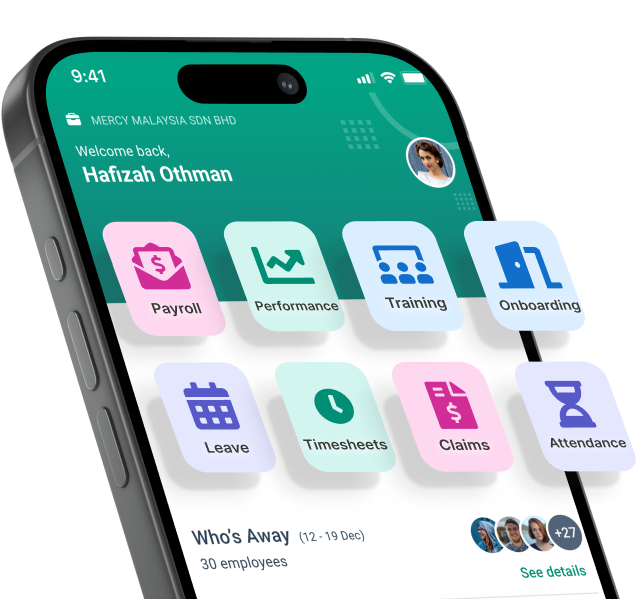
From payroll to onboarding, brioHR gives you everything you need in one place. Built for busy teams. Backed by people who care.
Build a Stronger Performance Culture With brioHR
If reviews still run through a shared spreadsheet, a stricter deadline won't fix it. What fixes it is a system where goals, feedback, and calibration already sit next to payroll and the employee record. brioHR is built for exactly that, for growing companies in Malaysia and Singapore.
Running a bigger stack, or reviewing enterprise options? Workday and Darwinbox are the serious picks above 10,000 employees. Weighing multi-rater reviews specifically? Our guide to the best 360 feedback tools goes deeper.
Otherwise, see it running with your own team's data. Book a free brioHR demo → or explore brioHR's services to find the right rollout for your team.
Conclusion
- brioHR is the best all-in-one pick for growing SMEs in Malaysia and Singapore — goals, 360-degree feedback, and calibration sit in the same system as payroll, with no double entry.
- altHR suits Malaysian teams that want leave and appraisals together on a tight budget. HiBob suits engagement-first cultures that already run payroll elsewhere.
- Swingvy and HR2000 cover basic appraisal needs but lack real performance programs — goal tracking, 360 feedback, and calibration are absent from both.
- Workday and Darwinbox only make sense above thousands of employees, with the budget and rollout time to match.
FAQs
If reviews still run through a shared spreadsheet, a stricter deadline won't fix it. Book a free brioHR demo and see goals, feedback, and calibration running in one connected system.