Ching Li Chew: From Admin to Business Partner, Modern HR in Southeast Asia

Key Takeaways
- Administration is no longer enough; true impact comes from HR leaders who understand the commercial direction of the company and link people strategy directly to business outcomes.
- Building a seat at the leadership table requires more than policy knowledge; you have to proactively learn how other departments create value and how the business handles market trade-offs.
- Digitalizing manual tasks isn't just about efficiency; it's about clearing the administrative noise so HR teams finally have the mental space to focus on talent and long-term strategy.
A lot of people still picture HR as the function that keeps things tidy in the background. Payroll runs, policies get updated, and hiring moves forward. But that version of HR is starting to feel too small for the reality companies are facing now. Growth is harder, teams are stretched, and AI is changing workflows. Leadership expects more speed and business value, while employees still expect fairness and real support. In Episode 15 of withBrio, we sit down with Ching Li Chew to discuss how HR can stop just supporting the business and start helping shape it.

Ching Li Chew has spent more than two decades working across HR, consulting, payroll, talent, and regional leadership. Today, she is the People and Communications Director for Southeast Asia and a Regional HR Leader dedicated to driving business impact through people strategy. What makes her perspective unique is her range. She has seen HR from the ground floor, the systems side, and the leadership table. She speaks about HR with the realism of someone who has had to balance performance and compassion in the same conversation—often at the same time.
HR is no longer just an administrative function
One of the clearest ideas in the discussion is also the most important: HR cannot stay trapped in an administrative identity. This shift matters, especially in Southeast Asia, where many organizations are still moving from operational HR toward a more strategic model. Early in her career, HR looked like a support function. Now, she sees it as a true business partner that needs a voice at the business table. This does not mean administration stops mattering; it means administration is no longer enough. The HR leaders who create the most impact today are the ones who understand the commercial direction of the business and can connect people's strategy to business outcomes.
Why business acumen matters more than ever
If HR wants a stronger seat at the table, it cannot only speak the language of engagement and policy. It also needs to understand market direction, operational complexity, and the trade offs leaders are managing. Ching Li Chew points out that business acumen grows through:
* Relationships and Curiosity: Proactively learning how other teams create value.
* Hands on Exposure: Getting involved in cross functional projects.
* Networking: Building connections across different departments to understand the wider business context.
The HR of the past was about 'HR for HR.' The HR of the future is about 'HR for the Business
Career growth often starts with discomfort
For ambitious HR professionals, growth often starts by saying yes before you feel fully ready. Ching Li Chew talks openly about the value of stepping into unfamiliar work and taking on responsibilities that feel uncomfortable at first. Her own journey across payroll, consulting, compensation, and recruitment proves that career acceleration often comes from breadth, not just depth. The path upward is not just about doing your current role well; it’s about becoming useful in a much wider business context.
High performance teams are built, not wished into existence
The phrase “high performance team” often sounds decorative, but in this discussion, it feels grounded. For Ching Li Chew, high performing teams are not just teams that hit targets—they are teams with strong engagement and the willingness to go the extra mile. The real question for leadership is not “How do we ask for more from teams?” but “What conditions make people want to give more?” When people feel connected to the work and recognized by their leaders, they naturally push further. This is where HR becomes strategic by building the environment that enables high performance.
Make performance management effortless
Streamline goals, reviews, and feedback in one flow—so managers can focus on real performance conversations.

Balancing the heart and the head
For all the talk about strategy and systems, HR leadership always returns to one tension: balancing business needs with employee needs. Ching Li Chew describes this as balancing the heart and the head. There are times when the business requires restructuring, and times when individuals need empathy and fairness. HR sits right in the middle of those realities. The real work is learning how to navigate hard decisions without losing your judgment or your humanity.
AI adoption sounds simple until the real work starts
The future of HR technology is not just about buying tools; it is about capacity. Ching Li Chew is optimistic about digitalization, especially given the pain of repetitive, manual processes. However, AI adoption is harder than it sounds. It requires a strong business case, change management, and a focus on freeing people for work that actually moves the business forward. Every investment in AI or digitalization comes with budget questions and productivity expectations that must be managed carefully.
The real challenge for HR in Asia
The main challenge for HR in Asia remains one of mindset. In many traditional organizations, HR is still seen as purely operational. This perception limits the function’s ability to contribute to business transformation. If leaders only see HR as support, the function will be invited too late and used too narrowly. This is a business problem, not just an HR problem. The future of HR in Asia depends on changing how the function is understood across the entire company.
Conclusion
- This episode does not try to hand you a neat framework with all the answers. Instead, it offers a realistic picture of what modern HR leadership looks like when you care about people and understand business pressure. The future of HR will depend on systems and AI, but it will also depend on whether HR leaders are trusted enough and commercially sharp enough to help shape decisions, not just respond to them.
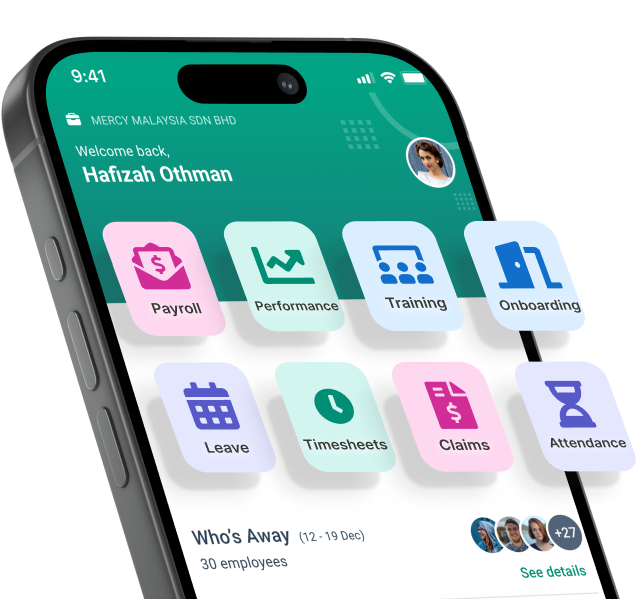
Everything HR.
One login
Cut the extra layers in your HR process. Keep what works, remove what doesn’t, and make everyday work easier for your team.
Want the full conversation on how HR can move from opinion to proof, from support to strategy, and from cost centre to value driver. Watch the full episode of withBrio.
To learn more about how brioHR can transform your HR processes, check out BrioHR’s website or request a demo.