How to Automate Payroll: Benefits, Steps & More for HR Teams
Key Takeaways
- To automate payroll means using software to calculate wages, deductions, and statutory contributions, then pay everyone on time with almost no manual work.
- More than half of small businesses (around 51%) still run payroll on spreadsheets, even though automation cuts errors by about 31% and compliance issues by about 70%, according to G2.
- A practical 5-step framework moves you from manual files to automated payroll: audit your process, choose the right software, configure it carefully, run a parallel cycle, then go live and monitor.
- brioHR automates statutory calculations for both Malaysia and Singapore, and scales from 10 to 3,000-plus employees across multiple countries.
Payroll day shouldn't eat your week.
Yet for many human resources (HR) and finance teams, it still means late nights, spreadsheet formulas, and the quiet fear of a wrong payslip.
Here's the fix. To automate payroll means using software to calculate wages, deductions, and statutory contributions, then pay everyone on time with almost no manual work.
This guide covers what payroll automation is, why teams stay manual, the benefits, a step-by-step framework, the challenges to watch for, and how to tell if it's right for you.
What Does It Mean to Automate Payroll?
Automating payroll means letting software do the repetitive work people used to do by hand.
Instead of keying in hours, calculating tax, and preparing bank files, an automated payroll system pulls data from your records and runs the math for you.
A good system handles gross pay, overtime, allowances, and deductions. It applies the right statutory rates, generates compliant payslips, prepares contribution files, and keeps a clean audit trail.
In short, payroll automation turns a multi-day chore into a quick review-and-approve task. You check the numbers, click approve, and the system does the rest.
Why Payroll Is Still Manual in Most SME HR and Finance Teams
If automation helps this much, why do so many teams still run payroll by hand?
The honest answer is a mix of habit, cost worries, and fear of getting compliance wrong. Here are the most common reasons.
Reason 1: Spreadsheets Feel Safe and Familiar
Spreadsheets are the default for a reason. They're cheap, flexible, and everyone knows them.
More than half of small businesses (around 51%) still run payroll on spreadsheets, and roughly 19% rely on manual or paper-based methods, according to payroll statistics from G2.
But that comfort hides risk.
One broken formula can quietly underpay a whole department, and no one notices until payslips land.
Reason 2: Worry About Cost and Setup Time
Many HR leaders assume payroll software is expensive and slow to set up.
That belief made sense a decade ago. Not anymore.
Today, modular tools let you pay only for what you use, often from a few ringgit per employee each month.
Setup that once took half a year now takes weeks.
Want to know what to look for first? Our guide to essential HR software features breaks down what actually matters.
Reason 3: Fear of Getting Compliance Wrong
In Malaysia and Singapore, payroll is tied tightly to statutory rules.
Teams juggle EPF, SOCSO, EIS, and Monthly Tax Deduction (MTD, also called PCB) in Malaysia, plus CPF and the Skills Development Levy (SDL) in Singapore.
Get one rate or deadline wrong, and penalties follow.
So teams cling to the manual process they know. The irony? Manual work is where most compliance errors start.
Benefits of Automating Payroll
The benefits of an automated payroll system go far beyond saving time.
Each one solves a real pain that manual teams feel every month. Here are the five that matter most.
1. Fewer Errors and Higher Accuracy
Manual payroll is error-prone by nature.
Industry data puts average payroll accuracy at about 80%. That means up to one in five pay runs may carry a mistake, and each error costs an average of $291 to fix, per EY.
Automation flips that. Businesses using payroll software report about 31% fewer errors, according to G2.
brioHR calculates EPF, SOCSO, EIS, the Human Resource Development levy (HRD Corp), and PCB automatically. So the math is right before you click approve.
2. Hours Back in Your Week
Payroll should take minutes, not days.
Automation prefills salaries and recurring allowances, removing the slow entry that drains your team.
PayrollOrg estimates automation can cut payroll processing costs by as much as 80%.
The result? brioHR customers run payroll up to four times faster with zero errors.
And when payroll connects to your time and attendance data, approved hours and overtime flow straight into the pay run. No re-keying.
3. Built-In Statutory Compliance
Compliance is where automation really earns its keep.
Automated systems can cut compliance issues by around 70%, per G2, by applying current rates and deadlines for you.
brioHR auto-prepares tax-compliant payslips and statutory forms like the EA form, PCB2(II), CP39, Form E, and CP8D in Malaysia. It also handles CPF, IR8A, and IR21 for Singapore.
The payoff: fewer late filings, and fewer penalty surprises.
4. One Connected System, Not Ten
Manual payroll usually means juggling separate files for leave, claims, and attendance.
Automation pulls them together.
Approved expense claims and leave balances update payroll automatically, which kills double handling.
Want proof it matters? Our breakdown of payroll system integration shows the effect on accuracy and speed.
5. Better Visibility and Reporting
Spreadsheets make simple questions hard, like who got paid what, where, and why.
Automation answers them in seconds.
With strong HR reporting software, you can compare the current pay run against past ones, filter by department, and spot anomalies before approval.
Clear data also helps you track cost and employee engagement trends over time.

The 5-Step Framework to Automate Payroll
Ready to make the switch?
This tight, execution-focused framework takes you from messy manual files to a fully automated payroll process.
Step 1: Audit Your Current Payroll Process
Start by mapping what you do today.
List every step, from collecting timesheets to filing contributions, and note who owns each one.
Flag the parts that take longest or break most often, like overtime or last-minute allowance changes.
This audit shows where automation saves the most time, and where your data is messiest.
Here's why it matters: clean source data is the foundation of accurate automated payroll. So fix obvious gaps now.
Step 2: Choose the Right Payroll Software
Pick a system built for your region and your size.
In Malaysia and Singapore, that means native handling of EPF, SOCSO, EIS, PCB, CPF, and SDL. Not a generic global tool bent to fit local rules.
Compare options on compliance coverage, integrations, support quality, and total cost.
Need a shortlist? Our roundups of the best payroll software in Malaysia and the best payroll software in Singapore can help.
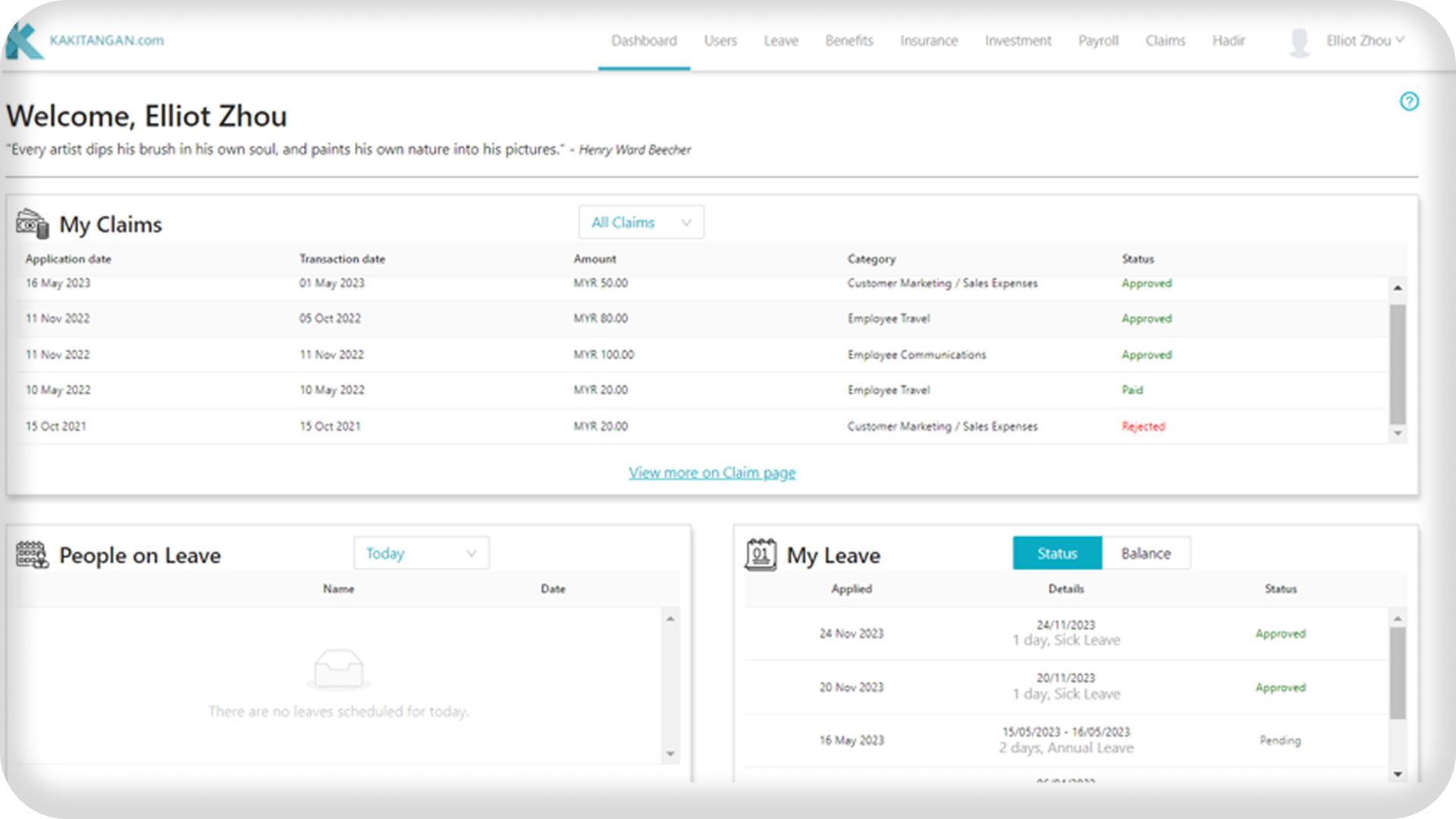
Local tools like Kakitangan, PayrollPanda, and Swingvy serve the market well. Kakitangan is popular with very small teams, while PayrollPanda is known for a clean, simple interface.
brioHR stands out by combining native payroll engines for both countries, deep integrations, and a payroll outsourcing option if you'd rather hand it off.
Step 3: Set Up and Configure Your System
Once you choose a tool, configure it carefully.
Import employee records, set pay items, and define allowances, deductions, and statutory rates.
Set up pay cycles for different groups, like monthly full-timers and weekly part-timers.
This is also where you handle premiums and special deductions.
brioHR's guide on how to set up shift premiums and deductions walks through the details.
Take your time here. A clean setup prevents months of small corrections later.
Step 4: Run a Parallel Pay Cycle
Don't switch cold.
Run your new automated payroll alongside the old manual process for at least one cycle.
Compare results line by line: gross pay, deductions, contributions, and net pay.
Any difference points to a config issue you can fix before going live.
This builds team confidence and catches edge cases, like prorated salaries or mid-month joiners, in a safe space.
Step 5: Go Live, Then Monitor and Improve
After a clean parallel run, go live with confidence.
But automation isn't set-and-forget.
Review each pay run before approving, watch for anomalies against past cycles, and keep your statutory rates current.
Use reporting to track accuracy and processing time, then refine as you grow.
Connecting payroll to a wider HR information system keeps everything in sync as you scale.
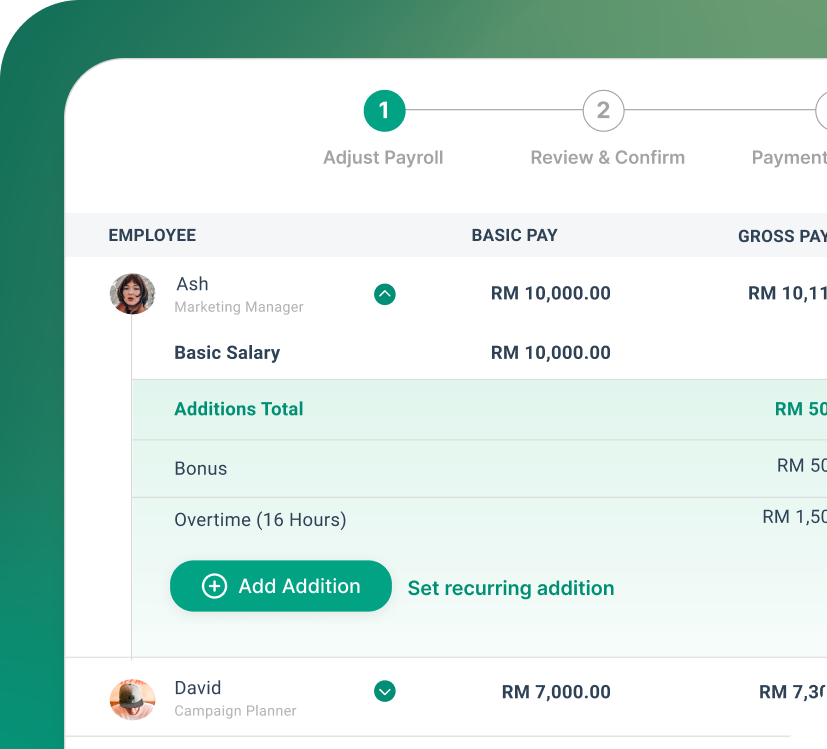
Experience how simple payroll can be
Reduce processing time and compliance risks with brioHR's intuitive payroll system.
Common Challenges When Automating Payroll
Automation is worth it, but the move isn't always frictionless.
Knowing the common challenges upfront helps you plan around them.
- Messy or incomplete data: Automation is only as good as the data you feed it. Inconsistent records or missing tax numbers cause errors on day one. Clean your data before you migrate.
- Change resistance: People trust the process they know. Some will resist giving up spreadsheets. Clear training and a parallel run build trust.
- Integration gaps: Payroll doesn't work in isolation. If your tool can't connect to attendance, leave, and claims, you lose much of the benefit. Pick a system that integrates cleanly, or read our payroll outsourcing guide to skip the work entirely.
- Local compliance complexity: Statutory rules in Malaysia and Singapore change. A tool that isn't built for the region can miss updates. Choose software with native, regularly updated compliance.
- Underusing the system: Many teams automate the pay run but keep doing reports by hand. Lean into features like automated payslips and expense management to capture the full value.
Payroll Automation Tools vs Manual Payroll
The clearest way to weigh your options is side by side.
This table shows how manual payroll vs automated payroll compare on the factors that affect your team every month.
| Factor | Manual Payroll | Automated Payroll |
|---|---|---|
| Processing time | Hours to days per cycle | Minutes per cycle |
| Accuracy | About 80% on average | About 31% fewer errors |
| Compliance | Manual rate lookups, higher risk | Auto-applied rates and filings |
| Statutory forms | Prepared by hand | Auto-generated (EA, CP39, Form E) |
| Scalability | Breaks down as headcount grows | Scales from 10 to 3,000-plus |
| Visibility | Hard to audit | Real-time reporting and trails |
"When payroll runs smoothly and employees get paid accurately and on time, it contributes to a more positive work environment"
Is Payroll Automation Right for Your Business?
Automation isn't one-size-fits-all. But it fits more teams than most people expect.
Here's who benefits most, and where brioHR fits each profile.
The Growing SME
Best for businesses scaling past 30 employees.
If payroll already eats a full day each month and your spreadsheets feel fragile, automation pays for itself fast.
brioHR is built for this stage. It handles the complexity without an enterprise price tag.
It's also eligible for the Productivity Solutions Grant (PSG) in Singapore, which lowers the cost further.
The Multi-Entity or Multi-Country Team
Best for companies operating in both Malaysia and Singapore, or across several entities.
Running separate manual processes per country is slow and risky.
brioHR offers native payroll engines for both markets, multi-currency support, and multi-country payroll outsourcing when you want it handled for you.
One system covers everything.
The Lean Team That Wants to Outsource
Best for businesses without dedicated payroll staff.
If you'd rather not run payroll at all, outsourcing is the answer.
More than 100 businesses let brioHR run payroll end to end through its managed payroll services.
You get accuracy and compliance without lifting a finger.
KPIs and Metrics HR Teams Should Track After Automating Payroll
Once you automate, measure the impact.
Tracking the right key performance indicators (KPIs) proves the value and shows where to improve. Here are the ones worth watching.
| Metric | What It Measures | Target to Aim For |
|---|---|---|
| Payroll accuracy rate | Error-free payslips per cycle | 99%-plus |
| Processing time | Hours per pay run | Under a few hours |
| Cost per payslip | Total payroll cost ÷ payslips | Trending down |
| On-time payment rate | Pay runs completed on schedule | 100% |
| Compliance breaches | Late or incorrect filings | Zero |
| Employee payroll queries | Pay-related tickets per cycle | Trending down |
Case Studies and Examples on Applied Payroll Automation
Real results make the case better than theory.
Here are three real brioHR client success stories from across Malaysia and Singapore.
Case Study 1: SRKK Reclaims Time on Payroll and Claims
SRKK is an information technology (IT) consultancy in Malaysia with around 120 staff.
Challenge: Their old system was mobile-only and clunky for claims. Staff had to push emailed receipts to a phone before submitting, and they couldn't view historical claims or reimbursement status.
Solution: SRKK switched to brioHR for expenses, leave, and payroll, drawn to the clean interface and flexible leave allocation across offices.
Outcome: Their People Excellence team became more efficient, self-service payslips saved time, support replies averaged about five minutes, and they now close their books faster each month.
Key takeaway: As Chief Strategy Officer Alex Lam advises, "put a dollar value on efficiency."
Case Study 2: TFD Matches Internal Systems to World-Class Output
TFD is an events management company in Singapore serving local and overseas clients.
Challenge: As TFD grew, they needed internal systems as sharp as their client work, without adding admin noise. Clunky, fragmented tools didn't fit the brand.
Solution: After reviewing several options, TFD chose brioHR for its modern interface and all-in-one package, with Performance Appraisal, Training, and Pulse Surveys ready out of the box.
Outcome: The migration was notably smooth, HR centralized into one dashboard, and performance reviews now assign competency levels and appraisers automatically.
Key takeaway: In Elaine's words, TFD "needed an HR platform as creative and precise as the events we deliver."
Case Study 3: Neoasia Builds a System for Scale
Neoasia is one of Asia's leading distributors of medical aesthetic technologies.
Challenge: As the business expanded regionally, recruiter and hiring-manager collaboration was fragmented, and HR needed to manage growth without burning out the team.
Solution: Neoasia started with brioHR's recruitment module, then expanded into performance management for continuous feedback, goal setting, and development planning.
Outcome: Hiring became smoother, adoption was quick with little training, and performance now aligns to organizational goals.
Key takeaway: As HR leader Maybelline Ang puts it, "for us, adoption is everything."
Run perfect payroll in minutes, not hours
brioHR calculates, files, and pays accurately so your team can focus on growth.
"A well executed and error free payroll strategy can improve retention, boost morale, and reflect the values of your organization."
Make HR and Payroll Easy With brioHR
Manual payroll costs you time, accuracy, and peace of mind. Automation gives all three back.
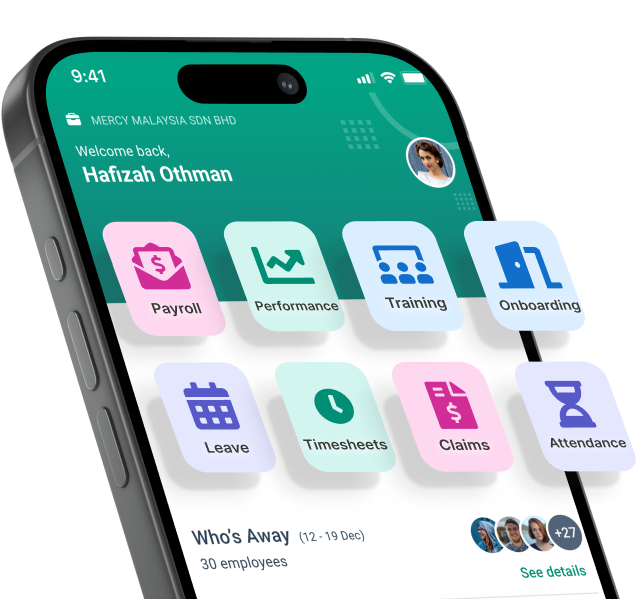
Whether you run payroll yourself or hand it to a managed team, brioHR brings payroll, compliance, and your wider HR stack into one platform built for Malaysia and Singapore.
It's also rated 4.7 out of 5 across 31 verified G2 reviews.


Ready to stop dreading payroll day? Book a free demo and see how simple it can be.
Conclusion
- Payroll automation cuts processing time from hours to minutes, while reducing errors by about 31% and compliance issues by about 70%, according to G2.
- The 5-step framework (audit, choose software, configure, run parallel, go live) takes you from manual files to a fully automated process without surprises.
- brioHR handles native statutory compliance for both Malaysia and Singapore, connects payroll to your wider HR stack, and scales from 10 to 3,000-plus employees.
- Real client results back this up: SRKK, TFD, and Neoasia all reclaimed time and improved accuracy after automating with brioHR.
Frequently Asked Questions
What Is an Automated Payroll System?
An automated payroll system is software that calculates wages, deductions, and statutory contributions, then files and pays them with little manual input.
Is Payroll Automation Worth It for Small Businesses?
Yes. Even small teams save hours and cut errors. Modular tools start from a few ringgit per employee monthly, so the cost stays low.
Does Payroll Automation Handle EPF, SOCSO, and CPF?
Yes. Region-built tools like brioHR calculate EPF, SOCSO, EIS, and PCB for Malaysia, plus CPF and SDL for Singapore, automatically.
How Long Does It Take to Automate Payroll?
It varies. With clean data and the right software, setup often takes a few weeks, including a parallel test cycle before you go fully live.
This article is for general informational purposes and reflects payroll practices in Malaysia and Singapore as of 2026. Always confirm current statutory rates with the relevant authorities.
Manual payroll costs you time, accuracy, and peace of mind. brioHR brings payroll, compliance, and your wider HR stack into one platform. Book a free demo and see how simple payroll day can be.