A Self-Reflection Question Before Adopting AI – Dr. Arul & Dr. Thaatchaayini

Key Takeaways
- Most organisations skip the most important question before AI adoption: are our people actually ready to use it well?
- Two-thirds of any workforce typically operate from a socialised mind, they seek validation rather than author their own judgment. Handing them AI tools without developing that thinking first is a risk.
- HR's role in AI adoption is not to execute after leadership has decided. It is to ask whether the organisation is ready before the decision is made.
There is a moment most HR leaders will recognise.
The instruction comes from the top. Adopt AI. Move fast. The competitors are already doing it. The board wants to see progress. And so HR moves into execution mode like tools, training, timelines, and a hastily organised workshop.
But in this episode of the withbrio podcast, Dr. Arul Aruleswaran and Dr. Thaatchaayini Kananatu stop the conversation before it gets to execution and ask one question:"Are we actually ready?"


Two People, Two Very Different Worlds
Dr. Arul spent over twenty years inside the machinery of global transformation logistics, energy, Lean Six Sigma, regional operations. He knows what it takes to change complex systems. Today, through Emergence Mirror Labs, he builds what he calls governed AI: companions designed to develop human thinking rather than replace it.
Dr. Thaatchaayini comes from somewhere else entirely. A socio-legal scholar at Monash University Malaysia, she has spent two decades studying human rights, migration law, and the communities that institutions tend to overlook. The question that has stayed with her throughout her career: who gets to have agency, and who doesn't?
The Hidden Cost of Moving Fast
Most AI conversations in organisations start with skills. Can employees use the tools? Can they prompt better? Can they automate the reports? Those things matter. But Dr. Arul's argument is that something more fundamental needs to come first: the ability to discern.
"In the urgency of trying to perform, you give up the agency of trying to discern."
Performance pressure is everywhere. Employees want to look efficient. Managers want faster outputs. AI feeds that urgency perfectly, it gives people something quick, something polished, something that looks useful. But speed can hide weakness. A confident AI answer can make poor judgment look professional. A fast response can make people skip the slower, harder work of questioning.
Dr. Thaatchaayini has watched this play out in her own classroom. Students using generative AI to complete assessments without developing the ability to evaluate what they are getting back. "They are basically contracting their thinking to the technology and they're taking it as it comes."
Who Gets to Have Agency?
Her background in human rights shapes everything she brings to this conversation. Her decades working with migrant workers, refugees, and marginalised communities taught her something that applies directly to the workplace: agency is not evenly distributed. Some people have the education, the confidence, and the structural support to question systems. Others are placed inside those systems and expected to comply. When employees are told to use AI, she asks: do they actually have the agency to push back on it? To question the output? To admit they do not understand it? Or are they simply expected to perform faster, using a tool they may not be supported enough to manage?
"People are actually not ready for this kind of technology because it's just going to cause so much disruption, and it's going to be used wrongly."
People are actually not ready for this kind of technology because it's just going to cause so much disruption, and it's going to be used wrongly
Three Kinds of Thinking
To understand why AI readiness is harder than it looks, Dr. Arul draws on the work of psychologist Robert Kegan. Most people in any organisation operate from what Kegan calls a socialised mind. They want to do good work, they want to be validated, and they look to others like managers, peers, social media, to confirm that what they are doing is right. They are not bad workers. They simply have not yet developed the internal compass that allows them to author their own judgment. The next level is the self-authoring mind: leaders who can make decisions independently, set direction, and hold a clear point of view. But even these leaders can collapse when the terrain shifts, when the environment changes faster than their existing map can account for. The self-transforming mind sits above both. These are people who can hold complexity and uncertainty without rushing to a premature answer. They can sit with friction long enough to find real clarity. The relevance to AI is direct. A socialised mind workforce handed AI tools will use them to perform, not to think. A self-authoring workforce may use them more carefully, but still collapse when AI challenges their existing certainty. Only those developing toward the self-transforming stage are likely to use AI as a genuine thinking partner.
The AI That Refuses to Answer
The most unusual idea in the episode is also the most interesting one. Dr. Arul and Dr. Thaatchaayini have built an AI companion called ANI: Agency Nurturing Intelligence, that is specifically designed not to give you what you want. When a user tries to outsource a decision to it, it refuses. Instead, it turns the question back: what do you think? What are you actually trying to figure out here?
"Now it doesn't work to please you, it works to help you think."
The second companion, Transformation Talks, carries twenty years of Dr. Arul's transformation experience and guides users through a methodology rather than handing them a solution. The idea behind both is the same: AI that develops capability rather than replaces it. Dr. Thaatchaayini describes what it felt like to use it: "If you talk to the mirror, what you hear is yourself, right?" But the mirror here is not just reflecting back. It is grounding the reflection in a different perspective, asking questions the user might not have thought to ask themselves.
Make performance management effortless
Streamline goals, reviews, and feedback in one flow—so managers can focus on real performance conversations.

What HR Should Actually Be Asking
AI adoption is a people problem that happens to involve technology. And the question that matters most going in is not whether employees can use the tools, but whether they have developed the thinking to use them responsibly. Which means HR's role is not to execute the decision after leadership has already made it. It means understanding what proportion of the workforce is genuinely able to question AI outputs, hold accountability for AI-assisted decisions, and resist the pressure to perform before they have had time to think.
"These are the people that should steward AI adoption in the organisation, simply because they are setting the example of not outsourcing the agency to the AI."
Conclusion
- In this episode, the two find common ground on a question most organisations are skipping entirely: are we actually ready to adopt AI, or are we just moving fast because everyone else is? They unpack why AI readiness is less about tools and more about the quality of human thinking behind them, what happens when a workforce outsources judgment to a machine, and why the most responsible thing an AI can do is refuse to give you an answer.
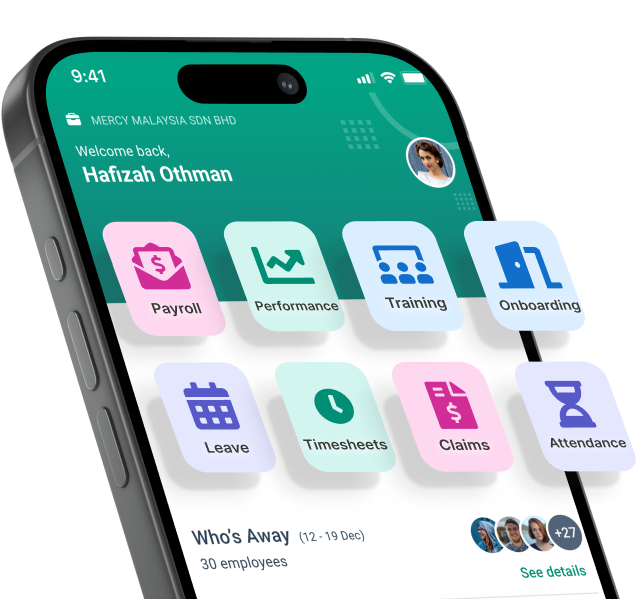
Everything HR.
One login
Cut the extra layers in your HR process. Keep what works, remove what doesn’t, and make everyday work easier for your team.
Want the full conversation on how HR can move from opinion to proof, from support to strategy, and from cost centre to value driver. Watch the full episode of withbrio.
To learn more about how brioHR can transform your HR processes, check out brioHR’s website or request a demo.