Alan Cheah on AI – Drive Culture, Prompting, and the Future of Work

Key Takeaways
- The advantage shifts to deciding what actually matters, not how fast you deliver.
- Strong thinkers get faster, weak thinkers get exposed.
- Most companies won’t fail at AI because of tools, but because people don’t change how they work.
AI is not taking your job. It is changing how you think, and that is a bigger shift than most people realize.

In Episode 13 of withBrio, Alan Cheah talks about AI in a way that feels less dramatic and more grounded. The conversation moves away from the usual fear of replacement or the obsession with efficiency, and instead focuses on something more practical. What actually changes when AI becomes part of how we work?
Alan has spent years building and scaling companies across Southeast Asia, from mobility platforms to large e-commerce operations. Today, his focus sits at the intersection of people and systems, thinking about how teams operate when intelligence is no longer limited to humans. The starting point is simple. AI is not removing people from work, but it is reshaping where people add value. Tasks are getting compressed. Work that used to take hours can now be done in minutes. But the responsibility for decisions does not disappear. If anything, it becomes more visible.
AI as a co-pilot, not a replacement
There is a tendency to see AI as something that will either replace roles or simply make existing work faster. In reality, it sits somewhere in between. AI can handle drafting, summarizing, and processing information at a speed that was not possible before. But it does not understand context in the way humans do. It does not decide what matters. It does not take responsibility for outcomes. What changes is the distribution of work. Execution becomes faster, but judgment becomes more important. The value shifts from doing to deciding.
Beyond tools: building an AI-first culture
Adopting AI is often treated as a tooling decision. Companies subscribe to platforms, run a few workshops, and assume the transition is happening. In practice, the shift is cultural. Teams need to see how AI fits into real workflows, not just hear about it in theory. People need space to experiment without the pressure of getting it right immediately. Access to tools needs to be simple enough that it does not become another barrier. At StoreHub, this shows up in small but deliberate ways. People who understand AI are encouraged to share how they use it in their daily work. Teams run hands-on sessions instead of abstract training. The focus is not on creating a few experts, but on raising the baseline across everyone.
We are drowning in information but starved for knowledge.
From surface AI to something deeper
Most companies are still operating at what could be called a surface level. AI is used to clean up writing, summarize meetings, or speed up research. Useful, but limited. The more interesting shift happens when AI becomes part of how a company stores and uses its knowledge. Instead of relying entirely on public tools, some organizations are building internal systems that work with their own data. Documents, past decisions, internal case studies all become part of a shared memory. This changes how people access information. Instead of searching across disconnected sources, they can retrieve context instantly. New hires get up to speed faster. Decisions become more consistent because they are grounded in the same base of knowledge.
Prompting as a way of thinking
How people interact with AI also matters more than it seems. Most prompts are task-based. Write this. Summarize that. Fix this paragraph. Alan describes a different approach, one that starts with context. What is the objective? What are the constraints? What matters in this situation? When prompts are framed this way, the interaction becomes closer to a conversation. AI is not just producing output, but helping shape the thinking behind it. The quality of the result depends less on the tool and more on how clearly the problem is understood.
Make performance management effortless
Streamline goals, reviews, and feedback in one flow—so managers can focus on real performance conversations.

The shift in skills
As AI continues to take on more structured work, it raises a broader question about what remains valuable. Tasks that follow clear patterns are easier to automate. Work that depends on nuance, judgment, and human interaction is harder to replace. Leadership, decision-making, and the ability to navigate ambiguity become more important, not less. This does not mean technical skills lose relevance. But on their own, they are no longer enough. The edge comes from knowing what to do with the output, not just how to produce it.
What stays human
Looking ahead, the roles that hold their value are not defined by how much information they can process, but by how they deal with complexity. Understanding people. Making decisions without perfect data. Knowing which problems are worth solving in the first place. These are not things that can be easily delegated.
Conclusion
- The shift around AI is already happening, but it does not always look dramatic. It shows up in smaller ways. Work gets faster. Expectations increase. The gap between those who adapt and those who do not becomes more visible. The people who benefit the most will not be the ones who use AI the most. They will be the ones who understand where it helps, where it does not, and how to think alongside it.
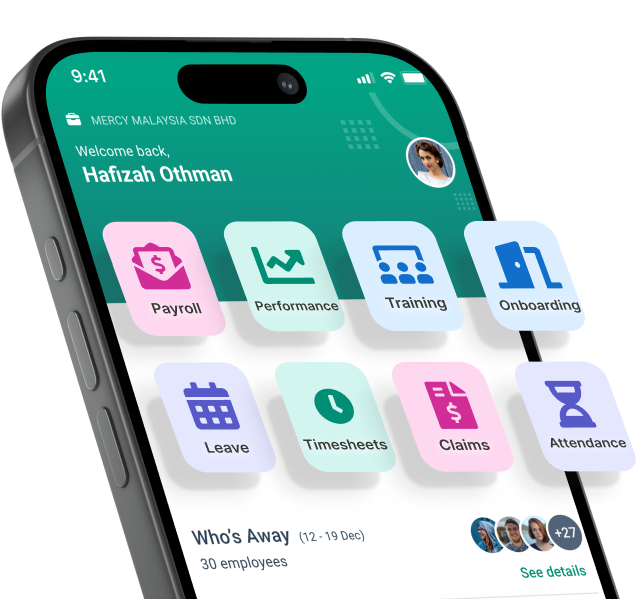
Everything HR.
One login
Cut the extra layers in your HR process. Keep what works, remove what doesn’t, and make everyday work easier for your team.
Want the full conversation on how HR can move from opinion to proof, from support to strategy, and from cost centre to value driver. Watch the full episode of withBrio.
To learn more about how brioHR can transform your HR processes, check out BrioHR’s website or request a demo.