The Frameworks Behind MUST’s Turnaround – Prof. Dr. Premkumar Rajagopal
Key Takeaways
- Financial results are a lagging indicator. If you want different numbers, you start with people and processes, not with revenue targets.
- Cost structure matters more than sales volume when an organisation is losing money. Understanding where the losses are built in comes before any conversation about growth.
- Management frameworks only earn their value when adapted to a specific organisation at a specific stage, not when copied directly from a textbook.
Prof. Dr. Premkumar Rajagopal walked into Malaysia University of Science and Technology in 2016 with a mandate that left little room for interpretation. The university had accumulated RM22 million in losses over six years and had 347 students enrolled. The chairman gave him one year to break even, or the business would close.
MUST broke even in seven months.
By 2024, the university had grown to 4,400 students, RM23 million in revenue, and RM4.8 million in profit after tax. The story behind those numbers is what this episode of the withbrio podcast is about.

Prof. Prem spent 12 years at Intel before moving to Seagate, then into academia. He completed a Balanced Scorecard masterclass at Harvard under Robert Kaplan and David Norton, the framework's creators. He designed a sustainability certification programme now offered in 72 countries, including Cambridge University.
The Gap Nobody Talks About
Most leaders already know the frameworks. The Balanced Scorecard, Value Chain, Good to Great; these ideas have been studied and cited in boardrooms for decades. What consistently breaks down is the distance between understanding a framework and using it to make decisions when things are not going well, and that distance is what Prof. Prem has spent his career working on.
"Many people, they are good in discipline in thoughts. They can write papers, beautiful presentation, but when come to execution, you fail."
Start With People, Not the Plan
When Prof. Prem took over MUST, he did not begin with a strategy presentation. He began by looking at who was there. Drawing on Jim Collins' three disciplines from Good to Great (disciplined people, disciplined thought, disciplined action), he assessed the organisation from the ground up. Within four months, roughly 40% of the existing workforce had been let go, and new people were brought in to support the direction he intended to take.
"You can craft a strategy, beautiful strategy. You can keep on talking about it, but if you don't have the right people, you will not get it done."
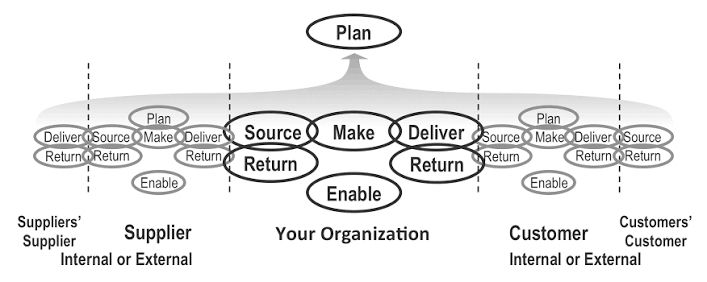
The sequencing matters. Disciplined thought came after the people question had been addressed, and disciplined action followed after that. He applied supply chain thinking to how he saw the university's position, with high schools and parents as the upstream, employers hiring graduates as the downstream, and MUST sitting in the middle trying to connect the two.
You can craft a strategy, beautiful strategy. You can keep on talking about it, but if you don't have the right people, you will not get it done
Sixteen KPIs, No More
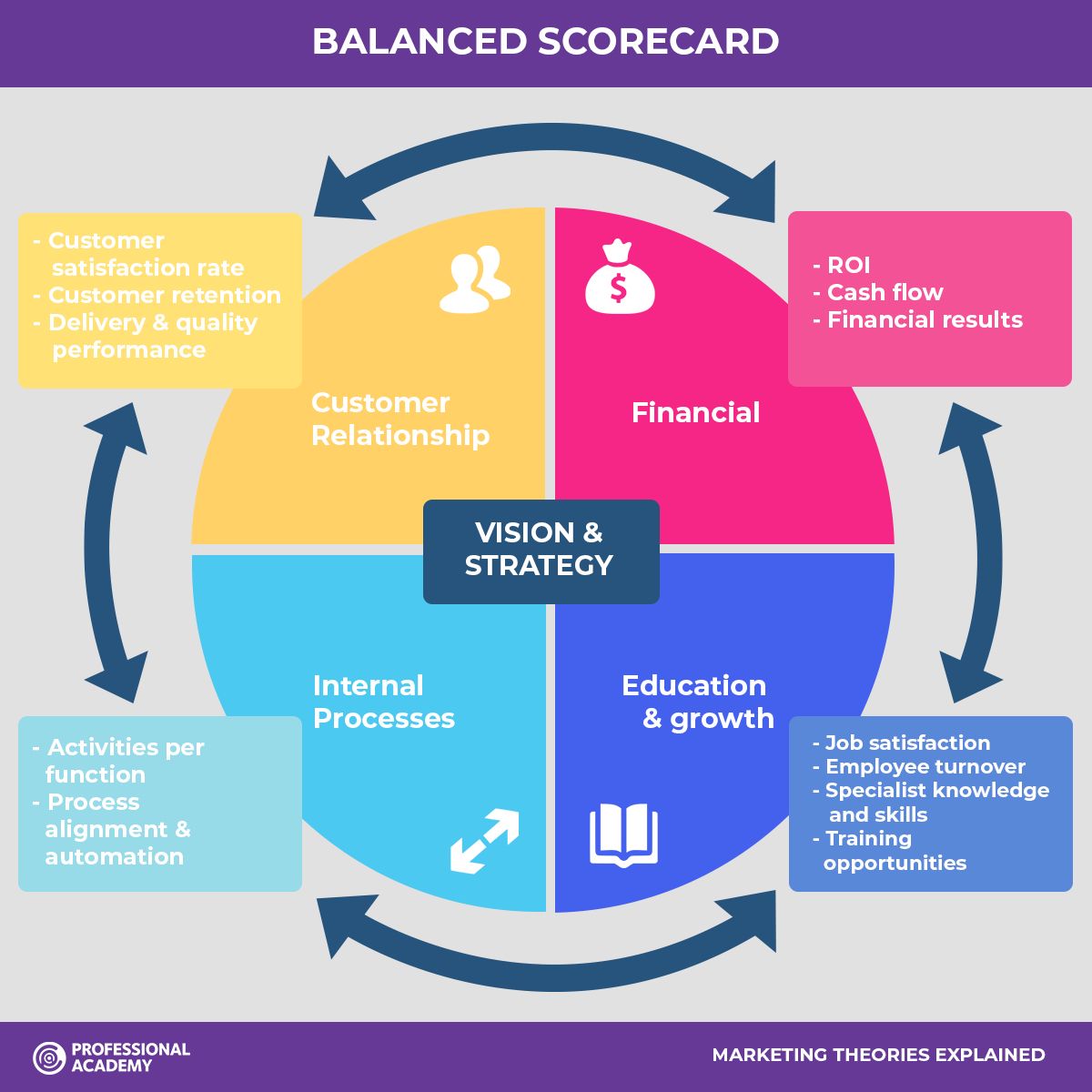
One of the more striking things Prof. Prem shares is how simple his performance measurement system actually is. MUST runs on a Balanced Scorecard with four perspectives, people and organisational capability, internal processes, students and customers, financial performance. Each perspective carries four KPIs. Sixteen measures in total, cascaded from the president's office down to deans, faculty and administrators.
"Four times four, sixteen. That's it. Done. Finished. Very simple."
The sequencing behind those perspectives is deliberate. Financial results come last. Prof. Prem invests in people and capability first, which improves processes, which improves student outcomes and employability, which then produces the financial numbers. Revenue and profit reflect decisions already made. If you want different numbers, you start earlier. Most organisations measure too much. When every activity generates its own KPI, the reporting load grows while clarity shrinks. Sixteen measures, applied consistently and cascaded clearly, tend to produce more alignment than a dashboard of eighty.
Look at Cost Before You Look at Revenue
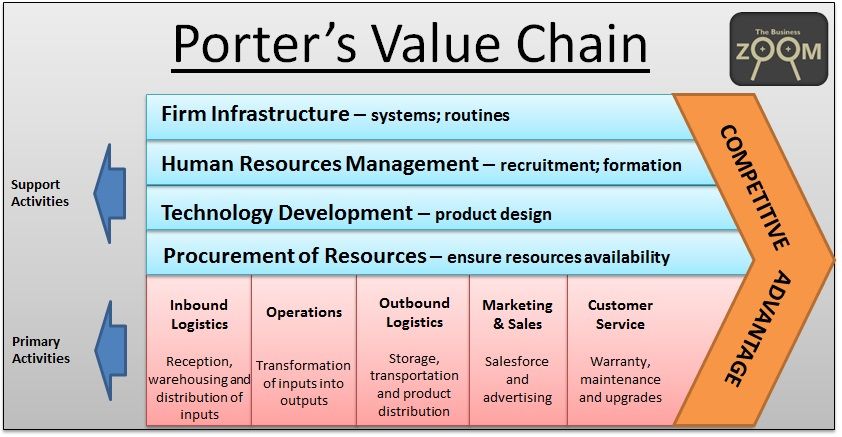
When an organisation is losing money, the instinct is usually to sell more. Prof. Prem goes the other way. At MyChef, a food business that had operated at a loss for eight consecutive years, his first discovery was that some business-to-business prices had been set below the cost of production. The company was locking in a loss on every sale in those categories. More volume would have made things worse. The same discipline shaped his approach at MUST. He applied Michael Porter's Value Chain to separate teaching and learning, the activities students pay for, from support functions like IT, administration and procurement. When headcount needed to come down, he protected the former and looked first at the latter. One of the tools he used was fractional faculty engagement. Instead of hiring experienced academics for five days a week, MUST would engage some of them for two or three days. Students retained access to their expertise. The cost structure became more flexible.
"I don't play volume game. I play the margin game."
The numbers make the case plainly. MUST generated RM4.8 million in profit after tax on RM23 million in revenue. A competing university generated RM1.8 million in profit on RM112 million in revenue. Larger does not automatically mean more profitable, and growth can conceal weak economics for a long time before it cannot.
One Shared Goal Cuts Through Silos
Departments tend to optimise for themselves, measured against their own targets with little visibility into what the organisation is trying to do overall, so Prof. Prem's solution at MUST was to anchor everything to a single organisational goal that every department could trace their work back to. For a university, student enrolment growth serves that purpose. Every function (marketing, faculty, operations, HR, finance) has a role in whether that number moves, and the departments keep their own responsibilities but share a destination. Prof. Prem tests this with a straightforward question: ask people from different departments what the organisation's single most important shared goal is. When the answers diverge significantly, the problem is usually not a lack of strategy but a lack of shared direction.
Make performance management effortless
Streamline goals, reviews, and feedback in one flow—so managers can focus on real performance conversations.

Supply Chain Is Not Logistics
One of Prof. Prem's more persistent arguments is that supply chain management is widely misunderstood, including by people who work in it.
"Supply chain is the entire function in the organization. It covers HR, it covers planning, it covers marketing everything."
Logistics is one part of the system, but supply chain thinking is about how decisions move through an organisation; how a hiring choice affects operations, how a pricing decision shapes customer experience, how a procurement relationship creates risk several steps downstream. In HR, it shows up in decisions about which roles to keep in-house, which to contract, and which to outsource. In finance, it appears in how cash moves through accounts payable and receivable. The point is not to relabel everything as supply chain, but to see an organisation as a connected system where decisions in one place produce consequences somewhere else, often somewhere no one anticipated.
When Strategy Does Not Work, Say So
Turnarounds create anxiety. People worry about their jobs, their managers, and whether the organisation will still exist in twelve months, so Prof. Prem does not try to manage that anxiety by softening the facts. He runs a University Leadership Camp every six months (two days, open to everyone from deans to clerical staff) where he shares direction, results and what the next period is expected to look like. He also holds regular sessions modelled on a practice from his Intel days, where he updates the organisation on industry developments, regulatory changes and strategic priorities, then opens the floor. And when a strategy does not deliver what it was supposed to, he says so.
"We fail. I fail."
When a decision has not worked, he names it, takes responsibility and explains what changes. People who are expected to carry out a strategy need to know when it has been revised and why, and pretending otherwise tends to produce more confusion than the original failure did.
Theory Only Earns Its Value When Applieds
Prof. Prem quotes Peter Drucker, Jim Collins, Michael Porter and Robert Kaplan with the ease of someone who has tested those ideas under real conditions rather than studied them from a distance. His consistent point is that reading a framework is not the same as understanding it, and understanding it is not the same as knowing when and how to adapt it to a specific organisation in a specific situation.
"Don't look at it from the theory perspective. Take it up. Look at it from the business perspective. When you apply it, then you will appreciate."
The MUST turnaround is worth studying not because the frameworks Prof. Prem used are unusual; most of them have been around for thirty years or more. What is unusual is the discipline with which they were adapted, sequenced and used to make hard decisions about people, costs, priorities and direction, and the honesty with which he talks about where they did and did not work.
Conclusion
- Prof. Prem did not arrive at MUST with an unusual playbook. The Balanced Scorecard, Value Chain and Good to Great have been in circulation for decades. What he brought was the discipline to apply them under pressure, the willingness to make hard decisions about people before touching anything else, and the honesty to say when something had not worked. The turnaround happened not because the frameworks were exceptional, but because they were actually used, adapted to the specific stage and condition of the organisation, and backed by clear measurement and consistent communication.
Everything HR.
One login
Cut the extra layers in your HR process. Keep what works, remove what doesn’t, and make everyday work easier for your team.
Want the full conversation on how HR can move from opinion to proof, from support to strategy, and from cost centre to value driver. Watch the full episode of withbrio.
To learn more about how brioHR can transform your HR processes, check out brioHR’s website or request a demo.