The Difference Between Doing Your Job and Caring About It – Rejie Samuel

Key Takeaways
- Job descriptions can become a tool for avoiding accountability. When people know only what their tasks are, they stop at the edge of those tasks.
- Titles create hierarchy. Hierarchy slows decisions and shrinks ownership. Outcomes are the only measure that matters.
- Vulnerability in leadership is not weakness. In Asia especially, leaders who admit they do not have the answer and invite people to solve problems together tend to build stronger, faster teams.
Rejie Samuel spent the first nine years of his career in finance. He was good at it. But somewhere around year three at Colgate-Palmolive, he started to find the whole thing deeply unsatisfying.

Every month, the factory would run. Materials would be consumed, sometimes wastefully. Costs would drift. And then, ten to fifteen days after month-end, the numbers would finally appear. By which point, nobody could do anything about them.
"You cannot just manage financials. You have to manage the operations that create financial results."
The Weighing Scale
Rejie had negotiated his way out of the finance department and into manufacturing. He started capturing variances daily instead of monthly, meeting with production teams each week to review them. And what he found there could never have appeared in a spreadsheet. One worker had a broken weighing scale. With no working equipment, he was estimating quantities by sight. Chemicals that looked full might be half. He was doing his best with what he had. The financial report showed a cost problem, For Rejie, this was the beginning of a career-long argument: the numbers are never the problem. The problem is always somewhere in the work that produces them. And you cannot find it by staring at a report.
Ms. Zhang and the Green Light
Years later, Rejie was walking an assembly line in Shanghai. The line was making HVAC units for Jaguar Land Rover. Every station had a green light. Everything was moving. Except one operator was refusing to let her unit through. Her name was Ms. Zhang. She could see that an airflow door inside the unit was not sitting correctly. The system said green. Her supervisor was telling her to move it. She said no. Rejie stopped and asked what was happening. He had the unit pulled off the line for inspection. The quality team confirmed she was right. The door was not seated properly. If it had reached the customer, a twenty-cent part would have cost a thousand dollars per car to repair. Afterwards, sitting in his office, Rejie kept turning the same question over. The supervisor had more training than Ms. Zhang. Every other operator on that line had the same training she did. So why did she do things differently?
"Well, because she cared more."
He brought her in to ask. Through a translator, she explained it simply. If the product reached the customer and the customer was unhappy, they might not win more business. The cost would impact the company. It would impact her. She had connected her one decision on that assembly line all the way to the business. Her supervisor had not. Two years later, Ms. Zhang became the production manager. Her supervisor reported to her. Rejie went on to build a care campaign across every Air International facility in the world — Michigan, Mexico, Slovakia, Thailand, India.
The job description is our biggest Achilles heel. It focuses people on 'this is my job' and creates silo mentality
The Job Description Problem
When Rejie arrived at Air International's Shanghai operation, he got rid of job descriptions. His problem with job descriptions was not that they were useless. It was that they had quietly become a tool for avoiding accountability. When something went wrong in an area slightly outside someone's assigned tasks, the document became a shield. "That is not my job." He had seen it happen across industries, across countries, across every level of an organisation.
"The job description is our biggest Achilles heel. It focuses people on 'this is my job' and creates silo mentality."
He replaced them with purpose statements, and he started with HR. His opening question to every person in the function was simple: why do you exist? Most of them responded by rewriting their job description back at him. The payroll person said their job was to process salaries accurately. Rejie kept pushing. Why does that role exist? What happens to the business when it runs well, and what happens when it does not?
The answer he was looking for: payroll exists so that employees are paid correctly and on time, which keeps them motivated, which contributes to the company hitting its sales, profitability, and cash flow targets. The same logic applied to every function. Finance does not exist to close the books. Recruitment does not exist to fill vacancies. Every role has a reason that connects back to the business, and once people understand that reason, the conversations in meetings change, the questions they ask change, and the decisions they make change.
What the Numbers Cannot Tell You
Rejie is not arguing that spreadsheets are useless. He spent decades learning to read them and use them well. His argument is narrower than that: by the time a number appears in a report, the decision behind it has already been made. The cost has already been incurred. The quality issue has already reached the line.
Getting close to the work is how you catch things before they become numbers. Ms. Zhang had no financial training and no management title, but she understood the consequence of one unseated airflow door well enough to stop a production line over it. That is what Rejie means when he talks about care, not warmth, not wellness initiatives, but the kind of understanding that makes someone act differently when it matters.
"I encourage everyone, every leader, just ask the question: do you care? First of all, do you care enough? Are you there for the salary? And do your employees care?"
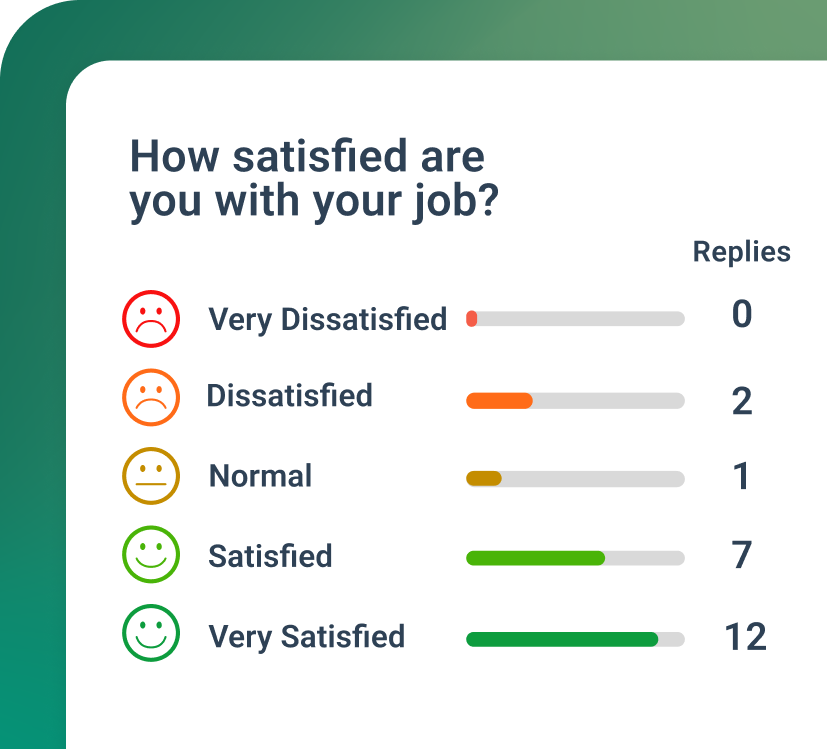
Experience simple pulse surveys
With automated pulses, real-time insights, and anonymous feedback, brioHR helps you understand employees and boost engagement faster.
Conclusion
- Thirty years across four countries, and Rejie's answer to most organisational problems came down to the same thing. Ms. Zhang had no title, no business degree, and no financial training. She just understood what a faulty door on an assembly line would eventually cost the customer, the company, and the people around her. That understanding changed how she acted. It is also the thing most job descriptions will never tell anyone.
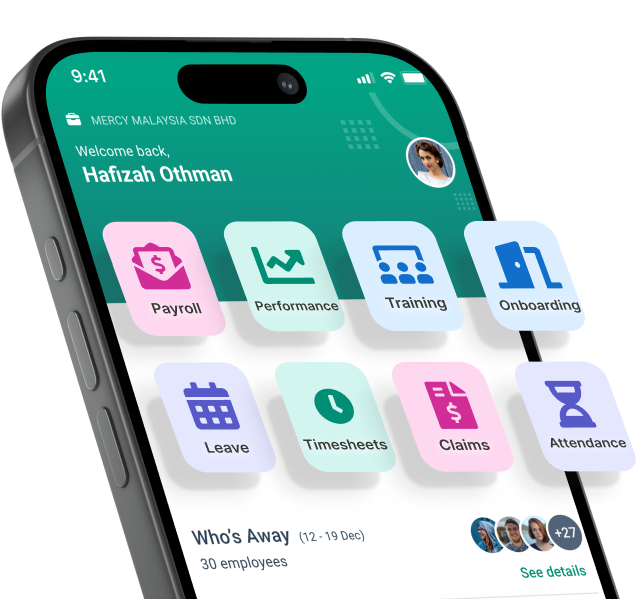
Everything HR.
One login
Cut the extra layers in your HR process. Keep what works, remove what doesn’t, and make everyday work easier for your team.
Want the full conversation on how HR can move from opinion to proof, from support to strategy, and from cost centre to value driver. Watch the full episode of withbrio.
To learn more about how brioHR can transform your HR processes, check out brioHR’s website or request a demo.