The Leadership Problem We Still Haven’t Solved – Captain Dr. Shan Moorthi

Key Takeaways
- Engagement survey data is only as honest as the culture that surrounds it. If employees have learned that honesty carries a cost, no tool changes that.
- Trust is not built before a crisis and then maintained, People watch how leaders behave under pressure more than they listen to what leaders say in normal times.
- The space between divergent thinking and convergent thinking, what Sam Kaner calls the Groan Zone, is where most teams rush or avoid. Navigating it well requires deliberate design, not just good intentions.
- Focusing on problems causes them to expand. Solution-focused leadership asks what we want, not why the problem happened. The village did not need better chicken coops. They needed income.
Captain Dr. Shan Moorthi opens with a question that most leaders are not ready to sit with. "Are we continuously creating creative liars in our organization?" He is not talking about dishonest people. He is talking about what happens when an organization, over time, teaches people that honesty is a risk. When someone speaks up and gets shut down, they learn. The next time, they are more careful. Eventually, the leader stops getting the truth and starts getting the safe version of it.
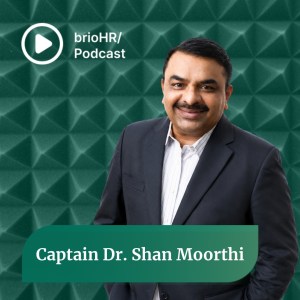
Shan has spent 25 years working with leaders across Asia on coaching, facilitation, and team culture. He is the CEO of Teamcoach International, a former Global President of the International Association of Coaching, and the author of Coaching with R.E.S.P.E.C.T. He also holds a PhD in Executive Coaching and Entrepreneurship. But the title he chose over all of them is Captain, because, as he puts it, the army was harder to earn.
What The Army Actually Taught Him
Most people hear military and think command and control. Shan heard that assumption his whole career and got tired of it. "A lot of people have this misconception that army officers are not empathetic. We are one of the most empathetic leaders around because we are trained to care for our people." His point is not sentimental. In the military, trust is not a culture initiative. It is operational infrastructure. You build it before you need it, because once you are in a crisis, there is no time to start. Leaders who wait until the pressure arrives to earn trust find that there is nothing there. He told a story that makes this concrete. He was stationed at the Royal Engineer School, working as an instructor. Instructors are feared, not respected, people comply because you hold their grade, not because they trust you as a person. When Shan was transferred to an operational unit, he could feel the same dynamic following him. The soldiers who had been his students were polite. Nothing more.
Then came the bomb.
A fresh, unexploded mortar round in a firing range. High explosive. A killing radius of 25 to 50 meters. His wife was about to deliver their first child. His sergeant told him to step back. Shan refused and did the disposal himself. "I told my sergeant, 'Your children have seen your face. My first child has not seen my face yet. I am going to do it.'" After that, something changed. Word moved through the unit. The soldiers started behaving differently around him. Not because he had given a speech about leadership. Because they had seen him decide, under pressure, that their lives mattered more than his rank. Years later, when he encountered the Trust Equation from the book The Trusted Advisor, he recognized what had happened. Trust is built from credibility, reliability, and intimacy, divided by self-orientation. The faster you reduce what you make the situation about yourself, the faster trust rises. "Less of me, more of you. Not my agenda, your agenda."
Why The Survey Data is Probably Wrong
Many organizations collect employee feedback through engagement surveys, 360 tools, anonymous forms. HR explains that responses are confidential. And employees fill in what they think is safe, not what they actually believe. "No matter how hard HR tells that it is confidential, people still cannot trust because there's no trust." The tool is not the problem. If employees have watched colleagues get sidelined for speaking honestly, no survey platform changes that calculation. They learn what the organization actually rewards, and they respond accordingly. The consequence is that leadership ends up making decisions on data that has already been filtered through self-protection. Strategy gets built on a version of reality that does not match what is happening on the ground. "You can't get solid data by sitting in the air-conditioned office and doing research on AI. No, you won't."
Are we continuously creating creative liars in our organization?
The Meeting That Never Actually Converges
Shan introduced a concept from Sam Kaner called the Groan Zone, the difficult middle ground between generating ideas and making decisions. Most organizations rush through it. They brainstorm, cluster ideas, and then converge fast. The uncomfortable space where people are still attached to their own position, where real disagreement lives, gets skipped. His view is that this is not a time problem. It is a design problem. Nobody planned for that space. Nobody created the conditions to navigate it. So teams leave meetings having technically made a decision without actually aligning. The same pattern shows up in coaching. Organizations spend most of their meeting time discussing problems. Shan's school bans the why question. "Why are you late? How does that help you knowing why he is late? What do you want? You want them to come to work on time. Focus on that." His solution-focused approach holds that focusing on problems causes them to expand. Creativity only happens when people are not stuck in what went wrong. He told a story about a village whose chickens kept dying in floods. Every solution they tried was about the chickens, better coops, higher ground. When they finally asked what they actually wanted, the answer was income. They switched to ducks. Ducks swim.
What AI Actually Changes
As more administrative work moves to AI, Shan's answer to what becomes more valuable for humans is simple. "Let the machine do the work. We sit down, have coffee, and have conversation about the future." His company's tagline for nearly a decade has been embrace high tech, focus on high touch. The argument is not sentimental. If AI reduces the repetitive work, the human layer, trust, meaningful conversation, the ability to think together, becomes the differentiating skill. Organizations that invest in it now will have something their competitors cannot copy from a software catalogue.
Make performance management effortless
Streamline goals, reviews, and feedback in one flow—so managers can focus on real performance conversations.

Why The Same Leadership Problems Keep Coming Back
Mattie asked Shan a question near the end of the conversation that is worth quoting in full. Why, after decades of management theory, are organizations still struggling with the same things? Trust. Feedback. Ego. Communication. Conflict. Shan's answer was direct. He showed a slide in his workshops listing the top leadership qualities from Forbes and Harvard Business Review. He asked senior leaders whether they had seen the same list 30 or 40 years ago. They had. "As long as we are human beings, the same problem will exist. It all starts from ego. It all starts from scarcity mindset. We always think someone out there is coming to steal our job, take our blessings." His closing image was a glass dome on Mars with humans inside. What were they discussing? The same problems they left behind on Earth. "We don't want followers. We want thinking leaders at every generation. Develop thinking leaders because we don't want a generation of zombies in the years to come."
Conclusion
- Shan's work sits at the intersection of military leadership, coaching, and organizational culture. What connects all of it is a single observation, most organizations already have the information they need to improve. What they lack is the conditions that allow that information to travel honestly. Leaders who reduce their own self-orientation, who create space for disagreement, who focus on what they want rather than what went wrong, build the kind of culture where people stop performing honesty and start practicing it. That shift does not come from a better survey tool. It comes from one decision made differently, repeated over time.
Everything HR.
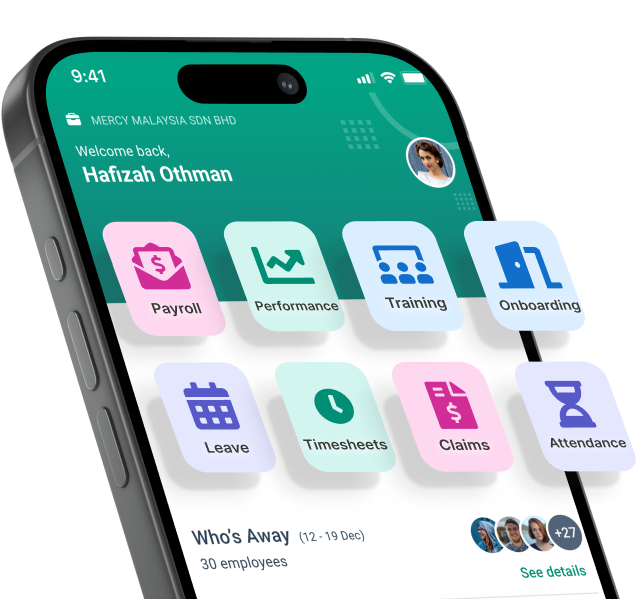
One login
Cut the extra layers in your HR process. Keep what works, remove what doesn’t, and make everyday work easier for your team.
Want the full conversation on how HR can move from opinion to proof, from support to strategy, and from cost centre to value driver. Watch the full episode of withbrio.
To learn more about how brioHR can transform your HR processes, check out brioHR’s website or request a demo.