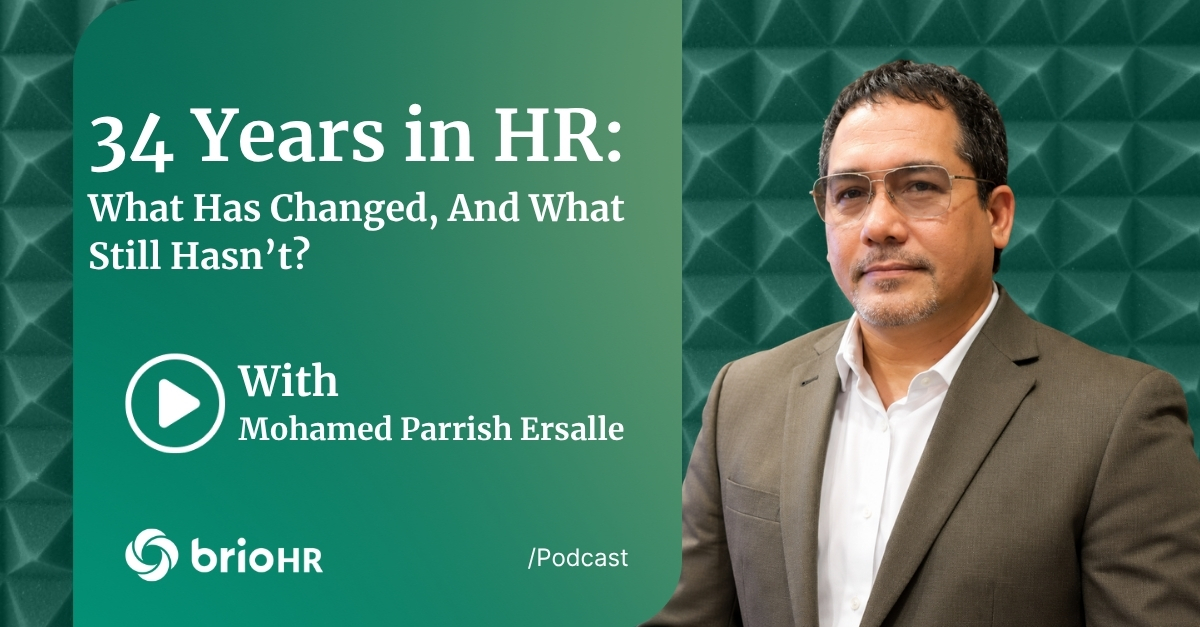
34 Years in HR: What Mohamed Parrish Ersal Still Believes, and What He’s Changed His Mind About
Key Takeaways
- Culture is the only thing that holds when everything else breaks down.
- True leaders are rarer than most organizations admit. 1 to 2% by some estimates. Build accordingly.
- Buy the system that fits your organization, not the one that impresses in a demo.
- Measure behavior the same way you measure results. If it matters, it should be on the appraisal form.
There's a placard Parrish still thinks about. Two of them, actually. They hung on the wall outside his first boss's office at Nestlé, visible to anyone walking in for a meeting.
The first one read: "Are you part of the problem or are you coming here with a solution?"
The second, just below it: "Before engaging mouth, make sure brain is in gear."
He was a management trainee in 1991. He's been in HR for 34 years since. And somewhere in that gap between those two placards and today, the entire landscape of work in Malaysia shifted under his feet.

When Parrish started at Nestlé, HR wasn't even called HR. It was the personnel department. The job was administrative: leave forms, payroll envelopes, union negotiations, industrial relations. Structure was everything. Clock in. Clock out. Stay late not because you had work, but because leaving on time meant you didn't have enough to do.
"Those days, it was very structured, very regimented," he says. "But even then, in 1991, there was a very clear path."
From Personnel to Strategic
"HR today is not like the HR of those years. HR should be strategic. HR should be sitting at the table, discussing with the business, discussing with CEOs what are the plans."
For Parrish, this isn't just a philosophy. It's a hiring logic. When he was at an insurance company, his CEO used gross written premium as a staffing benchmark. Every 100,000 in premiums justified one additional headcount. If you wanted more people, you brought the numbers. If the numbers weren't there, the answer was no.
"That gives you a very focused and a very productivity-driven way of recruitment. If you want more staff, you bring me the numbers, then you can have staff."
The Clock-In Conversation Nobody Wants to Have Honestly
Parrish is from Generation X. He knows exactly what it felt like to stay back at 5pm not because he had to, but because leaving on time meant people looked at you funny. He went through a period in his career where he was only getting back to his desk at 5pm after a day full of meetings, opening a hundred emails, turnaround time 24 hours, no exceptions.
"Do you think I liked it? Of course I want to go home. But I can't, because I have a job."
He says this without bitterness. It's just what it was. And he's clear that he can't expect the generation coming up now to live that same way.
But he's equally clear about what flexibility actually means. It doesn't mean total freedom. It means a different contract, one built on delivery instead of presence. The younger generation, in his view, is smarter and better informed than any generation before them. They'll leave without another job lined up if the environment isn't right. They'll build something with friends. They'll find a way. The organizations that keep them are the ones that give them something real to contribute to, not just a desk to sit at.
"If you can make them stay for more than two to three years, you are very successful already."
Don't measure me on the time that I come in or leave. Measure me on my performance. Measure me on my results that I deliver
Culture Is Not a Poster
Ask Parrish what makes an organization genuinely healthy, and he doesn't reach for engagement scores or pulse surveys. He reaches for a simpler test: "When the leaders are not around, do things still work the way they should?" If yes, the organization has built something real. If no, it's running on authority rather than culture, and authority is fragile. He uses the analogy of a healthy body. An organization with strong culture can take a hit, a crisis, a leadership transition, a rough quarter, and still function. The immune system is already built in. A weak culture looks fine in good conditions and collapses under pressure. He references a book by Rajiv Peshawaria, Too Many Bosses, Too Few Leaders, which cites cross-cultural surveys suggesting only 1 to 2% of people in organizations are true leaders.
"So if you have 10 C-suites, at most two are true leaders. What's happening to the other eight?"
Fear vs. Respect: The Distinction That Changes Everything
Parrish draws a hard line between two kinds of authority. One gets you compliance. The other gets you ownership. Fear makes people show up and perform just enough to avoid consequences. Respect makes people bring their full thinking to the work because they believe it matters and because they believe in the person asking for it. The difference shows up in how problems get solved. A fear-based team waits for the leader to rescue every situation. A respect-based team comes in with solutions. Those two placards from his first boss weren't just motivational quotes. They were a structural expectation: don't walk into this office unless you've already thought about what you're asking for. Parrish has carried that forward. When his team comes to him stuck on something, his first question is: what's your recommendation? Not because he doesn't know the answer, but because he believes the answer should come from them first.
"I will not give it. Although I know, I'll just probably save it for a while. They should be thinking."
Make performance management effortless
Streamline goals, reviews, and feedback in one flow—so managers can focus on real performance conversations.

Buy What You Actually Need
When the conversation moves to HR technology, Parrish's advice is the most grounded thing in the episode. Don't start with what vendors are selling. Start with what you already have. Map the systems. Identify what works and what doesn't. Talk to the people doing the actual work, not just the department heads, because the people inside the teams know where the friction is. And don't buy something impressive when something functional is what you need.
"You may not need a Ferrari, you may need a Toyota, so get a Toyota."
His concern isn't with technology itself. It's with the pattern he's seen too many times: organizations buying systems with features they'll never use, paying for capacity that sits idle, making decisions without the right people in the room.
Measuring What Feels Unmeasurable
One of the harder questions Mattie pushes on is ROI: how do you get a CEO to invest in culture, EQ, behavioral competencies? Things that are real but don't produce a clean number. Parrish's answer is practical. You build it into the performance system itself. In his framework, performance evaluation isn't only about hitting KPIs. It's split between hard targets, the delivery, the numbers, the results, and soft targets, the behavioral competencies. And the more senior the person, the higher the percentage that should be measured on behavior.
Malaysia's 2030 Problem
The last part of the conversation zooms out from organizations to the country. Malaysia has a target: 35% highly skilled workforce by 2030. Parrish estimates the country is currently somewhere between 5 and 10%. And as of May 2026, only 10.4% of registered training programs are certification-based. His argument is straightforward. Certification creates a standard. It creates portability. It creates something you can build on, not just a training attendance record that proves someone sat in a room for two days. If Malaysia wants to compete, and eventually export talent rather than just absorb it, the workforce needs credentials that mean something beyond the organization that issued them. Four years to 2030. The pace of change required is faster than most institutions are moving.
Conclusion
- Mohamed Parrish Ersal has spent 34 years in HR across manufacturing, financial services, aviation, and national human capital development. In this episode, he traces HR's evolution from personnel admin to strategic business partner, and gets honest about what still hasn't changed enough. He covers performance culture, leadership, why culture is the only thing that holds when a crisis hits, how to buy HR technology without wasting money, and what Malaysia needs to get right about talent before 2030.
Everything HR.
One login
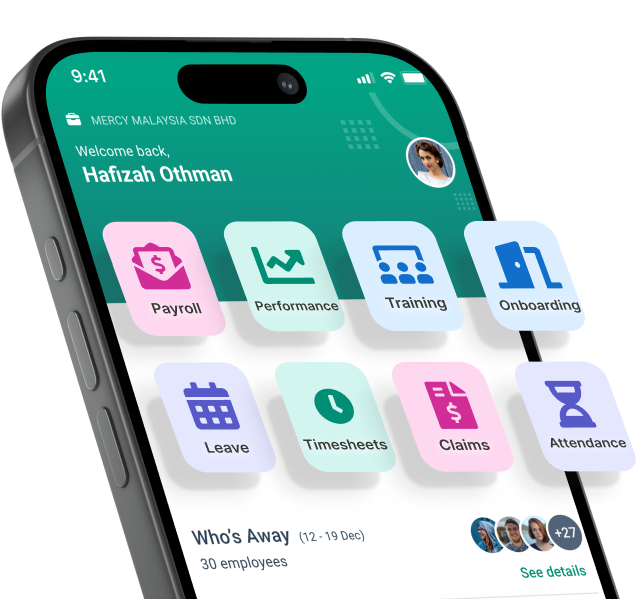
Cut the extra layers in your HR process. Keep what works, remove what doesn’t, and make everyday work easier for your team.
Want the full conversation on how HR can move from opinion to proof, from support to strategy, and from cost centre to value driver. Watch the full episode of withbrio.
To learn more about how brioHR can transform your HR processes, check out brioHR’s website or request a demo.