What You Need to Know About Annual Leave

Key Takeaways
- Employees in Malaysia are entitled to a minimum of 8 to 16 days of annual leave depending on their length of service.
- Annual leave can be calculated using prorated or earned methods, each affecting how and when employees can use their leave.
- Unused leave can be carried forward with conditions or converted into cash if the company allows leave encashment.
- Employers can manage leave timing and approvals, but cannot force employees to take annual leave for business convenience.
- Clear policies help prevent disputes and ensure fair use of annual leave for both employees and employers.
Annual leave – who doesn’t love paid time off? It’s also an important benefit for employees to rest and recharge, able to return and give their best at work. And, giving lots of annual leave is a great perk to attract talent to the company.
As a result, much of HR’s time is spent calculating annual leave entitlements, checking leave balances, and occasionally settling leave disputes among employees. Here’s all that you need to know about annual leave in Malaysia.
The Legal Entitlement to Annual Leave
Alongside other types of leave, annual leave is a legally mandated benefit under Malaysia’s Employment Act 1955.
In Malaysia, the minimum legal entitlement to annual leave is as follows:
- 8 days per year if employed for 1–2 years,
- 12 days per year if employed for 2–5 years,
- 16 days per year if employed for longer than 5 years.
Calculating Annual Leave Entitlement
There are broadly two ways of calculating annual leave entitlement.
Prorated Leave Entitlement
Employees will have their annual leave entitlement reset on 1 January every year. For example, if they are entitled to 12 days of annual leave, they will earn all 12 days of annual leave on 1 January.
If an employee joins midway through the year, their annual leave entitlement will be prorated. For example, if a new joiner starts on 1 July, they will only be entitled to six days. On 1 January the following year, they will get the full 12 days of annual leave.
Prorated leave also applies to resigned employees. If an employee is entitled to 12 days of annual leave, but resigns on 30 June, then their leave will be prorated to 6 days.
Also, the annual leave entitlement reset date need not be set on 1 January; it can fall on any other date determined by the company.
“Almost everything will work again if you unplug it for a few minutes, including you.”
What Employees Can Do with Unused Leave
Sometimes, employees will accumulate a lot of unused annual leave. Companies will commonly provide two options for them to use it.
Carry Forward Annual Leave
Employees may carry forward unused annual leave to the next year. Normally, only a fraction of the employee’s entitlement can be carried forward, and must be used by a certain date.
You can see how it works in the following sample carry forward leave policy:
“Employees may carry forward 5 days of leave into the next year, subject to the Company’s approval. Any leave days that are carried forward must be utilized by 31 March of the following year. Otherwise, they are forfeited.”
Under this policy, if an employee has 10 days of unused annual leave on 31 December 2022, they can only carry forward five days of leave into 1 January 2023 in addition to their existing annual leave entitlement. However, they need to use the additional five days of leave by 31 March 2023 before it is automatically forfeited.
Annual Leave Encashment
An alternative to carry forward leave is converting it into cash. This is known as leave encashment.
In effect, the employee is ‘selling’ their annual leave back to the company at an agreed rate. This is normally equivalent to the employee’s daily pay.
Leave encashment is not as common as carry forward leave, and is not a legal requirement for employers. The only way to encash leave is if the company explicitly provides for it in the employment contract and/or employee handbook.
Resigned Employees and Annual Leave
When an employee has surplus annual leave upon their resignation, you can give them two options.
- You can use it to offset their notice period. For example, let’s say an employee has a 30-day notice period and seven days annual leave balance. If they resign on 1 July, their last day will be 31 July. But they can use the seven days of annual leave to ‘bring forward’ their last day of work to 24 July.
- You can offer to encash their remaining annual leave.
Each option is of course subject to company policy and what is stated in the employment contract and/or employee handbook.
Other Annual Leave FAQs
Are employees on probation entitled to annual leave?
This will depend on the employment contract. Normally, employees on probation are not entitled to paid annual leave. If they need to take leave, it will be deemed as unpaid leave.
However, the leave benefits in the Employment Act 1955 apply to the following categories of employees, regardless of probationary status:
- Employees that earn a monthly salary of RM4,000 or less.
- Employees who are engaged in manual labour, regardless of salary.
- Domestic servants.
- Other categories of employees within the First Schedule of the Employment Act.
Can employers reject an employee’s annual leave application?
Yes. While employees are entitled to annual leave, the employer still retains control of when the leave can be used.
To be safe, it’s better to give a reason as to why an employee’s annual leave request is denied. These include:
- Insufficient notice was given.
- Leave application is not according to company procedure or policy.
- Other employees are also going on leave.
- There is urgent work that needs to be completed (or it is the company’s peak period).
Make Leave Management Effortless
With mobile requests and auto approvals, brioHR keeps employees and managers in sync no back-and-forth.

Can the company force employees to take annual leave?
Sometimes, during quiet periods, the company may close the office temporarily to save costs. However, this is not a reason to force employees to take annual leave. The Industrial Court has held in multiple cases that annual leave “should not be enforced on the employee merely to suit the company’s convenience.”
Guidance from the Ministry of Human Resources also states that employers cannot force their employees to take annual leave during the Movement Control Order (MCO) period. By extension of this guidance, employers also cannot force employees to take annual leave during normal times.
Can employees that are working from home take annual leave?
Yes, they are also entitled to annual leave. If anything, working from home leads to an unhealthy work-life balance and increases the risk of burnout. Hence, employees that are working from home can indeed take annual leave and ‘switch-off’ from the office.
Everything HR.
One login
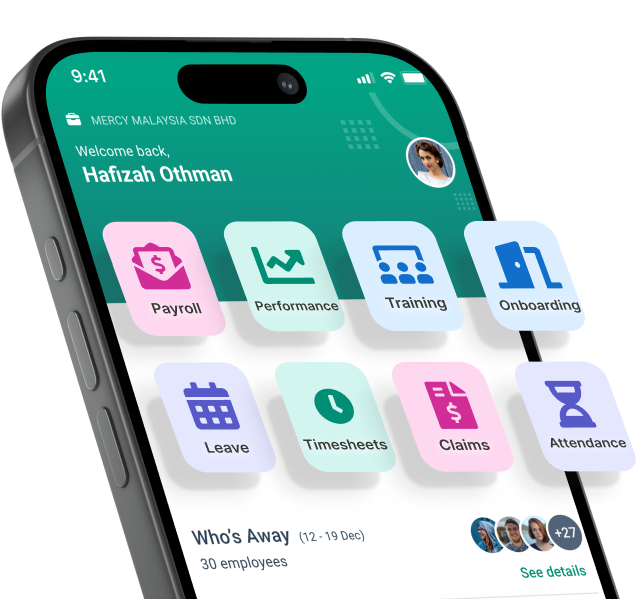
From payroll to onboarding, brioHR gives you everything you need in one place. Built for busy teams. Backed by people who care.
Conclusion
- Annual leave is a key employee benefit that supports rest, wellbeing, and sustained productivity.
- Employers must comply with legal minimum entitlements while setting clear policies on how leave is managed and used.
- Choosing the right leave calculation method can impact both operational efficiency and employee experience.
- Handling unused leave through carry forward or encashment should be clearly defined to avoid confusion.
- A well-structured annual leave policy helps maintain fairness, reduce disputes, and support a positive workplace culture.
To learn more about how brioHR can transform your HR processes, check out BrioHR’s website or request a demo.