Leadership, Career Freedom and the Power of Small Decisions | Chen Chow Yeoh
Key Takeaways
- A successful career can still feel wrong when it no longer fits the life someone wants.
- HR gains influence when people initiatives are connected to problems the CEO already wants to solve.
- AI can help people examine a decision, but context and judgment still belong to the person making it.
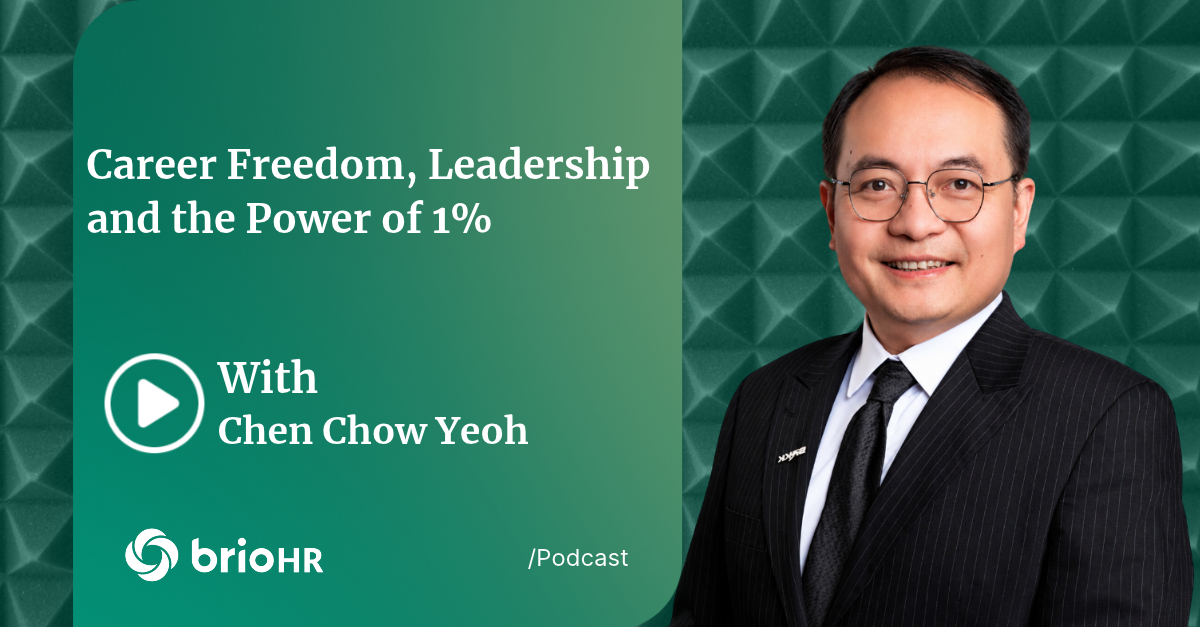
Discover CC Yeoh's insights on strategic HR, leadership, career freedom, employee engagement and AI in this episode of the with brioHR podcast. What happens when you've built successful companies, earned impressive titles, and achieved the career milestones most people dream of, but realize you want something completely different? For some, success means a bigger salary, a promotion, or another business to build. For others, it eventually becomes about something harder to measure: freedom, meaningful work, and the ability to spend time on what matters.
CC Yeoh has experienced both sides.
After years of building and scaling companies across Asia, he made an unexpected choice. Instead of pursuing another demanding executive position, he redesigned his working life around flexibility, intellectual curiosity, and the freedom to choose how he spends his time. Today, he advises entrepreneurs and business leaders by the minute, travels frequently, and deliberately lives a simple life.
But his story raises bigger questions. What does real success look like? How can leaders unlock better performance without losing the human side of business? And why is HR still treated as an administrative function when it has the potential to shape entire organizations? In this episode of the with brio podcast by brioHR, CC joins host Mathieu to explore career choices, entrepreneurship, AI, leadership, and the role of people in building successful businesses.

Yeoh Chen Chow, better known as CC, is an entrepreneur, investor, board director, and advisor with extensive experience building and scaling businesses across Asia. His career spans global consulting, multinational corporations, startups, and senior leadership roles, giving him an unusually broad perspective on how organizations operate.
CC played a significant role in building KFit and Fave, navigating expansion, acquisitions, restructuring, and business model transformations. Fave was eventually acquired by Pine Labs in a deal valued at USD 45 million. Throughout his entrepreneurial journey, he worked with approximately 20 venture capital firms, corporate investors, and angel investors, and participated in nine acquisitions or acqui-hires.
Today, he leads 1% Advisory & Coaching, offering business advisory, executive coaching, and career guidance through an unconventional pay-by-the-minute model. His clients include founders, investors, executives, and business owners navigating decisions involving growth, leadership, career transitions, and organizational change. He also serves as Independent Non-Executive Chairman of Foodie Media Berhad and as an independent director of Audience Analytics Limited and SRKK AI Berhad.
Beyond his corporate responsibilities, CC is an angel investor in more than 30 startups, an Eisenhower Fellow, and a Cornell University alumnus. He has worked across 13 Asia-Pacific countries and remains actively involved in mentoring young entrepreneurs and students, including through USAPPS, a nonprofit initiative supporting Malaysians aspiring to study at leading US universities. His experience gives him something particularly valuable: the ability to see business challenges from multiple perspectives, whether as a founder, employee, investor, board director, or advisor.
Why Career Success Doesn't Always Mean Fulfilment
Many professionals spend years working towards the next promotion, a bigger company, or a more prestigious title. But what happens when they reach that point and discover they are still unhappy?
CC frequently encounters senior professionals who have achieved financial security and career recognition but feel disconnected from the work they do. Some have spent decades developing expertise, only to find that advancing to the next level requires completely different skills. Others enjoy the financial rewards of their positions but no longer find the work meaningful. CC understands this tension. After years of running businesses, managing teams, and navigating high-pressure decisions, he realized he wanted to approach his career differently.
"Okay, let me design life, rather design career."
That decision became the foundation of his next chapter. Instead of choosing a job and organizing his life around its demands, CC started with a different question: What kind of life did he actually want? For him, the answer involved freedom to travel, control over his schedule, and opportunities to engage in intellectually stimulating conversations.
To make that possible, he deliberately reduced his living expenses. He drives an older car, lives in a small room, and avoids many expenses others might associate with success. These choices are not necessarily right for everyone. That's precisely his point. A successful career should not require everyone to follow the same formula.
For HR professionals and business leaders, this raises an important consideration about career development and employee engagement. Not every talented employee wants to become a manager. Not everyone is motivated primarily by compensation or promotion.
Some want greater autonomy. Others value learning, flexibility, stability, or opportunities to make a difference. Understanding what individuals actually want from their careers can help organizations create more meaningful development opportunities and retain people who might otherwise leave.
The 1% Principle: How Small Decisions Create Big Changes
CC's advisory business is built around a simple concept: 1%. Most people associate the idea of improving by 1% with gradual progress. Small improvements, repeated consistently, can eventually create significant results. But CC introduces another interpretation. Sometimes, a tiny interaction can change the direction of someone's life. A conversation with the right person, an unexpected introduction, or a small opportunity can influence a career or business in ways nobody initially anticipated.
Throughout his own journey, CC benefited from people who opened doors, encouraged him to try something new, or offered opportunities he had not considered. He also learned not to let rejection become the final answer. When he repeatedly failed to secure a place at a leadership conference, he volunteered to help with registration instead. That decision allowed him to experience part of the event and build relationships that lasted for years. It's a reminder that professional growth doesn't always come from elaborate plans.
Sometimes, it comes from being curious enough to ask, showing up when opportunities appear, and helping others without expecting immediate returns. For leaders, this principle is particularly relevant. Employee development isn't shaped only by annual performance reviews, promotion cycles, or formal training programs. It also happens through everyday interactions. A manager who offers someone a challenging opportunity, introduces an employee to a new colleague, or takes a few minutes to provide thoughtful feedback may influence that person's career far more than they realize. The challenge is recognizing the value of these moments and creating an environment where they happen naturally.
You have the power to transform people's life, whether for good or for bad.
Why Strategic HR Deserves a Bigger Role in Business
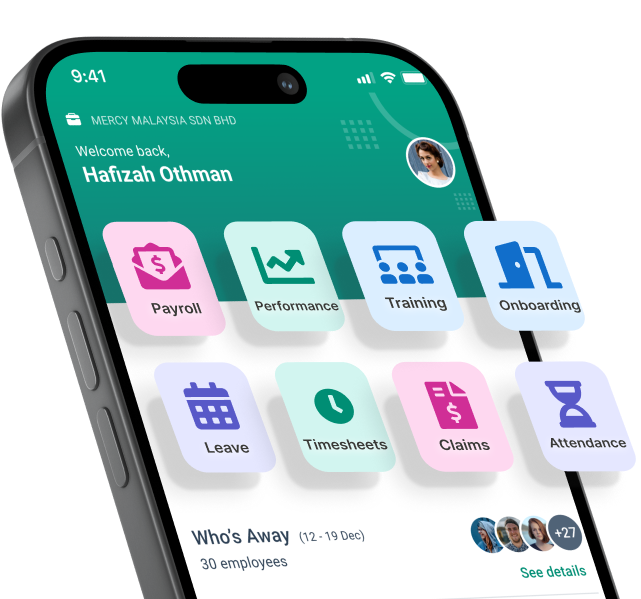
One of the strongest discussions in this episode focuses on a familiar challenge for HR professionals, particularly in growing businesses across Malaysia and Southeast Asia. HR teams are often consumed by payroll, employee claims, leave administration, compliance, and other operational responsibilities. These tasks are essential. Businesses need accurate payroll, reliable processes, and well-managed employee information. The problem arises when HR's contribution is limited to administration.
In the conversation, Mattie raises the difficulty many HR professionals face when trying to influence business decisions. They are responsible for managing people processes but may have limited authority to shape the organizational decisions that affect those same people. CC believes meaningful change must begin with business leaders.
CEOs need to recognize that talent, culture, and performance are not secondary concerns. They are fundamental to how a business operates and grows. He recalls a discussion in which a senior business leader suggested that the most important executive after the CEO may be the chief people or talent officer. It's a compelling argument. Companies depend on people to execute strategies, solve problems, serve customers, and adapt to change. Yet the people responsible for attracting, developing, and retaining that talent are not always involved in strategic conversations.
How HR Can Become More Influential
CC's advice is practical: Start by understanding what the CEO actually cares about. Business leaders usually have a few major concerns occupying their attention. They might be struggling to retain experienced employees, improve productivity, develop future managers, or prepare the organization for expansion. Instead of approaching leadership with an abstract proposal about HR transformation, HR professionals can connect their initiatives directly to these business priorities.
For example, if a business is losing talented employees, the discussion shouldn't stop at turnover statistics. It should explore why people are leaving, how those departures affect team performance, and what realistic changes could improve retention. If managers struggle to deliver results, HR can help establish clearer expectations, better feedback processes, and opportunities for leadership development.
The goal is not simply to introduce more HR programs. It's to demonstrate how better people management can help solve problems the business already recognizes. And while strategic influence matters, operational excellence remains equally important. Reliable HR processes build the trust and capacity needed to pursue broader initiatives. For HR teams trying to gain a stronger voice, the opportunity is to connect people, performance, and measurable business impact.
Employee Engagement Starts With Everyday Leadership
When businesses discuss employee engagement or company culture, the conversation often turns to benefits, team-building activities, or company events. Those initiatives can contribute to a positive workplace, but CC emphasizes something more fundamental. Culture is created through the way people experience everyday interactions at work. Do employees feel respected? Do they trust their managers? Are they comfortable contributing ideas? Do they feel that their work matters?
These experiences are influenced by hundreds of small decisions across an organization. CC shares an example from his time at Fave, where teams received a monthly budget based on the number of employees. Instead of prescribing how that money should be spent, leaders gave teams the flexibility to decide. Some could use it for coffee sessions, others for activities or outings.
The principle was simple: give people clear boundaries and allow them to make decisions that work for their teams. This approach recognizes that different departments have different needs. What helps an engineering team connect may not work for an operations team. More importantly, it gives employees a sense of ownership. The Human Side of Difficult Leadership Decisions
Care becomes even more important when leaders face uncomfortable situations. Performance problems, disagreements, restructuring, and layoffs are unavoidable realities in many organizations. But the way those situations are handled can leave lasting impressions. CC encourages leaders to consider how they would want to be treated if they were on the receiving end of a difficult decision. A necessary business decision can still be communicated with empathy, clarity, and respect. This reflects an important principle behind brioHR's approach to people management: care and impact should reinforce each other, not compete. High performance matters, but so does the experience of the people responsible for delivering it. Organizations don't need to choose between expecting great results and treating employees well. Effective leadership requires attention to both.
Make performance management effortless
Streamline goals, reviews, and feedback in one flow—so managers can focus on real performance conversations.

AI and Human Judgment: Finding the Right Balance
Artificial intelligence is rapidly changing the way individuals and organizations work. But with so many tools and possibilities, knowing where to begin can feel overwhelming. CC approaches AI from a practical perspective. He uses tools such as ChatGPT, Claude, and Gemini to explore ideas, analyze information, challenge assumptions, and consider different possibilities before making decisions.
Rather than adopting technology simply because it is popular, he recommends starting with a problem that genuinely matters. This could mean reducing repetitive administrative work, analyzing business data, preparing for an unfamiliar situation, or exploring alternative approaches to a difficult decision. His philosophy is straightforward:
"I think the way I look at this AI is to enhance human judgment, not to replace human judgment."
For HR teams, this distinction is particularly important. AI can help organize information, streamline workflows, analyze patterns, and reduce the time spent on repetitive tasks. But decisions involving employees often require context, empathy, and an understanding of individual circumstances that cannot be reduced to an automated recommendation. Consider performance management.
Technology may help managers track goals, structure feedback, and identify trends. But understanding why someone is struggling, what motivates them, or how to support their development still requires meaningful human interaction. The opportunity isn't simply to automate more work. It's to free people from unnecessary administrative effort so they can focus on decisions and conversations where human judgment creates the greatest value.
How Leaders Can Build Higher-Performing Organizations
Another important question from Mathieu explores how Malaysian businesses can improve productivity, creativity, and organizational performance. CC identifies exposure to world-class standards as one potential driver. When professionals encounter different business environments, leadership practices, and ways of working, they begin to see possibilities beyond what they already know. This matters for both individuals and organizations.
Employees who have never experienced an effective performance management process may struggle to imagine what good performance management looks like. Likewise, leaders who have always operated within the same structures may not recognize opportunities to improve. Exposure to better practices, combined with a willingness to experiment, can help organizations challenge familiar assumptions.
CC also emphasizes the importance of data. During his time at Fave, he closely monitored business performance metrics to identify patterns, changes, and potential problems. But performance is not only about measurement. Different people perform best under different conditions. Some excel through consistent routines, while others thrive when given ambitious challenges or opportunities to experiment.
For business leaders, the responsibility is to build an environment where clear expectations, useful information, and sufficient autonomy work together. For HR, the opportunity is to help make that environment possible through better management practices, development opportunities, and a deeper understanding of what enables people to perform.
The Bigger Lesson: Leadership Is About the Impact You Leave on People
Despite CC's extensive experience in entrepreneurship, investments, and business leadership, one of his strongest messages is about responsibility towards others. At the end of the discussion, Mathieu asks what final advice CC would give to HR professionals. His response captures the human significance of their work:
"You have the power to transform people's life, whether for good or for bad."
It's a powerful reminder that HR and leadership decisions affect more than business metrics. A hiring decision can change someone's future. A manager's encouragement can give an employee the confidence to pursue a new opportunity. A poorly handled dismissal can affect someone long after they leave the organization. The same is true of everyday interactions that appear insignificant in the moment.
Across the conversation, CC returns to a consistent philosophy: think bigger about what is possible, but never underestimate the small actions that make progress happen. For HR professionals, this means looking beyond processes without dismissing their importance. For business leaders, it means recognizing that people management is central to business performance.
And for anyone reconsidering their career, it means asking whether their definition of success still reflects the life they want to build. Perhaps the most interesting question isn't how to achieve more. It's whether we're directing our effort towards the things that genuinely matter.
Conclusion
- CC's career does not offer one definition of success. It shows what can happen when someone stops following the next expected step and decides what their work needs to make possible. The same attention is useful inside a company. Employees do not all want the same career. Teams do not all respond to the same incentives. AI does not remove the need for judgment. HR cannot influence the business without understanding the problems its leaders are trying to solve. Across each topic, the practical lesson is similar: pay attention to the small decisions. They shape careers, working relationships and the way people experience a company.
Everything HR.
One login
Cut the extra layers in your HR process. Keep what works, remove what doesn’t, and make everyday work easier for your team.
Watch the Full CC Yeoh Interview on with brioHR
From building startups across Asia to choosing an unconventional lifestyle, CC Yeoh brings a perspective that challenges many assumptions about work, success, and leadership. This article explores some of the key lessons, but there's much more in the full conversation, including the unexpected decisions that shaped CC's career, his approach to business advisory, and the personal experiences behind his philosophy.
Watch the full episode of the with brioHR podcast featuring CC Yeoh to discover more about leadership, entrepreneurship, AI, strategic HR, and the small decisions that can create a lasting impact. Because sometimes, a single conversation is enough to make you reconsider what success means to you.
To learn more about how brioHR can transform your HR processes, check out brioHR’s website or request a demo.