When Faster Decisions Become Dangerous for HR
Key Takeaways
- Communication and reporting become faster, because less time is spent preparing and more on acting.
- AI speeds up HR work, because it removes the manual steps that slow everything down.
- The gap between insight and action gets shorter, because decisions don’t need long processes anymore.
- Organisational changes can happen quicker, because execution is no longer the main bottleneck.
- Efficiency cuts both ways, because what becomes easier to manage also becomes easier to reduce.
AI is making HR faster, speeds up communication, automates reporting, simplifies administration, and reduces manual work that used to take hours. It also makes layoffs faster 🙏. It shortens the distance between analysis and action. It allows organisations to restructure in weeks instead of months. It removes friction from decisions that used to require long internal debate.
In Episode 9 of withBrio, Becky Low explains why this matters. When technology accelerates people decisions, governance, judgment, and trust become more important than ever. Without them, efficiency turns into organisational damage. Her perspective is shaped by two decades in HR operations, shared services, and large scale transformation, combined with board level experience in governance, ESG, and risk. The result is not a conversation about trends. It is about how HR actually works when systems, people, and reputation are all under pressure.
AI Adoption Is Not a Technology Project
Dr. Becky does not treat AI as a software problem. She treats it as a leadership problem. This is why she insists on validation. Even with advanced automation and RPA, human review remains essential. AI can handle volume. Humans protect quality, fairness, and risk. The danger is not that AI makes mistakes. The danger is that leaders stop questioning outputs because the system looks “smart.”
Lessons from Hypergrowth at ByteDance
The conversation turns practical when she talks about her experience at ByteDance during the pandemic. In several markets, hiring accelerated dramatically. HR operations had to onboard hundreds of people per location, manage remote inductions, ship equipment across regions, and build processes while everything was still evolving. There was no perfect playbook. What made it work was coordination under pressure. Technical teams, vendors, and HR operations worked closely. Delivery partners were used to scale hardware distribution. Onboarding was simplified quickly. Feedback loops were continuous. Everyone worked toward one shared objective: keep the organisation functioning. She describes this as “coverage,” not culture posters. Leaders supported each other across time zones. When documentation was unclear, they solved problems together instead of waiting for perfect systems.
Management is doing things right; leadership is doing the right things.
Why Workforce Planning Is No Longer About Employees Only
Dr. Diez also argues that HR thinking is often stuck in an outdated model of work. In many organisations today, work is done by a mix of full time employees, contractors, freelancers, project teams, software, automation, and AI systems. Treating workforce planning as “headcount management” no longer reflects reality. This is why he suggests that the function may eventually evolve into something closer to a Chief Resources Officer role. Someone responsible for managing human and non human resources as one integrated system. This is also why AI adoption cannot be left only to IT. Introducing automation changes how people see their future, their value, and their security. Managing that transition is primarily a trust and psychology challenge.
Payroll Accuracy Is a Trust Engine
One of Dr. Becky’s strongest arguments is about HR operations, specifically payroll and benefits. She believes ambitious HR professionals should start there, not because it is glamorous, but because it teaches you what trust feels like when it is real. Payroll is one of the most direct trust mechanisms an organisation has. When salaries are paid correctly, employees feel secure. When errors occur, anxiety spreads immediately, regardless of how friendly the culture deck looks. That is why operational discipline matters. Validation processes, audit trails, and accountability structures are not bureaucracy for its own sake. They are reputation protection. Payroll errors can affect wellbeing, retention, and credibility, and the impact often outweighs the effort it takes to “fix it quietly.”
Get the foundation right
Automate workflows, reduce errors, and keep your HR operations consistent and reliable.

Why There Are No Shortcuts in HR Transformation Careers
Dr. Becky’s career advice is simple: build fundamentals before you chase strategy titles. Starting in payroll and benefits forces you to understand employee experience, compliance constraints, policy interpretation, and the reality of how people respond to HR decisions. It trains you to respect detail. In transformation work, detail is not admin. Detail is where risk hides. Once you have lived those fundamentals, you can lead larger systems with credibility. Without them, strategy becomes conceptual, and conceptual HR is easy for the business to ignore.
ESG in HR: Why HR Has More Influence Now
The episode also explains a shift many HR leaders feel but struggle to define. ESG has changed what boards and executives ask from HR. HR owns a significant part of the social dimension of ESG. Wellbeing, fairness, opportunity, learning, and workplace systems sit inside HR’s control. Succession planning becomes more than a talent exercise. It becomes governance protection. When leadership transitions are poorly managed, confidence can drop internally and externally. Dr. Becky pushes ESG away from performative reporting and toward execution. Plans, timelines, KPIs, and accountability determine whether the organisation is serious.
People Advocate and Business Partner Is Not a Personality Type
Dr. Becky shares a principle that is uncomfortable because it is practical. Be a good employer even at the last moment. If someone is close to a benefits milestone, she advises leaders to consider timing so the employee is not unnecessarily harmed. At the same time, she refuses exceptions that damage fairness. In hiring, she argues HR should not bend rules for one candidate if it breaks internal trust. Winning one person is not worth teaching everyone else that standards are negotiable. That balance is not achieved through being “nice.” It is achieved through consistency.
How to Challenge a CEO Without Getting Ignored
Her method for influencing senior leadership is built on preparation. Do the homework. Analyse risks and tradeoffs. Show structure, not feelings. Present options with consequences, then go deep only after direction is chosen. This prevents HR from spending weeks polishing plans leadership never intended to run. It is also a credibility move. Leaders may ignore moral language. They rarely ignore well-structured risk.
Conclusion
- AI in HR can absolutely improve efficiency. It can remove administrative drag and help HR teams move faster. But if adoption outruns governance and judgment, it can also compress decision cycles in a way that breaks morale, damages trust, and creates reputational risk that no comms team can patch. Dr. Becky’s through-line is consistent. Future-ready HR is built on operational excellence, compliance discipline, and leadership courage. ESG increases HR’s influence, but it also increases HR’s responsibility.
Everything HR.
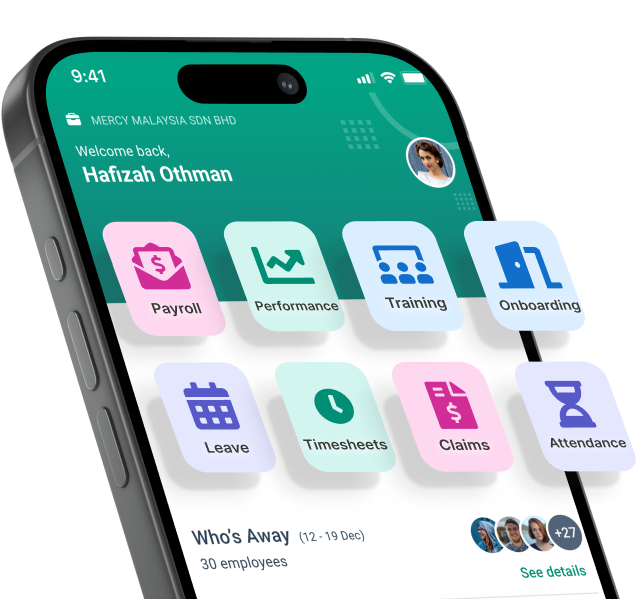
One login
Cut the extra layers in your HR process. Keep what works, remove what doesn’t, and make everyday work easier for your team.
Want the full conversation on how HR can move from opinion to proof, from support to strategy, and from cost centre to value driver. Watch the full episode of withBrio.
To learn more about how brioHR can transform your HR processes, check out BrioHR’s website or request a demo.