The HR Identity Crisis: From Admin to Strategic Leader & Why Your Job is Not to Be Popular
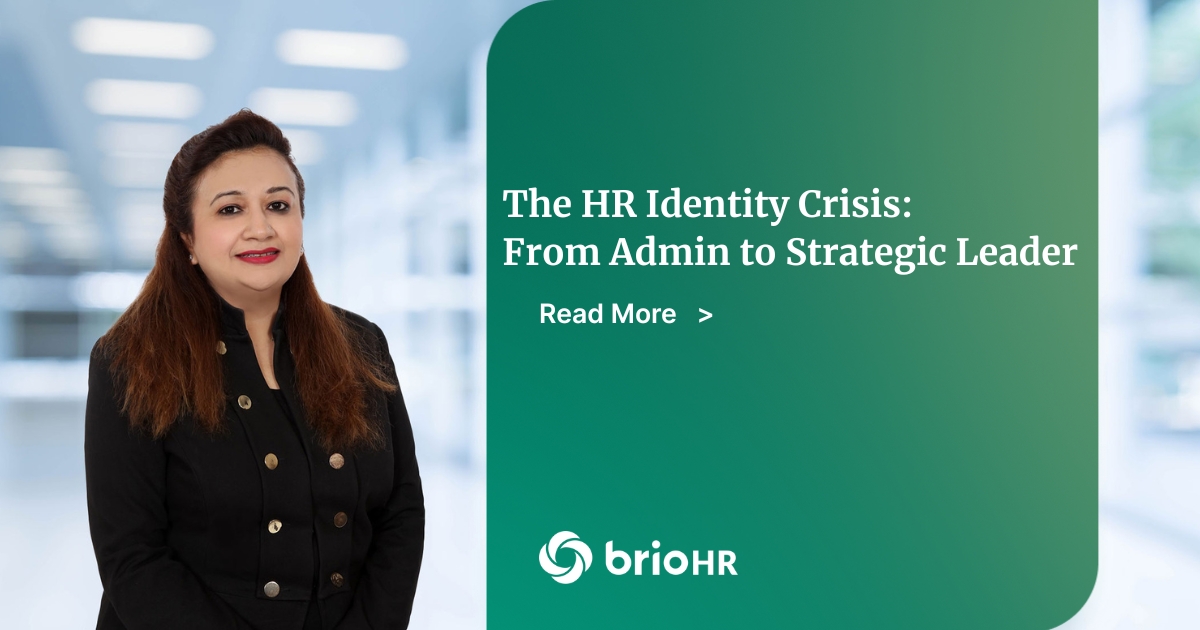
Insights from the withBrio Podcast with Malini Vijaya Rajah
In many organizations, HR is still seen as the department that manages payroll, compliance, and forms. Yet, as Malini Vijaya Rajah reminds us in our latest episode, that’s a limited view of what HR can and should be
Malini with over 30 years of experience in HR, leadership, and organizational transformation has helped companies across APAC and India redefine their HR models. Representing HRCI, she has championed professional certification and capability development for HR professionals across the region. Her message is clear: if HR wants to be seen as a strategic partner, it needs to start acting like one
Why HR Still Struggles to Be Seen as Strategic
Even today, many business leaders see HR as a “cost” instead of an investment. According to Malini, the problem isn’t perception it’s positioning. HR often operates reactively, caught up in admin and compliance. But when HR leaders understand what makes the business tick its revenue levers, customer impact, and people dependencies they earn credibility. “Understanding the business,” she says, “isn’t about memorizing KPIs. It’s about knowing what makes your organization successful and helping your people drive that success.”
The Reality of One-Person HR
If you’re the only HR in your company, you already know the struggle: endless tasks, no time for strategy, and little support. Malini’s advice is pragmatic: Start with governance, make sure compliance and payroll are solid, but don’t stop there. Use automation to free time, and focus on building your understanding of what drives turnover, performance, and engagement. “If you don’t understand why people are leaving or what makes them stay, you’ll stay stuck as admin.”
How AI is Reshaping HR Software for Maximum Impact
When integrating AI into core HR software, the brioHR team focuses on two dimensions: how the company uses AI internally, and how they incorporate it into the product for clients (AI for HR). Their philosophy is to prioritize specific, task-oriented tools over creating a single "intelligent HR assistant" that tries to do everything. This approach ensures better adoption and direct impact for HR teams.
From Order Taking to Leadership
Many HR professionals, especially in growing SMBs, find themselves taking orders rather than shaping direction. Malini challenges them to change that mindset. Ask yourself:
1. Do I understand what makes the business succeed?
2. Do I know what skills our people need to get there?
3. Am I bringing solutions or waiting for instructions?
Becoming proactive starts with curiosity. “If you want to move up the ladder,” she says, “don’t just grow your salary grow your accountability.”
Why Promotions Fail and What to Do About It
Companies often promote great performers into leadership roles, only to see them struggle. The reason? A missing bridge between operational excellence and strategic capability. Malini explains that promotions must come with structured development plans, continuous feedback, and leadership mentoring. Without that, even the best employees risk failing in their new roles. “Promotion doesn’t equal success,” she reminds us. “You need to equip leaders with the right competencies not just the new title.”
The New Work Life Contract
COVID-19 changed everything. Flexibility isn’t a perk anymore, it’s a baseline expectation. Malini has seen employees resign before finding another job, simply to reclaim balance and wellbeing. “Work–life balance is now on a completely different level,” she says. “People are bolder about choosing family and mental health over money.” HR’s role? Design cultures that respect flexibility while maintaining performance. Because when people feel trusted and valued, retention follows naturally.
Trust, Integrity, and the HR Brand
Trust is the currency of HR – and it’s earned through integrity and transparency. “HR’s role is not to be popular,” Malini says. “It’s to be fair.” That means:
– Using data to make objective decisions
– Building credibility through consistency
– Speaking up, even when it’s uncomfortable
True trust, she notes, comes when HR stops being seen as “management” and starts being seen as a partner
The Future of HR and AI
Malini’s take on AI is refreshingly grounded: don’t compete with it, collaborate with it. AI can automate repetitive work, but it can’t replace empathy, judgment, or human connection. Her advice to HR professionals: master your fundamentals first. “Before you teach AI, make sure you understand the basics of HR because algorithms can’t fix what you don’t know.” Automation, she believes, should give HR more time to focus on what matters people, strategy, and culture.
The Future of Work: Humanizing the System
The workplace of tomorrow isn’t just digital, it’s humanized. Policies need to reflect real life, not just spreadsheets. Diversity, inclusion, and lifelong learning aren’t buzzwords they’re survival strategies. As Malini puts it: “We need to accept people as they are. It’s not about fitting in it’s about bringing your best self to work.”
Final Thought
The HR function is evolving from paperwork to purpose, from cost to catalyst. Malini’s journey shows that when HR leaders understand the business, embrace technology, and build trust, they stop being seen as “the people police” and start being recognized as true business partners
Watch the full interview with Malini Vijaya Rajah on the with brioHR Podcast to dive deeper into The HR Identity Crisis: From Admin to Strategic Leader
To learn more about how brioHR can transform your HR processes, check out BrioHR’s website or request a demo.