The Augmented HR Leader: CTO Insights on AI, Impact, and the Future of Work

Insights from the withBrio Podcast with Nabil Oudghiri
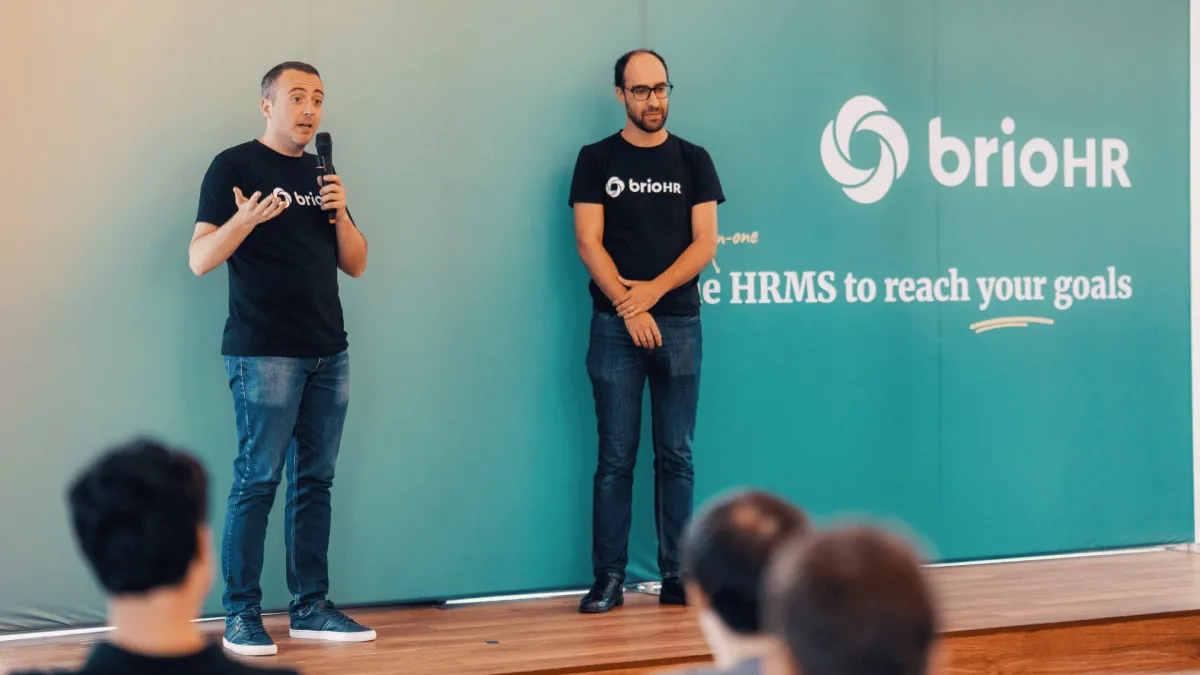
Nabil Oudghiri, Cofounder and CTO at brioHR, reveals the future of work. Learn why AI is your "junior partner," how to prioritize tech for maximum impact, and the one critical mistake to avoid with custom HR software. Watch the full interview to learn more
The Future of Work Starts with How We Build
The conversation around the future of work is no longer focused solely on remote or hybrid models; it's centered on Artificial Intelligence. To get a true sense of what this evolution means for product development and the role of Human Resources, we sat down with Nabil Oudghiri, Cofounder and CTO at brioHR, who offered candid insights on the shift from chasing "cool tools" to focusing on genuine business impact.
Nabil, whose journey into HR software was sparked by his personal frustration with manual processes, is now leading the charge in building an augmented future for HR professionals. The core of the future of work, according to Nabil, involves every employee having "one or several AI agents working for them on different tasks". This isn't science fiction, it’s a necessary transformation allowing people to do much more than they can today. Think of AI as an advanced junior person working for you. This perspective is key because while AI can automate virtually every small, repetitive task, humans must still coordinate and direct this augmented workforce. This is the essence of being an augmented HR professional and achieving a bigger scope and better quality of work, faster.
Why You Must Verify Your AI's Work
One of the most critical takeaways is that you cannot expect AI to be perfectly accurate right out of the box. It is an excellent tool for creating an advanced first draft, but it is still up to you to confirm and perfect the output. “AI is like somebody that works for you, a junior person. You can’t just expect everything to be perfect; you still have to check and verify.” Nabil offers a clear example from his engineering team through the concept of "vibe coding" The AI writes most of the code, but the human engineer must command it precisely (via prompts) and then verify the results. This process of command and verification applies just as much to marketing, HR, or any other business function. Ultimately, leadership must build a culture where employees are encouraged to try, iterate, and master the art of prompting AI tools. In other words, AI is not replacing HR, it’s amplifying human capability. For small teams, this could mean running advanced performance appraisals or predictive analytics that were previously out of reach.
How AI is Reshaping HR Software for Maximum Impact
When integrating AI into core HR software, the brioHR team focuses on two dimensions: how the company uses AI internally, and how they incorporate it into the product for clients (AI for HR). Their philosophy is to prioritize specific, task-oriented tools over creating a single "intelligent HR assistant" that tries to do everything. This approach ensures better adoption and direct impact for HR teams.
Specific AI Use Cases for HR Teams
The AI features being deployed and developed within the platform fall into four clear areas, all aimed at delivering more speed, accuracy, and compliance:
1. Content Generation: Automating and enhancing tasks like generating first drafts, writing or summarizing long-form content, such as performance appraisals or onboarding summaries.
2. Data Analysis and Reporting: Extracting and combining data from different parts of the system to analyze trends, for example, analyzing salary trends from past recruitment cycles.
3. Compliance and Regulation Assistance: Helping HR professionals who aren't deeply versed in every employment act, payroll regulations, or tax law by providing accurate and helpful information.
4. Natural Language Actions: Allowing users to perform tasks in the software simply by asking, such as "book a leave for me" or "run payroll".
Building a Product: The Philosophy of Impact and Listening
brioHR's product roadmap isn't driven by flashy trends; it's driven by a rigorous focus on impact. This impact is dual-focused: improving the HR process (making it faster, more automated, and flexible for HR teams) and enhancing the employee experience (making the app simple and seamless).
Impact Over Trends: The Search for the Proven Use Case
For Nabil, successful product development and the search for new technology is always filtered through a simple lens: use case and impact. He advises looking for tools with a proven use case that can genuinely solve a problem, rather than simply adopting every new "cool tool" that emerges in the market. This focus means drilling down to recognize the recurring client pain points, even if the feature requests are formulated differently, to ensure the resulting solution delivers maximum value across the customer base. The key to capturing these pain points lies in the product's DNA a continuous, close link between the Product and Customer Success teams.
Warning: Why AI Cannot Build Your Core HR System
While new AI tools allow anyone to build entire systems and websites with a few prompts, Nabil offers a stern warning for businesses considering a custom build for their core HR functions: AI is a great prototyping tool, but a disaster in production. An HR system that handles employee pay, leave, and core records is a critical pillar of company trust and organizational sustainability. Custom, AI-generated applications often become messy and difficult to maintain or evolve, like a junior software engineer's rushed work. Investing in a proper, compliant tool is non-negotiable for such a critical business function.
Conclusion and Next Steps
The age of Augmented HR is here, and it's defined by a pragmatic, impact-first approach to technology. By focusing on specific AI use cases to boost productivity and prioritizing genuine client needs over fleeting trends, industry leaders like Nabil Oudghiri, Cofounder and CTO at brioHR, are setting the stage for a more effective, empowered professional. “Everyone will have one or several AI agents working for them, allowing them to do much more than today.” Yet, we remain grounded in human values. For Nabil, technology will never replace purpose, collaboration, or curiosity, it will simply expand what’s possible for those ready to adapt. There's much more to uncover, including Nabil's optimistic view on job displacement (hint: it's a technological revolution that will create a million new jobs we can't imagine yet) and BrioHR's long-term product roadmap.
Watch the full interview with Nabil Oudghiri on the with brioHR Podcast to dive deeper into the future of work and AI
To learn more about how brioHR can transform your HR processes, check out BrioHR’s website or request a demo.