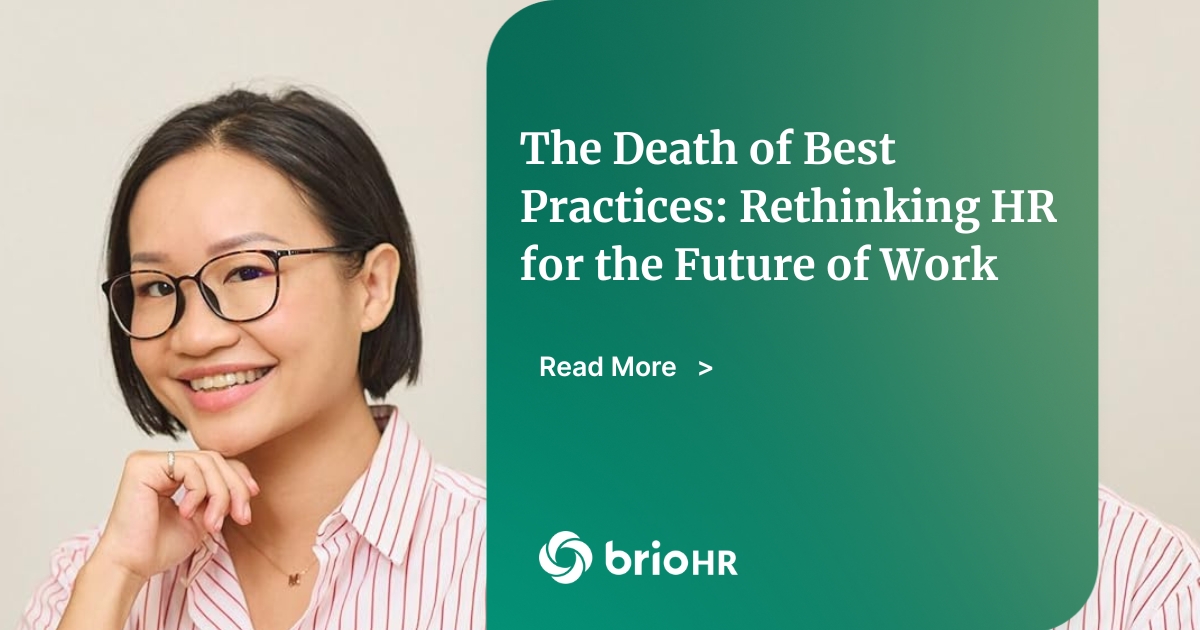
The Death of Best Practices: Rethinking HR for the Future of Work
Insights from brioHR Podcast Episode 1
Businesses everywhere are under pressure. More complexity, more tools, more “best practices” piling up and somehow, things feel heavier than ever. But what if HR and leadership more broadly could feel lighter? What if instead of chasing endless checklists, we focused on just two meta skills that make everything else easier? That’s the vision shared by Susan Chen – Founder and CEO of co:grow, in our very first episode of the with brioHR Podcast

Why “Best Practices” Don’t Always Work
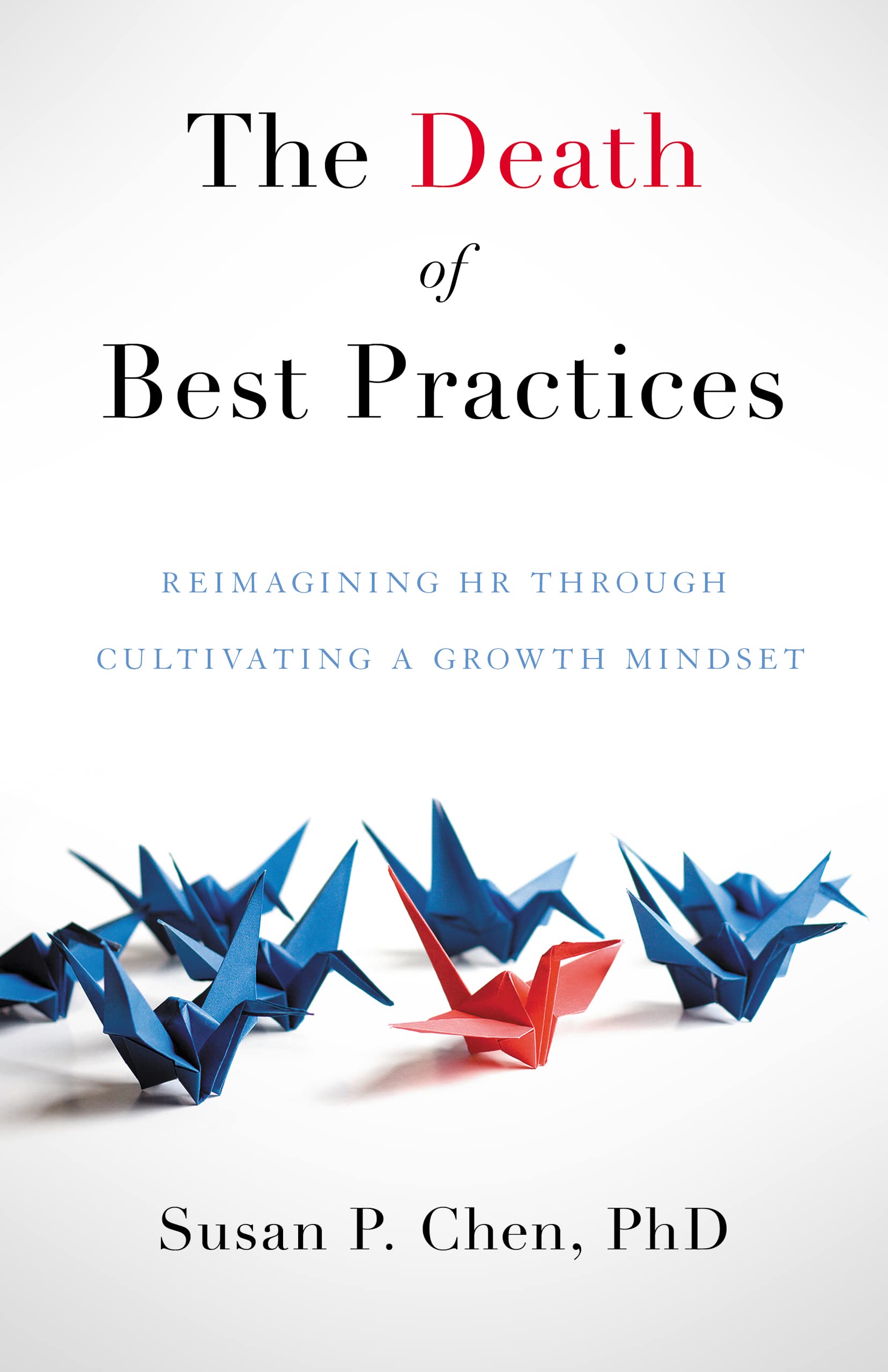
Susan’s book The Death of Best Practices challenges a core belief many HR leaders hold: that copying what works for others is the safest path. Her point is simple but provocative: best practices can become a crutch. They create the illusion of certainty in a world that’s deeply contextual, deeply human. Instead of blindly following templates, organizations should double down on what makes them unique. The mindset shift? Stop asking “What does Google do?” and start asking “What makes us, us?”
Two Skills That Change Everything
So if best practices aren’t the answer, what is? For Susan, it comes down to two fundamentals: Curiosity – the habit of asking questions, staying open, learning and unlearning. Grit – the tenacity to keep going when it matters, but also the wisdom to know when to stop. Together, curiosity and grit form the foundation of a true growth mindset. They are the skills that allow HR and leaders in general to adapt in a world that only gets more complex. Susan explains it as a yin–yang balance: too much grit without curiosity leads to sunk costs and stubbornness. Too much curiosity without grit leads to constant changes with no follow through. The sweet spot lies in the balance.
HR That Feels Lightweight
Another big theme from the conversation: HR must feel lightweight. If performance reviews, engagement surveys, or development conversations feel like a burden, something is wrong. The future of HR is not about heavier processes. It’s about designing systems that make good management inevitable, while freeing teams from unnecessary complexity. As Susan puts it: “The future of HR needs to feel lightweight, agile, and human. It can’t feel heavy.”
Engagement, Redefined
We also explored one of the most overused buzzwords in HR: engagement. Susan questions whether engagement, as commonly defined, is even the right measure. Instead, she suggests focusing on progress, whether employees walk away from interactions feeling like they’ve moved forward. It’s a subtle but powerful shift: from trying to maximize survey scores, to creating daily experiences that help people and organizations grow.
Where HR Goes Next
From rethinking engagement to experimenting with fractional HR models, Susan is committed to reshaping how organizations approach people, performance, and technology. Her vision of the future is not one where AI replaces managers, but one where technology amplifies what makes us human, empathy, decision making, and the ability to build trust.
Final Thoughts
The conversation with Susan Chen is both a challenge and an invitation: A challenge: to stop hiding behind best practices, and instead build HR practices that are lightweight, human, and contextual. An invitation: to embrace curiosity and grit as the meta skills that will carry us and our organizations, into an uncertain future. This is only a glimpse of what we covered. From redefining engagement, to exploring the balance between efficiency and intimacy, to the hard realities of scaling culture, there’s so much more to unpack.
Watch the full interview with Susan Chen on the with brioHR Podcast to dive deeper into the future of HR.
To learn more about how brioHR can transform your HR processes, check out BrioHR’s website or request a demo.