Best HR Software for SME in 2026
Key Takeaways
Small and mid-sized businesses now drive most of the demand in the HR software market. In 2024, SMBs accounted for 80% of all HR software search activity, and small businesses now make up 61% of total HR tech adoption in the US.
- brioHR: best all-in-one HRMS for growing SMEs in Malaysia and Singapore that want payroll, leave, performance, and reporting under one login.
- Swingvy: best for SMEs still moving off spreadsheets and want a modern, mobile-first starting point.
- HReasily: best for teams that need automated payroll and claims across both Malaysia and Singapore.
- QuickHR: best for Singapore SMEs that want ISO-certified, audit-ready HR operations.
The right fit depends on your headcount, your compliance footprint, and how much of HR you actually want to automate versus keep manual for now.
Introduction
Running HR for an SME usually means one person (or a very small team) doing the job of five: payroll, leave approvals, onboarding paperwork, and answering the same benefits question for the tenth time this month. Nearly half of small business owners spend roughly a full day a week on HR admin alone, and 35% of businesses under 50 employees put in 6 to 10 hours weekly just keeping the basics running.
This guide compares the best HR software for SMEs in 2026, what each platform actually covers, what it costs, and which team it genuinely fits, so you can stop guessing and start comparing.
Best HR Software for SMEs 2026: Quick Look
| Tool | Best For | Standout Feature | Price Starting Point |
|---|---|---|---|
| brioHR | All-in-one HRMS for growing SMEs in MY/SG | Full employee lifecycle in one connected system | From RM3/employee/month |
| Swingvy | SMEs starting HR automation | Mobile-first leave, claims, and payroll | From RM10/employee/month |
| HReasily | Automated payroll and claims across MY/SG | Dual-market statutory compliance | From RM4/employee/month |
| QuickHR | SG SMEs standardizing HR operations | ISO 9001:2015-certified processes | From S$5/employee/month |
| altHR | MY SMEs wanting leave and performance together | Built-in OKRs and 360-degree feedback | From RM8/employee/month |
| Kakitangan | Cost-focused, very small MY businesses | Budget-friendly full statutory payroll | Custom quote |
| Employment Hero | Broader HR and payroll breadth | Wide engagement and self-service ecosystem | From USD $10/employee/month |
brioHR: Best All-in-One HRMS for Growing SMEs in MY/SG
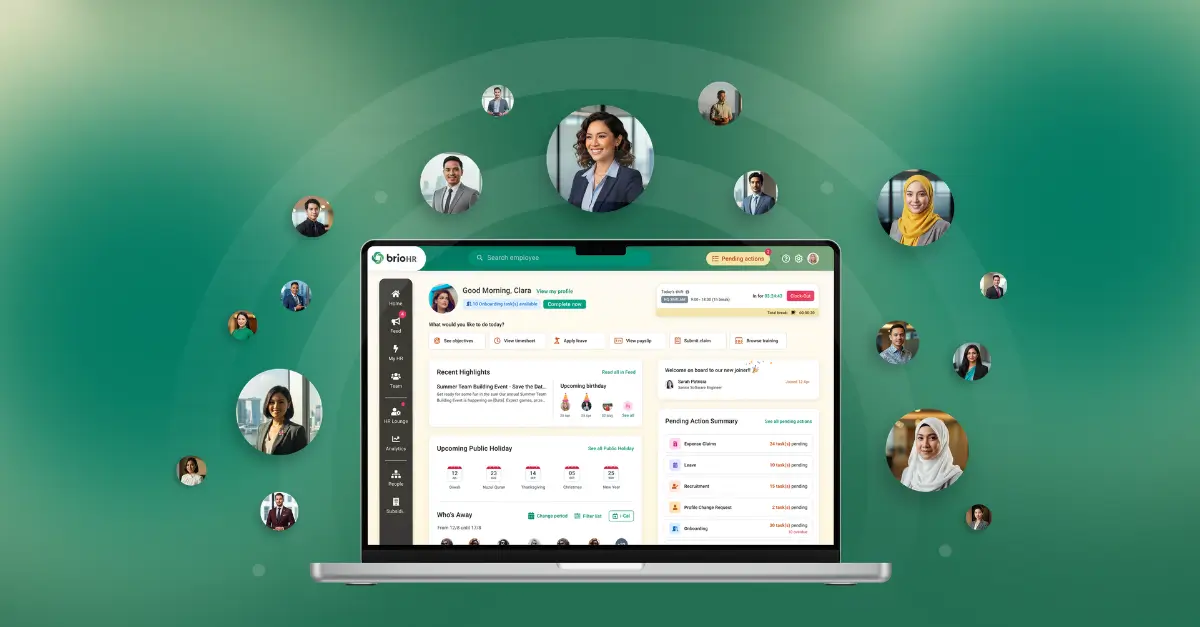
brioHR is built for SMEs that have outgrown spreadsheets and disconnected tools but aren't ready for enterprise-grade complexity. It's the closest thing to a single system for the entire employee lifecycle, from the first job posting to the last payslip.
More than 1,000 organizations across 50 countries now run on brioHR, most of them SMEs and mid-market companies in Malaysia and Singapore.
Key Features
brioHR covers recruitment, onboarding, payroll, leave, claims, attendance, performance, and reporting from one login. Three features in particular set it apart from most SME-focused tools.
One System Across the Full Employee Lifecycle
Most SME HR stacks are a patchwork: one tool for payroll, another for leave, a spreadsheet for performance reviews. brioHR keeps recruitment, onboarding, payroll, leave, claims, attendance, performance, and reporting on the same employee record.
That matters more than it sounds like on paper. When a new hire's leave balance, attendance history, and payroll details all live in one place, HR stops re-entering the same data three times a month. Approvals move faster because managers see the full picture instead of switching tabs.
For a growing SME, this also means the system doesn't need to be replaced every time the company adds a new function. A team that starts with payroll and leave can add performance management or recruitment later without migrating to a different platform.
Performance Management Connected to Engagement
Performance reviews and engagement surveys usually live in separate tools, if an SME has either at all. brioHR's performance management module sits on the same platform as payroll and attendance data, and it includes full review cycles, 360-degree feedback, self-assessments, peer reviews, and continuous feedback, not just an annual form.
Pulse surveys sit alongside this, with adjustable frequency, anonymity controls, and live dashboards. Teams using this combination report sentiment analysis roughly four times faster than manual, spreadsheet-based tracking.
For SMEs that have historically treated performance reviews as a once-a-year scramble, connecting reviews to real attendance and output data makes conversations more grounded and less subjective.
HR Reporting and People Analytics
Most SME-tier HR tools stop at basic exports. brioHR's HR reporting suite includes custom report builders, headcount dashboards, attrition analytics, and scheduled report emails, giving HR leaders a live view of the business instead of a static spreadsheet that's outdated by the time anyone opens it.
Combined with employee engagement data from pulse surveys, this gives smaller HR teams the kind of visibility that used to require a dedicated analytics hire.
brioHR Pricing
| Plan | Details |
|---|---|
| Modular pricing | Per-employee pricing based on modules and company size, starting at RM3 per employee per month |
| Custom quote | Tailored based on headcount, workflows, and rollout needs |
Where brioHR Shines
- One platform instead of five: Payroll, leave, claims, attendance, performance, and reporting share the same employee record, so nothing needs re-entering across tools.
- Compliance handled locally: EPF, SOCSO, EIS, LHDN, CPF, SDL, IR8A, and IR21 workflows are built in, with statutory updates rolling out automatically.
- Support that responds like a partner, not a ticket queue: Sub-three-minute average response times and a 96% positive feedback rate.
Where brioHR Falls Short
- Built for commitment, not a quick patch: brioHR is designed for teams ready to run their HR properly for the long term. If you just need a stopgap for the next quarter, the setup effort isn't worth it.
- More than a five-person team typically needs: The lifecycle-wide depth is the whole point, but a business with a handful of staff and no real compliance complexity may not use enough of it to justify switching.
brioHR Customer Reviews


Who brioHR Is Best For
- Growing SMEs (roughly 30 to 500 employees): Teams replacing spreadsheets or several disconnected point tools with one system.
- Mid-sized companies operating in Malaysia and Singapore: Businesses that need both statutory compliance and stronger reporting than a basic payroll tool offers.
- HR teams of one or two people: Who need automation to do the work five people would otherwise handle manually.
Curious how brioHR fits your team specifically? Request a demo or explore client success stories from SMEs already running on the platform. Singapore teams can review payroll workflows here, while Malaysia teams can check payroll here. Shift-based teams should also look at time and attendance.
Swingvy: Best for SMEs Starting HR Automation

Swingvy pairs core HR admin with payroll in a modern-looking package. It's usually the first stop for SMEs that want to leave spreadsheets behind without committing to a heavier, full-lifecycle platform right away.
Key Features
Mobile-First Leave and Claims
Employees apply for leave and submit claims from an iOS or Android app, with photo receipt uploads and multi-level approval built in. This is one of the reasons adoption tends to be higher than with desktop-only local tools.
Malaysian Payroll and Statutory Compliance
Full support for EPF, SOCSO, EIS, PCB, HRDF, and LHDN e-filing comes standard, alongside prorated salary calculations and bank direct credit.
Shift Scheduling and GPS Attendance
Mobile GPS clock-in, geo-fencing, and shift scheduling make Swingvy a workable fit for distributed or shift-based SME teams, not just office staff.
Swingvy Pricing
| Plan | Details |
|---|---|
| Modular pricing | From RM10 per employee per month |
Where Swingvy Shines
- Higher adoption through mobile design: A cleaner, app-first experience than most legacy local HR tools, rated around 4.0 out of 5 in independent usability comparisons.
- Solid day-to-day coverage: Leave, claims, attendance, and core payroll all handled with full Malaysian statutory support.
- Good fit for shift-based teams: GPS clock-in and geo-fencing work well for retail, F&B, and field teams.
Where Swingvy Falls Short
- No recruitment or applicant tracking: Job posting, resume parsing, and interview scheduling all require a separate tool.
- Thin performance management: Beyond basic review cycles and self-assessments, there's no OKR tracking, 360-degree feedback, or performance dashboards.
- No payroll outsourcing option: Teams that want managed payroll rather than self-service software will need a different provider.
Swingvy Customer Reviews
Who Swingvy Is Best For
- SMEs just starting HR automation: Teams moving off spreadsheets for the first time who want a low-friction, mobile-first tool.
- People-first teams: Companies that weight day-to-day usability heavily, even if it means less depth in performance management.
Further reading: see how HR software's key features typically compare, or check what functions your HRIS system should have before shortlisting a tool.
HReasily: Best for Automated Payroll and Claims Across MY/SG
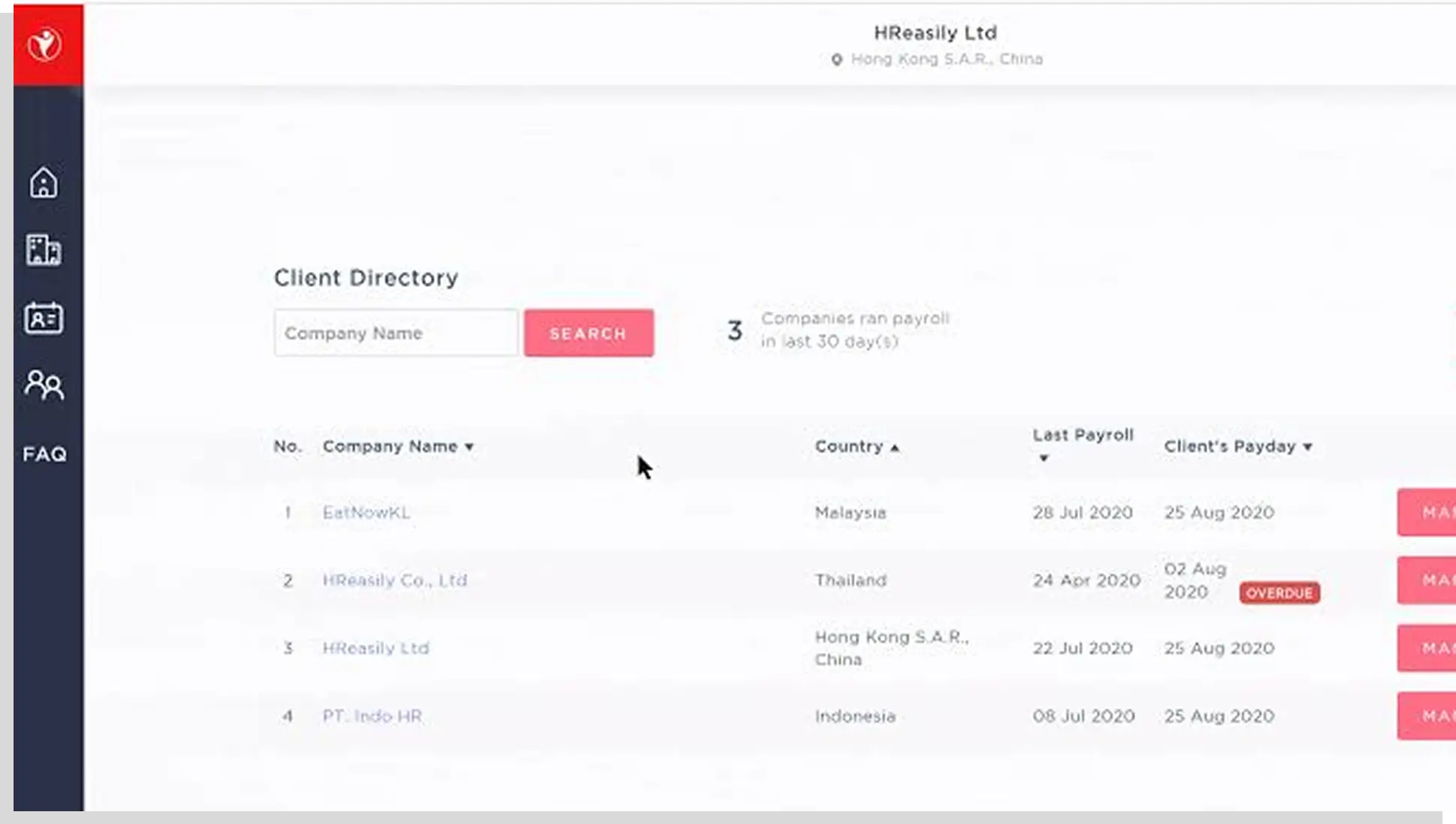
HReasily is a cloud HR and payroll platform built for SMEs operating in both Malaysia and Singapore. Its main draw is automated, audit-ready payroll paired with a mobile-first claims and attendance experience.
Key Features
Dual-Market Payroll Automation
HReasily runs full statutory compliance for both Malaysia (EPF, SOCSO) and Singapore (CPF, SDL) from the same account, which matters for SMEs with headcount split across both markets.
Mobile Claims Processing
Employees photograph receipts, submit claims, and route them through multi-level approval from their phones, with reimbursement flowing straight into the next payroll run.
GPS-Based Attendance and Leave
Mobile leave applications and GPS attendance tracking, including shift scheduling, cover the day-to-day basics without requiring a separate time clock system.
HReasily Pricing
| Plan | Details |
|---|---|
| Modular pricing | From RM4 per employee per month |
Where HReasily Shines
- True dual-market compliance: Native support for both Malaysian and Singaporean statutory requirements in one account, useful for cross-border SME teams.
- Mobile-first accessibility: Payroll, claims, and leave are all manageable from a phone, which helps adoption among non-desk staff.
- Affordable entry point: One of the lower starting prices among full-featured local payroll platforms.
Where HReasily Falls Short
- No recruitment, performance, or learning modules: HReasily stays focused on payroll and claims, so growing HR needs elsewhere require additional tools.
- Basic expense analytics: Reporting on spend patterns is limited compared to platforms built with dedicated analytics in mind.
HReasily Customer Reviews
Who HReasily Is Best For
- SMEs with headcount in both Malaysia and Singapore: Teams that want one account handling both statutory systems.
- Mobile-first teams: Businesses with field staff, retail floors, or F&B operations where a phone is the primary device.
For a deeper look at expense workflows specifically, see best expense management systems and reasons companies use HR software across multiple entities.
Streamline leave approvals and absence tracking
Stop managing leave in spreadsheets. Automate approvals, track balances, and ensure policy compliance.

QuickHR: Best for SG SMEs Standardizing HR Operations

QuickHR is a Singapore-first HR platform with broader daily operations coverage than most payroll-only tools, including document management, contract handling, and e-signatures alongside leave, claims, and attendance.
Key Features
ISO 9001:2015-Certified Processes
QuickHR's certification adds a layer of process credibility that matters for SMEs going through vendor audits or stricter procurement checks.
Native Singapore Payroll
Full CPF, SDL, IR8A, and IR21 support comes standard, along with multi-currency payroll and PSG-grant eligibility for eligible Singapore SMEs.
Shift-Based Attendance Management
Mobile GPS clock-ins, geo-fencing, rotating shift support, and automatic overtime calculations make QuickHR a solid fit for retail and hospitality SMEs specifically.
QuickHR Pricing
| Plan | Details |
|---|---|
| Modular pricing | From S$5 per employee per month |
Where QuickHR Shines
- ISO 9001:2015 certification: A genuine differentiator for compliance-sensitive procurement processes.
- Strong native Singapore payroll: Full CPF, SDL, IR8A, and IR21 workflows with PSG-grant eligibility.
- Solid shift-based attendance: GPS clock-ins and rotating shift handling work well for retail and hospitality teams.
Where QuickHR Falls Short
- No recruitment or ATS: Job posting, resume parsing, and interview scheduling are all missing.
- No onboarding or performance modules: There's no digital onboarding flow, review cycles, OKRs, or 360-degree feedback.
- Malaysia support runs through a partner: EPF, SOCSO, EIS, PCB, and HRDF aren't fully native, which matters if you have Malaysian headcount too.
QuickHR Customer Reviews
Who QuickHR Is Best For
- Singapore SMEs standardizing operations: Companies that prioritize structure, documentation, and compliance over feature breadth.
- Retail and hospitality teams: Businesses that need strong shift and overtime handling more than a full performance suite.
See also a guide to choosing HR software in Singapore and top HR reporting software reviewed for 2026.
altHR: Best for MY SMEs Wanting Leave and Performance Together
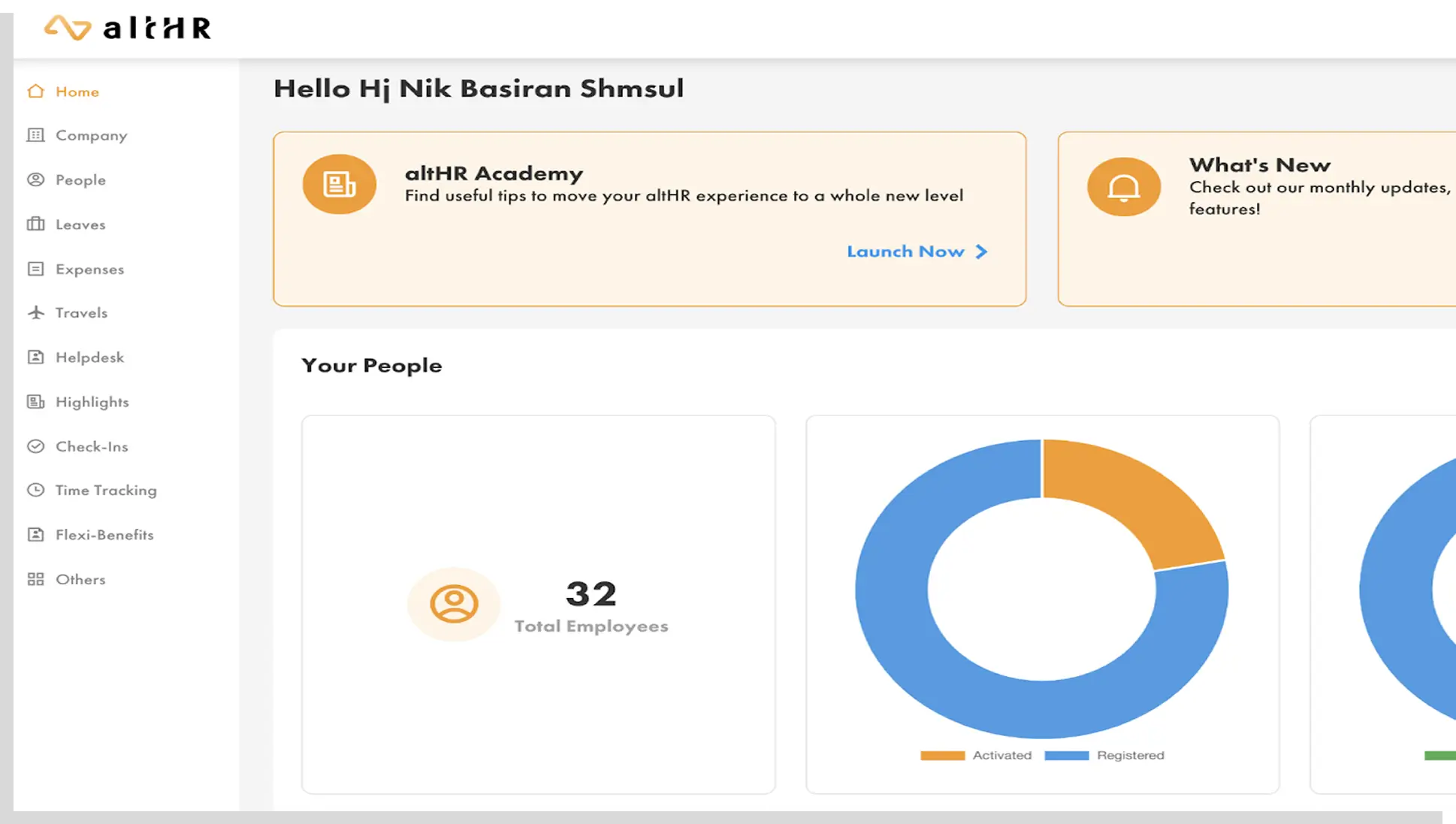
altHR pairs Malaysian leave and payroll basics with a genuine performance suite, including OKRs, KPI tracking, and 360-degree feedback, which is unusual at this price point.
Key Features
- Performance management: OKRs, KPI tracking, 360-degree feedback, peer review, self-assessment, and performance dashboards, all built in rather than bolted on.
- Leave and payroll: Full Malaysian statutory compliance (EPF, SOCSO, EIS, PCB, HRDF) with religious leave types configured out of the box.
- Onboarding: Digital onboarding flow with checklists, task assignment, and pre-boarding.
altHR Pricing
| Plan | Details |
|---|---|
| Modular pricing | From RM8 per employee per month |
Where altHR Shines
- Real performance depth for the price: OKRs and 360-degree feedback are genuinely built out, not a checkbox feature.
- Malaysian-first compliance: Full EPF, SOCSO, EIS, and HRDF support, with religious leave types included.
Where altHR Falls Short
- No pulse surveys or eNPS: There's no built-in engagement survey tool, which limits ongoing sentiment tracking.
- Malaysia only: No native Singapore payroll, so cross-border SMEs need a second system.
altHR Customer Reviews
Who altHR Is Best For
- Malaysian SMEs wanting performance tools without an enterprise price tag: Teams that want leave and real performance management in one place.
Related reading: best 360 feedback tools and people analytics software.
Kakitangan: Best for Cost-Focused, Very Small MY Businesses

Kakitangan is built for very small Malaysian businesses that want affordable, compliant payroll without paying for features they won't use.
Key Features
- Payroll processing: Salary calculations, payslips, and full statutory submissions (EPF, SOCSO, EIS, PCB, LHDN e-filing).
- Expense claims: Receipt upload, multi-level approval, and mileage tracking, with reimbursement flowing through payroll.
- HR advisory access: Optional guidance alongside the software itself.
Kakitangan Pricing
| Plan | Details |
|---|---|
| Payroll pricing | Custom quote based on number of staff and module selection |
Where Kakitangan Shines
- Genuinely affordable: One of the lower-cost options among Malaysian SME payroll tools.
- Fast to roll out: Implementation typically takes about a month.
Where Kakitangan Falls Short
- Not a full HR system: No performance management, recruitment, onboarding, or learning modules.
- Limited scalability: No multi-entity support, SSO, or API access, which becomes a real constraint past roughly 100 employees.
Kakitangan Customer Reviews

Who Kakitangan Is Best For
- Very small Malaysian businesses: Teams with simple payroll needs and tight budgets that don't need broader HR features yet.
Employment Hero: Best for Broader HR and Payroll Breadth
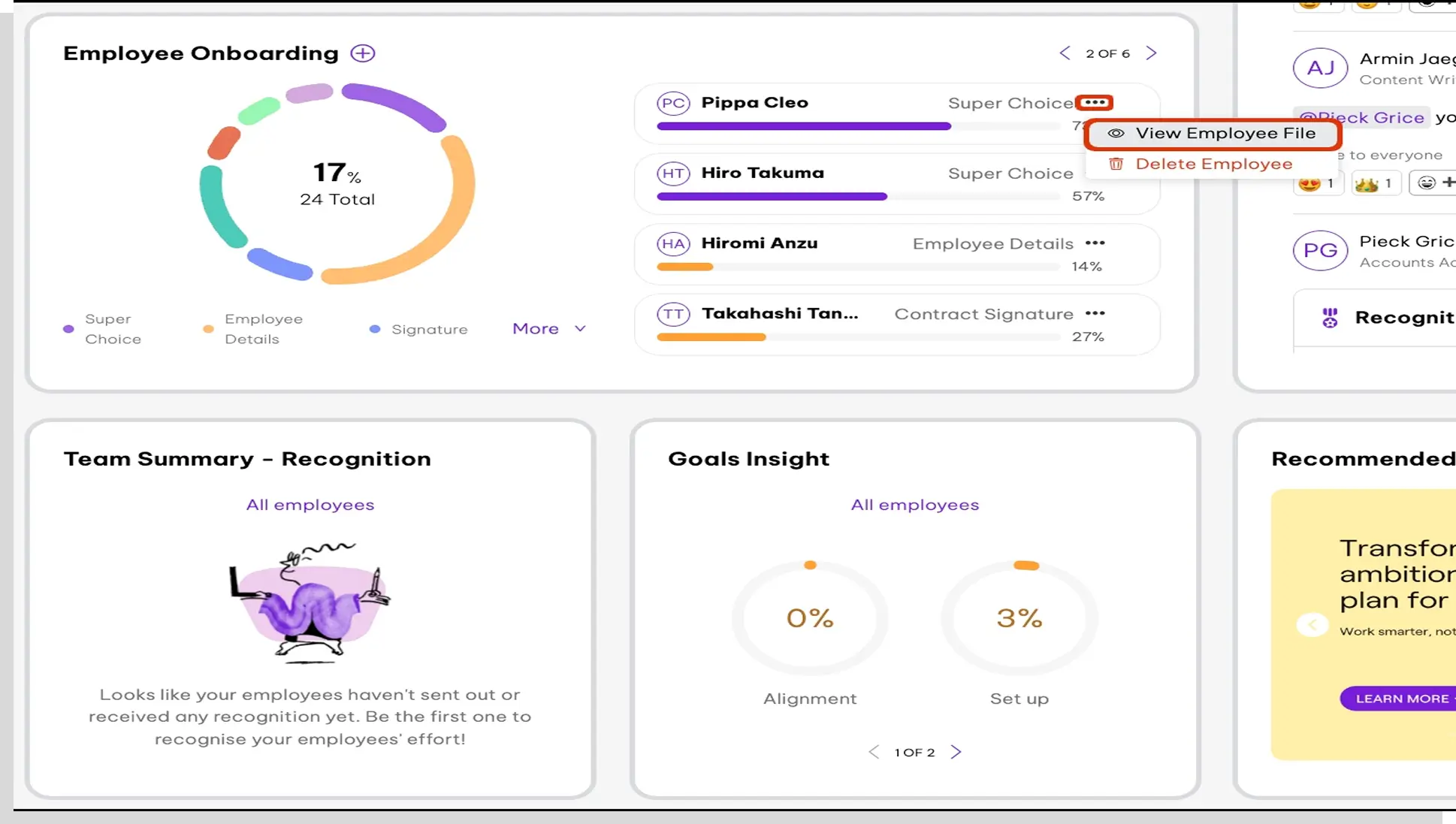
Employment Hero is built around a wider HR and engagement ecosystem, with payroll as one part of a larger platform rather than the centerpiece. It's strongest in Australia and the UK, so SMEs in Malaysia or Singapore should weigh localization depth carefully.
Key Features
- Broad platform coverage: Recruitment, onboarding, performance, payroll, and engagement all live in the same ecosystem.
- Employee self-service portal: Reduces routine admin questions for both staff and HR.
- Performance module with 360-degree feedback: Sits alongside recruitment and onboarding tools rather than as a standalone product.
Employment Hero Pricing
| Plan | Details |
|---|---|
| HR Premium | From USD $10 per employee per month, subject to a USD $100 monthly minimum |
| Malaysia guidance | Roughly RM8 to RM12 per employee per month, with a RM160 to RM240 monthly minimum |
Where Employment Hero Shines
- Wide feature breadth: Recruitment, onboarding, performance, payroll, and engagement in one ecosystem, more horizontal coverage than most SME-focused local tools.
- Modern employee experience: Self-service and engagement tools are a genuine strength.
Where Employment Hero Falls Short
- Payroll and HR aren't fully unified: Payroll was acquired separately, which can create friction between modules and logins.
- Weaker MY/SG localization: Local compliance depth and support hours can be inconsistent versus regional-first alternatives, and it isn't PSG-eligible.
Employment Hero Customer Reviews
Who Employment Hero Is Best For
- HR-first organizations: Teams that want a broad platform with payroll included as part of a wider ecosystem.
- Businesses with ties to Australia or the UK: Where Employment Hero's localization and support are strongest.
Further reading: what functions should your HRIS system have and HRMS tools that transform productivity measurement.
How to Choose the Best HR Tool for Your SME
The right tool depends less on the longest feature list and more on which admin tasks are actually costing you time right now. Work through these considerations before shortlisting.
Payroll Compliance and Coverage
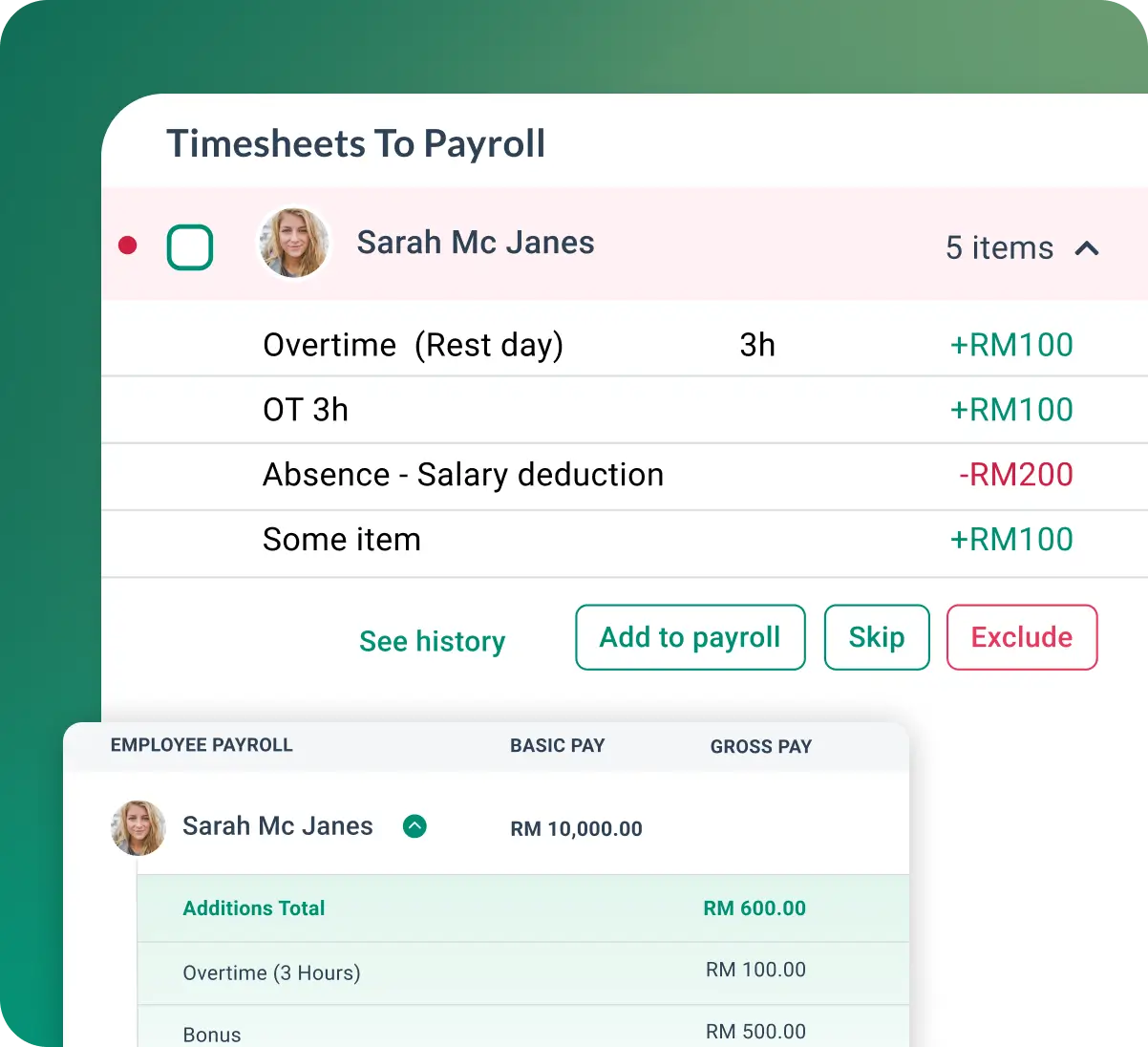
If you have headcount in more than one country, confirm the platform runs native statutory compliance in both, not just one market with the other bolted on through a partner. Check specific line items: EPF, SOCSO, and EIS coverage for Malaysia, and CPF updates for Singapore. A partner-based setup usually means slower fixes when a rule changes.
brioHR runs native EPF, SOCSO, EIS, LHDN, CPF, SDL, IR8A, and IR21 compliance from one account, with statutory updates rolling out automatically rather than waiting on a partner.
Onboarding and Leave Workflows
Poor onboarding shows up fast in retention numbers, and manual leave tracking creates disputes when balances don't match what an employee remembers. Look at how a platform handles employee onboarding end to end, and whether leave types map cleanly to your actual policies, not a generic template.
brioHR's onboarding module was one of its earliest features, built around the idea that onboarding is a sequenced process, not a single welcome email. Leave types, accrual rules, and approvals sit on the same record as attendance and payroll.
Reporting and People Analytics
A tool that can only export a static spreadsheet won't tell you when attrition is creeping up or which department is driving overtime costs. Confirm whether payroll system integration feeds into live dashboards, or whether reporting means manually pulling numbers every month.
brioHR's custom report builder and headcount dashboards pull directly from payroll, leave, and attendance data, so reports stay current without manual exports.
Recruitment and Applicant Tracking
Not every SME needs a full ATS on day one, but if you're hiring regularly, a disconnected recruitment process (spreadsheets, email threads, separate job boards) slows everything down. Compare how each platform handles an applicant tracking system before ruling it in or out.
brioHR includes job posting, resume parsing, interview scheduling, and offer letter generation on the same platform as onboarding, so a hired candidate flows straight into their employee record.
Data Security and Vendor Stability
HR data includes salary details, ID numbers, and medical records. Check security certifications and how long the vendor has operated in your market before committing, since switching HR systems later is far more disruptive than switching most other software.
How We Selected the Best HR Software for SMEs
Every tool on this list was evaluated against the same three criteria, not just a feature checklist.
Fit for Actual SME Complexity
We prioritized platforms built for the reality of running HR with a small team: limited headcount, real compliance obligations, and no dedicated IT department to manage a heavy enterprise rollout. Tools clearly aimed at large enterprises were left off.
Verified Statutory Compliance
For Malaysia and Singapore specifically, we checked whether EPF, SOCSO, EIS, LHDN, CPF, SDL, IR8A, and IR21 support was native rather than routed through a third-party partner, since that distinction affects how fast a platform adapts when regulations change. Related reading: best shift management software covers a similar compliance-first evaluation approach for attendance-heavy SMEs.
Genuine, Published Feature Depth
We favored tools with documented, verifiable features over marketing claims, cross-checking against best HR reporting software and best employee onboarding software comparisons, plus direct product pages like brioHR's onboarding module, to confirm each platform's claimed capabilities actually exist in the product.
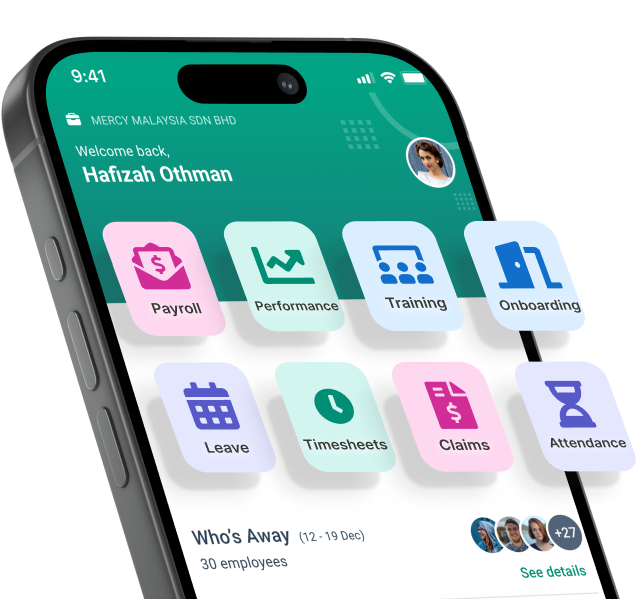
Everything HR.
One login
From payroll to onboarding, brioHR gives you everything you need in one place. Built for busy teams. Backed by people who care.
Simplify HR for Your SME With brioHR
If you're running HR for a growing SME in Malaysia or Singapore and tired of stitching together separate tools for payroll, leave, and performance, brioHR is built for exactly that transition. It handles the full employee lifecycle in one system, with local compliance and support that responds in minutes, not days.
If your team is under ten people with no real compliance complexity, a lighter tool like Swingvy or Kakitangan may serve you better for now. But if you're managing real payroll obligations across a growing headcount, it's worth seeing brioHR in action.
"It's one system and we believe the fact that is one system is actually the most important. It was never about building as many modules as we could."
Conclusion
- The right tool depends less on the longest feature list and more on which admin tasks are actually costing you time right now.
- If you have headcount in more than one country, confirm the platform runs native statutory compliance in both, not just one market with the other bolted on through a partner.
- Poor onboarding shows up fast in retention numbers, and manual leave tracking creates disputes when balances don't match what an employee remembers.
- A tool that can only export a static spreadsheet won't tell you when attrition is creeping up or which department is driving overtime costs.
Request a demo or browse brioHR's full range of services to see what fits your team.