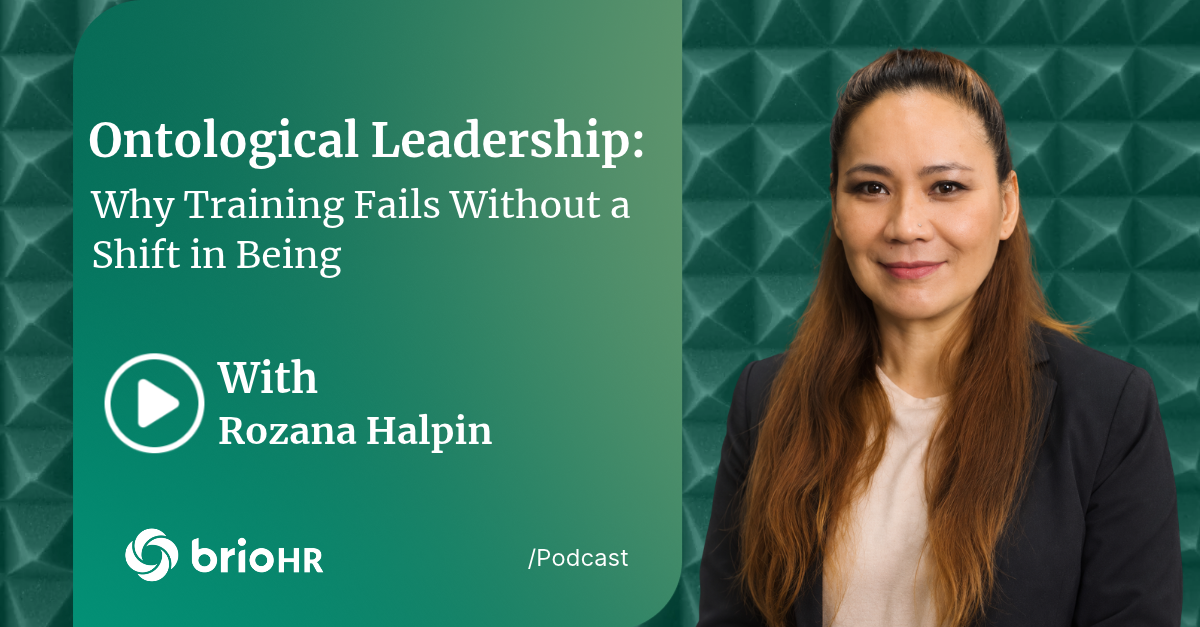
A Deep Dive into Ontological Leadership | Rozana Halpin
Key Takeaways
- Training fades when employees understand the lesson but have little space to practise it, reflect on what happened, and try again.
- Communication problems often come from the environment around employees. Teaching people to speak up will have limited effect if speaking up still feels unsafe.
- Leaders shape culture through the language they use, the emotions they bring into a room, and the behaviour they demonstrate under pressure.
A company sends its employees to a communication workshop. They learn how to give feedback, ask clearer questions, and handle difficult conversations. Then they return to managers who shut down disagreement or react badly when someone speaks honestly.
Three months later, the old behaviour is back.
Rozana Halpin believes this gap cannot always be explained by missing skills. Employees may already know what to do. The harder question is whether they feel able to do it in the environment they return to.
That question sits at the centre of this episode of the with brioHR Podcast, where Mattie speaks with Rozana about ontological leadership, why corporate training often fades, and what HR can examine before booking another workshop.

Rozana is Director of Human Intelligence at KCOM Academy, an ICF Professional Certified Coach, and an executive and leadership development coach. Before moving into coaching, she spent 12 years helping British retailer Monsoon grow from around 50 stores to almost 400. Her work now focuses on how leaders show up, how workplace culture shapes behaviour, and how learning becomes something people can use with confidence.
What Ontological Leadership Actually Means
For Rozana, ontology is about how we show up in the world. It looks beneath a leader's actions and asks what is driving their language, emotions, behaviour, and decisions.
Her approach brings together three perspectives:
- Ontology looks at identity and our way of being.
- Mindfulness helps us notice our thoughts, emotions, assumptions, and physical reactions before responding.
- Ecology looks at the wider system and the effect our behaviour has on other people.
This becomes especially useful under pressure. A leader may know the correct communication technique and still react with anger, blame, or defensiveness when something goes wrong. Ontological leadership asks the leader to notice that reaction before it shapes the room.
The Gap Between Knowing and Doing
Information is rarely the main barrier anymore. Employees can find frameworks, videos, articles, and AI-generated advice within minutes. They may leave a workshop able to explain the right approach clearly.
The difficulty starts when they have to use it with a real manager, colleague, or team.
Rozana describes the difference in one line:
Knowledge sits in the head. Wisdom sits in your being.
Wisdom develops through practice. Employees need opportunities to test what they have learned, examine the assumptions behind their choices, discuss what went wrong, and decide what to try next.
KCOM Academy designs its workshops around that process. Around 30 to 40% of the session is dedicated to knowledge, while 60 to 70% is used for practice and mentoring. Rozana also recommends coaching, reflective journals, or group check-ins after the workshop so employees can work through the challenges they meet when applying the lesson.
Without that space, employees return to the same routines and the same pressures with a new set of notes, but little support for using them.
When Communication Training Cannot Fix Culture
Companies often approach Rozana because employees are quiet in meetings, avoid difficult conversations, or struggle to give clear feedback. These concerns are usually described as communication problems.
Rozana often finds a cultural problem underneath.
Employees may know how to ask questions or express disagreement. They stay quiet because previous experience has taught them that speaking up leads to being dismissed, criticised, or blamed.
“These people have been trained by the environment that speaking up is not safe.”
A communication workshop can teach the words to use. It cannot make the workplace safe enough to use them.
When changing the whole organisation feels unrealistic, Rozana advises managers to begin within the area they control. They can create a small team environment where questions are welcomed, mistakes can be discussed, and disagreement does not damage the relationship. Over time, the effect may become visible to neighbouring teams.
Why Leaders Need to Be in the Room
Rozana regularly hears employees say, “Our leaders should be in this training.” Some leaders attend the opening and leave for another meeting. Others send the team because they see the employees as the problem that needs fixing.
This can happen when someone is promoted because of technical expertise. The new title becomes proof that they already know how to lead, even when they have never been taught how to manage conflict, listen well, or create psychological safety.
Culture still takes its cue from leadership. If leaders ask employees to communicate openly while reacting badly to uncomfortable feedback, the reaction will carry more weight than anything taught in the workshop. The change employees are asked to make needs to be visible in the people asking for it.
Language, Emotion, and the Body Under Pressure
Rozana explains ontological leadership through three signals that appear in a difficult meeting: language, emotion, and the body.
Imagine that a project has gone wrong. A leader's first question might be, “Whose fault is this?” That language immediately puts the room on the defensive. A different question, such as “What can we learn from this so it does not happen again?”, changes what the team can discuss.
The words are only one part of the response. The leader may also notice anger, frustration, or an urge to assign blame. That emotion may show up physically through tense shoulders, a knot in the stomach, or a raised voice.
Recognising these signals creates a short pause between the reaction and the response. That pause gives the leader a chance to choose what happens next instead of passing their tension to the rest of the room.
Ask What Created the Problem
Rozana encourages HR and L&D teams to investigate the situation before selecting a training programme.
If a manager reports a communication problem, useful questions include:
- What is creating this behaviour?
- What happens when employees try to speak openly?
- How does leadership respond?
- What needs to change after the training?
- What support will employees receive while they practise?
These questions help HR distinguish between a missing skill and a workplace condition that prevents people from using the skills they already have.
They also move L&D away from a checklist of completed programmes and closer to the organisation's actual culture, leadership behaviour, and business needs.
Make performance management effortless
Streamline goals, reviews, and feedback in one flow—so managers can focus on real performance conversations.

One Practice to Try Tomorrow
Rozana's simplest recommendation requires no new programme or budget.
Pause before entering your first meeting.
Think about how you want to affect the conversation and how consciously you want to interact with the people in it. The pause only needs to last long enough to move out of an automatic reaction and choose your response.
It is a small practice, but it brings the central idea of ontological leadership into an ordinary working day: pay attention to who you are being before deciding what to do.
Conclusion
- Ontological leadership brings attention to the person using the leadership tools. It asks leaders to notice how their identity, language, emotions, and behaviour shape the environment around them. The same idea changes how HR approaches development. Training becomes more useful when employees can practise, examine what happens, and receive support as they adjust their approach. Communication improves when the workplace gives people enough safety to speak. Culture moves when leaders demonstrate the behaviour they expect from everyone else. The work begins before the next framework, workshop, or company initiative. It begins with how a leader enters the room.
Everything HR.
One login
Cut the extra layers in your HR process. Keep what works, remove what doesn’t, and make everyday work easier for your team.
Watch the Full Rozana Halpin Interview on with brioHR
The full conversation also covers Rozana's move from the UK back to Malaysia, the RM10 moment that tested her integrity, why emotions remain difficult to discuss at work, the challenge of measuring coaching ROI, and what leadership in Malaysia could look like by 2035.
To learn more about how brioHR can transform your HR processes, check out brioHR’s website or request a demo.