New Employee Onboarding Complete Guide for HR Teams in 2026
Key Takeaways
- New employee onboarding is the structured process of integrating a new hire into a company, covering everything from pre-start paperwork to training, introductions, and the first few months of regular check-ins.
- A good process follows five steps: preboarding, orientation, role-specific training, integration into the team, and ongoing check-ins through the first 90 days.
- 22% of new hires leave within their first 90 days of employment, which is why structure matters more than good intentions.
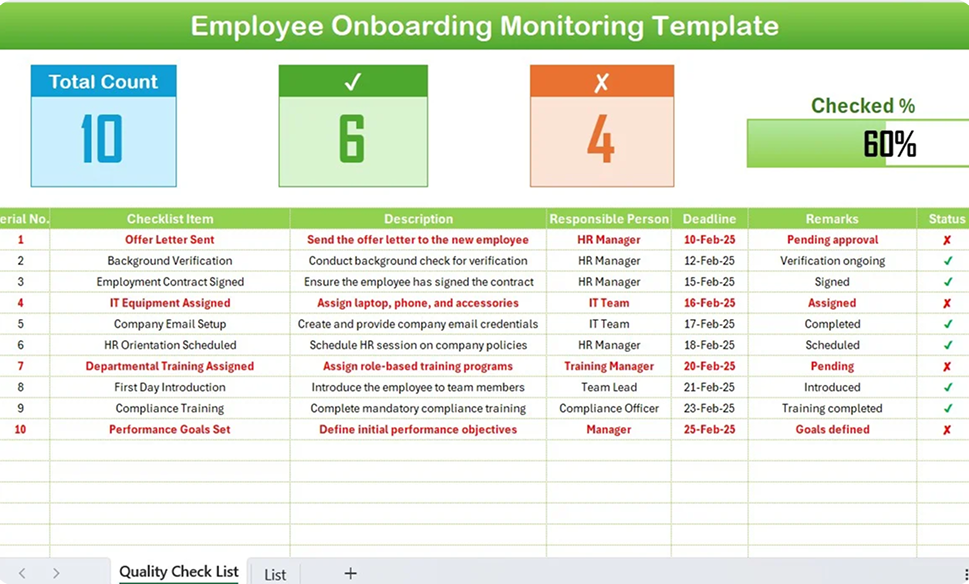
- Use the checklist further down this guide to build a repeatable process, then consider HR software once the manual version starts breaking under its own weight.
Introduction
A new hire's badge gets made, their laptop gets ordered, and someone remembers to add them to the team chat on day one. Then what? For a lot of companies, "then what" is the problem. Tasks get missed, paperwork sits in someone's inbox, and the new hire spends their first week guessing at what they're supposed to be doing.
New employee onboarding is the answer to that gap: a structured process for bringing a new hire from signed offer letter to fully functioning team member. It typically runs from preboarding through the first 90 days, covering documentation, training, introductions, and regular check-ins along the way.
This guide walks through the process step by step, with a checklist you can adapt for your own team, real examples from companies that have been through it, and a look at where software fits once spreadsheets stop being enough.
Onboarding Process Step by Step
A strong onboarding process usually moves through five stages. Each one builds on the last, so skipping a step tends to show up as a problem two steps later.
| Step | What Happens | Typical Timing |
|---|---|---|
| 1. Preboarding | Paperwork, equipment setup, access provisioning | Offer acceptance to start date |
| 2. Orientation | Company introduction, policies, first-day logistics | Day one |
| 3. Role-Specific Training | Job tools, systems, processes, shadowing | Week one to four |
| 4. Team Integration | Introductions, mentor pairing, social onboarding | Week one to eight |
| 5. Check-Ins and Feedback | Structured 30/60/90-day reviews | Month one to three |
Step 1: Preboarding
Preboarding covers everything that happens between a signed offer and the new hire's actual start date. This is where most onboarding quietly falls apart, because it's easy to assume there's nothing to do until day one.
There's actually quite a lot to do. Contracts need signing, statutory forms need collecting, equipment needs ordering, and system access needs provisioning so a new hire isn't sitting without a working laptop on their first morning. Digital employee files make this easier because documents, IDs, and bank details can be collected and verified before day one instead of scrambled together at the front desk.
Timing matters here too. Sending the welcome pack or team introduction three or four days before the start date tends to land well with new hires. Wait until day one, and most people won't bother reading it.
Pro Tip: If you're hiring remotely or across borders, preboarding also needs to cover employer of record (EOR) arrangements where relevant, so compliance and local payroll setup aren't left until the last minute.
Step 2: Orientation
Orientation is the new hire's actual first day, and it's doing more work than it looks like. This is where someone explains what the company does, how teams fit together, what the core policies are, and where to go if something breaks.
Keep this practical rather than ceremonial. A new hire needs building access, a desk, someone to show them where lunch happens, and a clear idea of what their first week looks like. None of that requires a big production, just basic logistics handled before they walk in.
For teams managing this across multiple offices or remote locations, a first-day onboarding checklist keeps the experience consistent even when the person running it changes every time.
Step 3: Role-Specific Training
Orientation tells someone about the company. Training tells them how to do their actual job. This is the step that gets rushed most often, usually because managers assume a new hire will "figure it out" by shadowing someone for a day or two.
Structured training beats informal shadowing because it's repeatable and it doesn't depend on whichever colleague happens to be free that week. Map out the specific tools, systems, and workflows the role requires, then build a short sequence for working through them in order, rather than throwing everything at a new hire in the first 48 hours.
| Training Element | Why It Matters |
|---|---|
| System and tool walkthroughs | Prevents new hires from learning software through trial and error |
| Process documentation | Gives a reference they can return to instead of re-asking the same question |
| Supervised practice tasks | Builds confidence before full independent ownership |
| Defined training timeline | Sets expectations for how long ramp-up should take |
Step 4: Team Integration
A new hire can know the systems cold and still feel like an outsider if nobody's properly introduced them to the people they'll actually work with. Integration is the step that makes a new hire feel like part of the team rather than a visitor sitting at someone else's desk.
Pairing a new hire with a mentor or buddy, someone other than their direct manager, gives them a low-stakes person to ask the "dumb" questions to. Team lunches, informal coffee chats, or even a short round of introductions in a team meeting all help, especially for remote employee onboarding, where the usual hallway interactions don't happen on their own.
Step 5: Check-Ins and Feedback
Onboarding doesn't end on day five, or even day thirty. The companies that get this right keep checking in through the 30, 60, and 90-day marks, using short structured conversations rather than waiting for a formal review cycle to surface problems.
These check-ins catch small issues (confusion about a process, an unclear expectation, a tool that isn't working) before they turn into reasons someone starts looking elsewhere. Pairing check-ins with a quick pulse survey gives HR a way to track sentiment across new hires at scale, instead of relying on individual managers to flag concerns.
Best Practices for New Employee Onboarding
Beyond the five-step structure, a handful of practices separate onboarding that actually works from onboarding that just looks organized on paper.
- Start before day one. Preboarding isn't optional admin, it's the first impression. Companies that send welcome materials, equipment, and basic information ahead of the start date see smoother first days.
- Assign a dedicated onboarding owner. Someone, whether that's an HR coordinator or a manager, needs to own the process end to end. Without a named owner, tasks fall through the cracks between departments.
- Document the process once, reuse it every time. A written onboarding plan, even a simple one, means quality doesn't depend on who happens to be running it that week. Track onboarding success metrics like time-to-productivity and 90-day retention to see whether the process is actually working.
- Build in feedback loops. Ask new hires what's working and what isn't, ideally at 30, 60, and 90 days. This is also how you catch process gaps before they affect the next cohort.
- Automate the repetitive parts. Manually chasing signatures, re-entering the same employee details across systems, and tracking checklist items in a spreadsheet doesn't scale past a handful of hires a month. This is where most teams start looking at onboarding software that connects to the rest of HR.
Did You Know? Formal onboarding programs result in 50% higher employee retention and 62% productivity increase within the same group, according to a 2025 HR statistics roundup published via the Society for Human Resource Management's vendor directory.
If your team is hybrid or remote, pull in guidance from best practices for remote work to adapt the in-person steps into something that works over video and chat instead.
Checklist for HR Leaders and Managers
Use this as a working checklist, adapting the exact tasks to your own company's policies and tools. It's built around the five-step process above so nothing gets missed between stages.
Before Day One (Preboarding)
- Send signed offer letter and employment contract for countersignature
- Collect statutory documents (ID, bank details, tax forms)
- Set up system access, email, and equipment
- Add new hire to relevant payroll and benefits systems
- Send welcome email with first-day logistics, three to four days ahead
Day One (Orientation)
- Confirm building and office access, plus workstation setup
- Walk through company policies and core systems
- Introduce direct manager and immediate team
- Share first-week schedule and expectations
Week One to Four (Training)
- Assign role-specific training modules or shadowing sessions
- Share process documentation and reference materials
- Set initial 30-day goals with the new hire's manager
- Confirm understanding of reporting lines and escalation paths
Week One to Eight (Integration)
- Assign a mentor or buddy outside the direct reporting line
- Schedule informal team social time
- Add new hire to relevant team meetings and communication channels
Month One to Three (Check-Ins)
- Hold a structured 30-day check-in
- Hold a structured 60-day check-in
- Hold a structured 90-day check-in and review against initial goals
- Run a short onboarding feedback survey
Case Studies
Here's how this plays out for real teams, not just on a checklist.
A mid-sized logistics company in Malaysia was losing new hires to competitors within the first month, largely because new drivers and warehouse staff weren't clear on shift schedules or pay structures until their first payslip arrived. Once the company built a preboarding step that walked new hires through pay, shift patterns, and leave policy before day one, early attrition dropped noticeably within two hiring cycles.
A Singapore-based professional services firm struggled with inconsistent onboarding across departments, since each manager ran it their own way. Standardizing the process with a shared checklist and assigning HR as the single owner of onboarding in Singapore cut the average time-to-productivity for new analysts from roughly six weeks to four.
A fast-growing F&B group found that new store managers felt disconnected from head office because integration happened entirely over email. Introducing a buddy system and a 30-day check-in call, even when new hires were based in different outlets, gave managers a direct line to flag problems before they escalated into resignations.
Why Is New Employee Onboarding Important?
The short answer: a new hire's early experience shapes how long they stay and how quickly they become productive, and the data backs this up fairly consistently.
22% of new hires leave within their first 90 days of employment, and a separate industry review found that only 12% of employees say they've had a great onboarding experience. That gap between how often onboarding happens and how rarely it's done well is exactly where most of the turnover risk sits.
Poor onboarding doesn't just cost a replacement hire, it costs the time already invested in interviewing, hiring, and the first weeks of training that now have to be repeated from scratch. It also affects the people who stay. A new hire who feels unsupported in their first month rarely becomes a fully engaged team member by month six.
This is exactly the gap the right onboarding software is built to close for growing teams. A documented, repeatable process doesn't just protect against turnover, it also gives HR and managers a shared reference for what "good onboarding" actually looks like, instead of relying on memory or whoever ran it last time.
"Onboarding is not that complex. It's a succession of simple tasks, but it has to be properly sequenced and anticipated."
That's really the core of this whole guide. Onboarding fails less often because the tasks are hard and more often because nobody sequenced them properly, or nobody owned making sure they happened on time.
Simplify new employee onboarding from day one
Assign onboarding tasks, collect documents, and track every new hire in one place.
Build an Efficient Onboarding Process With brioHR
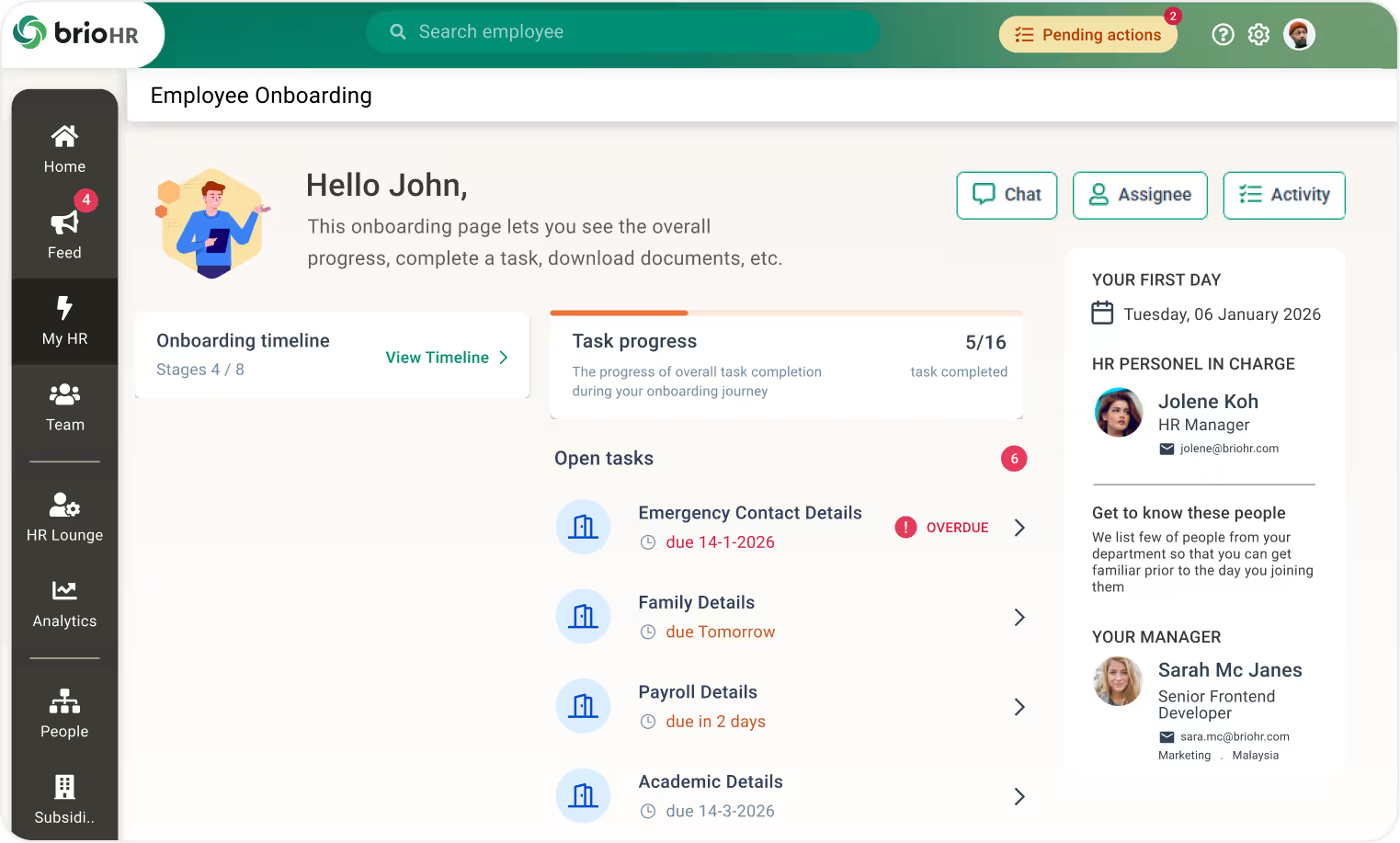
A checklist gets you consistency. Software gets you consistency at scale. brioHR's onboarding module was actually the first module the company ever built, digitizing the checklist above into assigned tasks, document collection, and progress tracking that HR can see across every new hire at once, not just the ones someone remembered to follow up on.
If you're ready to move past spreadsheets and sticky notes, brioHR's HR services team can help map your current process onto the platform, or you can see it in action directly.
Before brioHR
After brioHR
Everything HR.
One login
From payroll to onboarding, brioHR gives you everything you need in one place. Built for busy teams. Backed by people who care.