2026 Guide to Annual Leave in Malaysia
Key Takeaways
- Malaysian employees get 8 to 16 days of paid annual leave a year under Section 60E of the Employment Act, based on years of service. The Act now covers every employee in Peninsular Malaysia and Labuan regardless of salary since January 1, 2023.
- New hires don't get their full allowance on day one. Leave accrues monthly, and employees can only take what they've actually earned so far.
- Unused leave must be used within 12 months of each service year or it lapses by law, unless the employer asked in writing to defer it. Carry-forward and encashment beyond that are company policy choices, not legal requirements.
- When employment ends, any leave the employee has earned but not taken must be paid out in cash. This applies to resignations, terminations, and retirements alike.
Introduction
An employee resigns with six unused annual leave days on the books. Does the company pay those out, or does the balance just disappear? If you're not sure, you're not alone. Malaysia's annual leave rules sound simple until you hit a resignation, a part-year joiner, or a manager who wants to reject a leave request during a busy quarter.
This guide covers what the Employment Act actually requires: who's covered, how to calculate entitlement and pro-rated leave, what happens to leave nobody used, and where employers' rights to manage leave timing actually end.
The Legal Entitlement to Annual Leave
Annual leave in Malaysia is governed by Section 60E of the Employment Act 1955. It sets a floor, not a ceiling: employers can offer more generous leave, but never less.
Who the Employment Act Covers
Almost every employee in Peninsular Malaysia and Labuan is covered, regardless of salary. The Employment (Amendment) Act 2022 removed the old wage ceiling effective January 1, 2023, so the Act's core protections, including annual leave, now apply to all employees under a contract of service.
A RM4,000 monthly salary threshold still exists, but it's narrower than many employers assume. The threshold only affects a specific set of provisions, not annual leave itself.
What the RM4,000 threshold excludes:
- Overtime pay rates
- Rest day and public holiday pay rates
- Shift allowance rules
- Termination and lay-off benefits under Section 60J
What it does not touch: annual leave, sick leave, maternity and paternity leave, and most other core entitlements apply to everyone, regardless of what they earn.
One commonly repeated mistake: some older guides claim employees on probation aren't entitled to annual leave. They are. The Act doesn't carve out an exception for probationers, and withholding leave during probation is a compliance risk, not a grey area.
Calculating Annual Leave Entitlement
Entitlement scales with length of service. The statutory minimums:
| Years of Continuous Service | Minimum Annual Leave |
|---|---|
| Less than 2 years | 8 days |
| 2 years to less than 5 years | 12 days |
| 5 years or more | 16 days |
These are floors. A company can offer 14 days to a first-year employee if it wants to, but it can't offer fewer than eight.
Prorated Leave Entitlement
Employees who join or leave partway through a year don't get a full year's leave. Their entitlement is calculated proportionally, based on the number of completed months of service in that leave year.
For example, someone entitled to 12 days a year who joins in July has completed six months by December. Their pro-rated entitlement for that first year is six days, not 12.
Earned (Accrued) Leave Entitlement
An employee can only use the leave they've actually earned so far, not their full annual allowance in advance. Leave builds up month by month across the year rather than landing in one lump sum on January 1.
Practically, this matters most for new hires. Someone with a 12-day annual entitlement who joins in March has earned roughly one day per month by the time April rolls around, not all 12. If a manager approves a week off in their second month, the system or the policy needs to flag that they haven't earned it yet.
What Happens to Unused Annual Leave
By law, unused annual leave must be taken within 12 months after the end of the service year it was earned in. If it isn't, it lapses: the employee loses it and the employer owes nothing for it.
There's one legal exception. If the employer specifically asked the employee in writing not to take the leave, the days don't lapse. Instead, the employer must pay for them in lieu, under Section 60E of the Employment Act. In other words, forfeiture only applies when the employee chose not to use their leave. If the company blocked it, the company pays.
Everything beyond that statutory baseline (carrying leave forward or encashing it mid-year) is a policy decision each company makes on its own.
Carry Forward Annual Leave
Carry-forward isn't required by law. Companies that choose to allow it typically cap how many days can roll into the next year (commonly five to ten) and set an expiry date for those carried-over days, often within the first three to six months of the new leave year. Without a cap, carry-forward balances tend to snowball, and employees end up sitting on months of leave they'll never realistically use.
Annual Leave Encashment
Encashment means paying an employee cash for unused leave instead of letting them take the time off, while they're still employed. It's not a legal requirement in Malaysia outside of the exit scenario described below. Some companies offer limited encashment (for example, letting employees cash out up to five unused days a year) as a retention perk. Others don't offer it at all and expect staff to actually take their leave, partly because unused leave piling up is a quiet burnout risk rather than a harmless admin line item.
Annual Leave When Employment Ends
Any annual leave an employee has earned but not yet taken must be paid out in cash when employment ends. This rule applies the same way whether the employee resigns, is terminated, or retires. There's no legal basis for an employer to withhold payment for earned, unused leave just because the employee chose to leave.
How the payout is calculated:
- Confirm the employee's ordinary daily rate of pay (typically monthly salary divided by 26, though this can vary by employment contract).
- Multiply that daily rate by the number of unused, earned leave days remaining.
- Include that figure in the final payslip, alongside any other outstanding payments like unpaid salary or pro-rated bonuses.
A few situations trip employers up:
- Notice period leave: an employee can usually still request to use annual leave during their notice period, subject to employer approval, rather than being forced to cash it all out.
- Negative leave balances: if an employee used more leave than they'd earned by their last day, most companies deduct the shortfall from final pay, though this should be spelled out in the employment contract or leave policy in advance.
- Documentation: the final leave balance and its cash value should appear clearly on the final payslip and exit paperwork, not just mentioned verbally.
Getting this calculation wrong is one of the more common disputes that surfaces during employee termination processes, largely because leave balances were tracked loosely during employment and nobody can agree on the final number by the time someone exits.
What Employers Can and Can't Do With Annual Leave
Employees own their annual leave entitlement. Employers can manage when it's taken, within limits, but can't take the entitlement away or ignore requests without a valid business reason.
Are Employees on Probation Entitled to Annual Leave?
Yes. The Employment Act doesn't exempt probationary employees from annual leave entitlement. They accrue leave from their start date the same way confirmed employees do, calculated on the same pro-rated, accrual basis described earlier. Some companies choose to restrict when probationers can actually use their leave (for example, not approving long leave blocks in the first month), but that's a scheduling policy, not a change to the underlying entitlement.
Rejecting an Annual Leave Request
Employers can reject or reschedule a leave request, but not arbitrarily and not indefinitely. A rejection needs a genuine operational reason: understaffing on the requested dates, a conflicting approved request from someone else on the team, or a critical business period like month-end close or a product launch. What employers can't do is repeatedly deny leave requests without reason, effectively preventing an employee from ever using their entitlement. That pattern can itself become a compliance issue, since it pushes the company toward owing payment in lieu for leave the employee was never allowed to take.
Forcing Employees to Take Annual Leave
Employers can require employees to take leave, most commonly for block closures like a year-end shutdown or a slow season, as long as reasonable notice is given. What employers generally can't do is force an employee to use leave with no notice, or use forced leave as a way to avoid paying overtime or sidestep a notice period during termination. If an employer mandates leave during a closure, the days taken should still come out of the employee's actual accrued balance, not be treated as bonus unpaid time off.
Annual Leave Policy Checklist for Malaysian Employers
A written leave policy prevents most of the disputes covered above before they start. Use this checklist to confirm yours covers the basics:
- Entitlement tiers: Match or exceed the statutory 8/12/16-day minimums based on years of service.
- Accrual method: Confirm leave builds monthly rather than landing in a lump sum, and that new hires only access what they've earned.
- Leave year and reset date: Define when the 12-month leave year starts and ends for calculation purposes.
- Carry-forward rules: State whether carry-forward is allowed, the maximum number of days, and the expiry date for carried-over leave.
- Encashment rules: Spell out whether mid-employment encashment is offered, how many days, and at what rate.
- Approval chain and notice period: Set how far in advance requests must be submitted and who approves them.
- Exit payout process: Document exactly how unused leave is valued and paid out when employment ends.
- Sabah/Sarawak carve-out: Note explicitly if a separate policy applies to employees under the East Malaysian Labour Ordinances.
Manage Annual Leave in Malaysia With brioHR
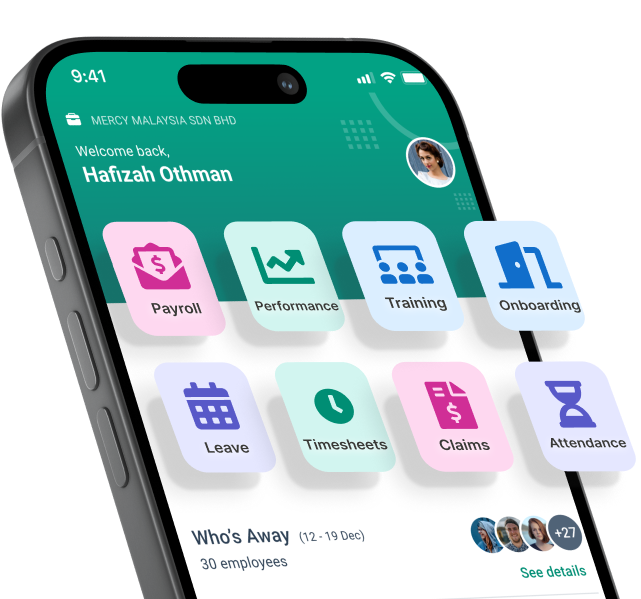
Annual leave disputes rarely come from bad intentions. They come from balances tracked loosely, policies nobody wrote down, and exit calculations done by hand under time pressure. brioHR's leave and time-off module handles the accrual math, carry-forward caps, and exit payouts automatically, so the numbers match the policy every time, not just when someone remembers to check.
If payroll accuracy around leave and final pay is also on your radar, our guide on running payroll step by step and our breakdown of EIS contribution rates for 2026 cover the statutory deductions that interact with final settlements. And if you're comparing what HR software should actually cost before you commit, our HR software pricing guide is a useful next read.
Everything HR.
One login
From payroll to onboarding, brioHR gives you everything you need in one place. Built for busy teams. Backed by people who care.