Best Digital Onboarding Software for HR Teams in 2026
Key Takeaways
- brioHR is best for growing companies in Malaysia and Singapore that want onboarding connected to payroll, leave, and performance from day one.
- OmniHR is best for multi-country teams that want onboarding tied to a full performance management suite.
- HiBob is best for culture-first companies that want a polished, socially-driven onboarding experience.
- altHR is best for Malaysian SMEs that want onboarding paired with local payroll compliance in one tool.
- Companies with structured onboarding programs see 82% higher new-hire retention and 70% greater productivity, according to Brandon Hall Group research.
A new hire's first two weeks decide a lot more than whether their laptop arrives on time. If paperwork is scattered across email threads, shared drives, and a manager's memory, that new hire notices, and so does their manager, who's now chasing signatures instead of doing their actual job.
Digital onboarding software fixes that by turning the mess of forms, tasks, and approvals into one guided flow, from the offer letter to the first performance check-in. This guide compares the best digital onboarding platforms for HR teams in 2026, including brioHR, OmniHR, HiBob, altHR, Darwinbox, Employment Hero, and QuickHR, so you can match the right tool to your team's size, market, and existing HR stack.
7 Best Digital Onboarding Software in 2026: A Quick Look
| Tool | Best For | Standout Feature | Starting Price |
|---|---|---|---|
| brioHR | All-in-one onboarding connected to payroll and performance | Pre-boarding portal that syncs directly into payroll and leave setup | From RM3/employee/month |
| OmniHR | Multi-country teams wanting onboarding + performance together | Native Malaysia and Singapore payroll paired with a full performance suite | From S$3/employee/month |
| Employment Hero | Broader HR ecosystem with onboarding built in | Employee self-service portal spanning onboarding through payroll | From USD $10/employee/month |
| HiBob | Culture-first teams wanting a polished onboarding experience | Recognition and social feed woven into the new-hire journey | ~$16-25/employee/month (quote-based) |
| altHR | Malaysian SMEs pairing onboarding with performance | Pre-boarding plus OKR and 360-feedback tools in one local platform | From RM8/employee/month |
| Darwinbox | Enterprise onboarding across Asia at scale | Multi-entity, multi-language onboarding for regional rollouts | Custom quote |
| QuickHR | Singapore SMEs standardizing onboarding paperwork | Document management with e-signature for new-hire contracts | From S$5/employee/month |
Most of these platforms cover the basics: checklists, document collection, task assignment. The differences show up in how well onboarding connects to what happens next, payroll setup, leave balances, and the first performance conversation. brioHR is built around that connection specifically, which is why it tops this list.
brioHR: Best All-in-One Digital Onboarding Software
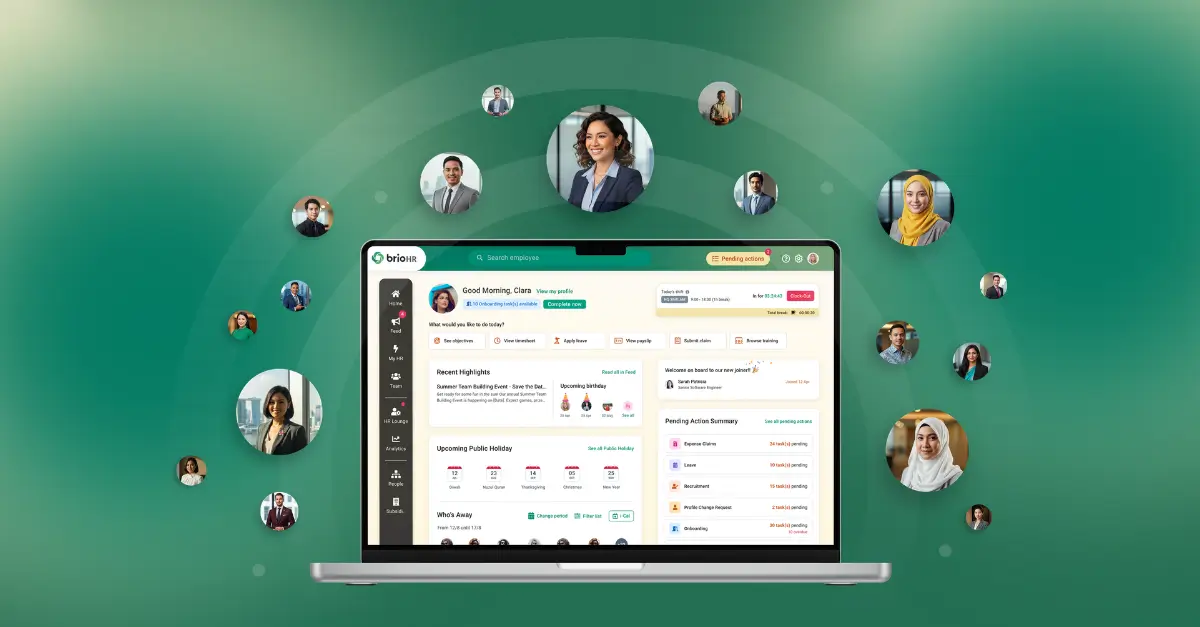
brioHR is an all-in-one HRMS built for companies in Malaysia and Singapore that want onboarding, payroll, leave, and performance running on the same employee record instead of five disconnected tools. It's aimed at growing SMEs and mid-market companies replacing spreadsheets, not enterprise IT departments running twelve-month rollouts.
brioHR Key Features
brioHR's onboarding module was the company's first product, built specifically because most HR software at the time treated onboarding as an afterthought rather than a process worth designing properly. Three features stand out.
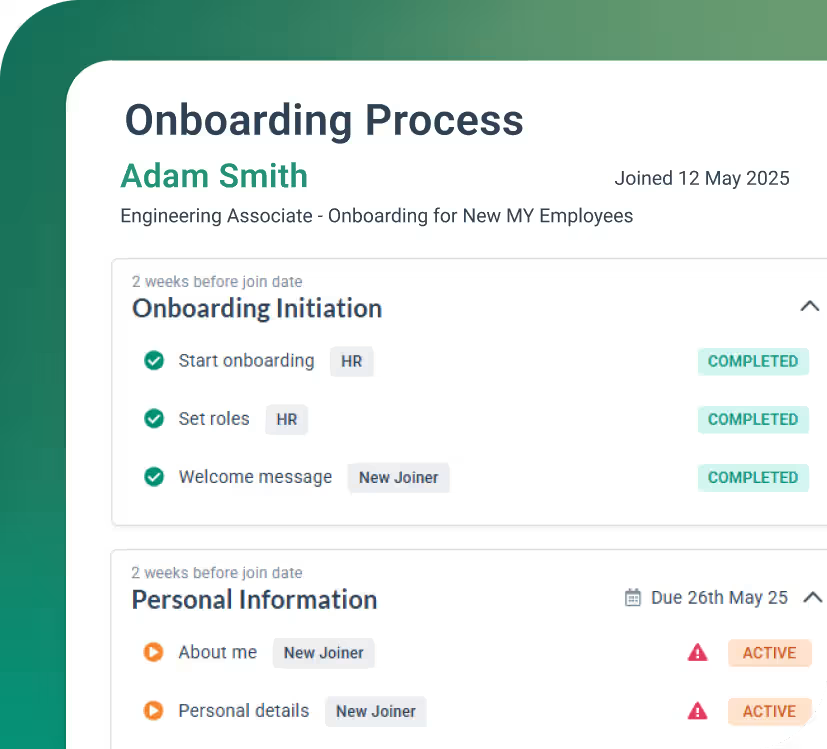
Pre-Boarding Portal Before Day One
New hires get access to a welcome portal days before their start date, not on it. They can review their contract, submit documents, and get a sense of the company culture ahead of time, which matters more than it sounds.
Benjamin Croc, Co-Founder and CEO of brioHR, has noted that "if you share it three, four days before, employees love it. New joiners, they love it, they will go through. But if you actually wait until day one, that's the worst thing. They don't want to even read it anymore." The portal is designed around that exact window, giving new hires enough lead time to actually engage with onboarding material instead of skimming it under pressure on their first morning.
"if you share it three, four days before, employees love it. New joiners, they love it, they will go through. But if you actually wait until day one, that's the worst thing. They don't want to even read it anymore."
For HR teams, this also front-loads document collection. Contracts, bank details, and emergency contacts get submitted before day one, so the first week is spent on integration rather than paperwork.
Sequenced Onboarding Checklists
A single new hire can trigger 40 to 50 small tasks across IT, facilities, payroll, and their direct manager. Left unmanaged, those tasks get missed or duplicated. brioHR's checklist engine assigns each task to the right owner and sequences them so nothing fires before its prerequisite is done, IT access before building access, for example.
This isn't about adding ceremony to onboarding. It's about making sure the ordinary logistics, desk setup, system access, a lunch introduction, actually happen without someone having to remember all of them manually.
Onboarding-to-Payroll Handoff
Once a new hire's details are collected during pre-boarding, they flow directly into brioHR's payroll and leave modules without re-entry. Bank details, tax information, and leave entitlements are set up automatically instead of being retyped by a payroll admin days later.
This is the feature that separates brioHR from standalone onboarding tools. A new hire who completes pre-boarding on time walks into their first payroll cycle with everything already configured, no manual data entry, no first-payslip errors caused by missing information.
brioHR Pricing
| Plan | Details |
|---|---|
| Modular pricing | Per-employee pricing based on modules and company size, starting at RM3 per employee per month |
| Custom quote | Tailored based on headcount, workflows, and rollout needs |
Where brioHR Shines
- Onboarding data doesn't get re-entered downstream. Because onboarding, payroll, and leave sit on the same platform, information collected once during pre-boarding populates payroll and leave setup automatically.
- Support that actually responds during rollout. brioHR maintains sub-three-minute average support response times and a 96% positive feedback rate, which matters most in the first few weeks of implementation when questions come up constantly.
- Built to scale without re-platforming. The same onboarding workflows that work for a 30-person team still hold up at 500 employees across multiple entities.
Where brioHR Falls Short
- Overkill for a five-person team. A company hiring one or two people a year doesn't need pre-boarding portals and sequenced checklists. A simple shared document works fine at that scale.
- Requires actual setup time to pay off. The onboarding-to-payroll handoff only saves time once workflows, task owners, and checklists are configured properly, which takes real setup effort upfront rather than working out of the box.
brioHR Customer Reviews

Who brioHR Is Best For
- Growing SMEs in Malaysia and Singapore (30-500 employees): Teams replacing manual onboarding checklists or scattered email threads with one connected system.
- Companies onboarding regularly, not just occasionally: Businesses hiring several people a month who need repeatable, sequenced workflows rather than ad hoc setup each time.
- HR teams that want onboarding to feed payroll automatically: Organizations tired of re-entering the same new-hire data across separate onboarding and payroll tools.
Get new hires productive faster
From offer letter to day 30, automate the entire onboarding workflow. New hires feel welcomed, prepared, and connected.
OmniHR: Best for Multi-Country Teams Wanting Onboarding and Performance Connected
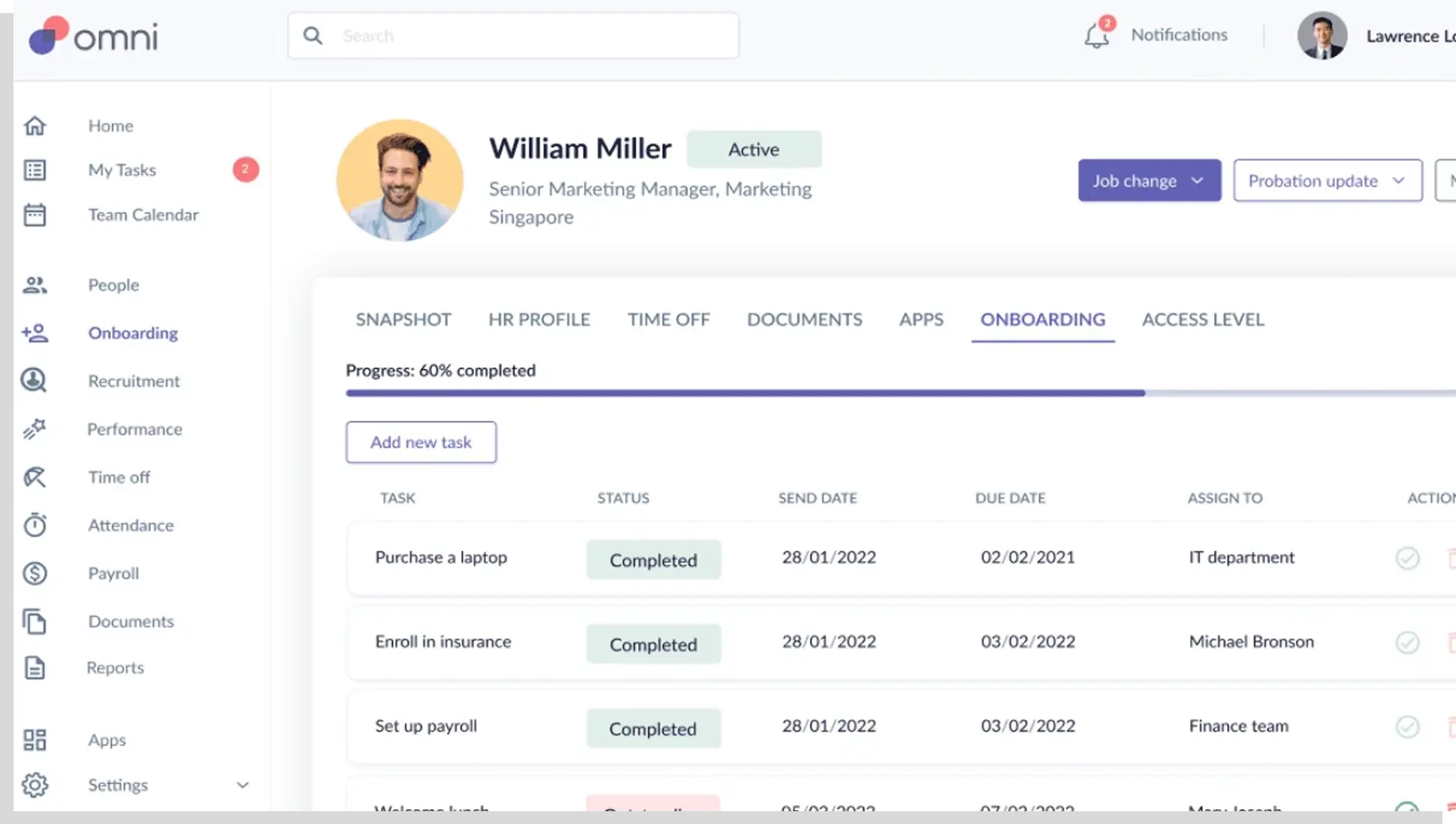
OmniHR is a Singapore-founded HRIS built for SMEs and mid-market companies operating across multiple Asian markets. Its onboarding tools sit alongside a genuinely deep performance management suite, which makes it a strong pick for teams that want the transition from "new hire" to "performing team member" tracked in one place.
OmniHR Key Features
- Digital onboarding with task assignment: Structured checklists and manager task assignment, feeding directly into OmniHR's native Malaysia and Singapore payroll engines (EPF, SOCSO, EIS, PCB, CPF, SDL all handled automatically).
- Full performance suite from day one: Goal setting, KPI tracking, and continuous feedback tools are available immediately after onboarding, so new hires move into a structured review cycle rather than a gap before their first check-in.
- Broader integration support: Native Zapier and no-code integrations mean onboarding data can flow into other tools already in use, unlike more closed platforms.
OmniHR Pricing
| Plan | Details |
|---|---|
| Starting price | From S$3 per employee per month for core modules |
| Model | Modular pricing that scales as more modules are combined |
Where OmniHR Shines
- Onboarding leads straight into performance tracking. New hires move from onboarding checklists into goal setting and continuous feedback without switching systems.
- Strong integration options for existing tool stacks. Native Zapier support means onboarding workflows can connect to tools already in use elsewhere.
- Early reviewer sentiment is strong. OmniHR holds a 5.0 rating on Capterra, with reviewers specifically calling out ease of use for day-to-day HR tasks.
Where OmniHR Falls Short
- Smaller review base overall. Only a handful of verified reviews are publicly available so far, which makes it harder to judge onboarding-specific experience at scale.
- Rollout takes a bit longer. Implementation runs around three months, longer than some lighter onboarding-only tools.
OmniHR Customer Reviews
Who OmniHR Is Best For
- Multi-country teams in Asia: Companies onboarding new hires across Malaysia, Singapore, and neighboring markets who want payroll compliance handled natively in each.
- Teams that want onboarding to lead into performance management: Organizations that don't want a gap between "new hire" and "first goal-setting conversation."
Employment Hero: Best for a Broader HR Ecosystem With Onboarding Built In
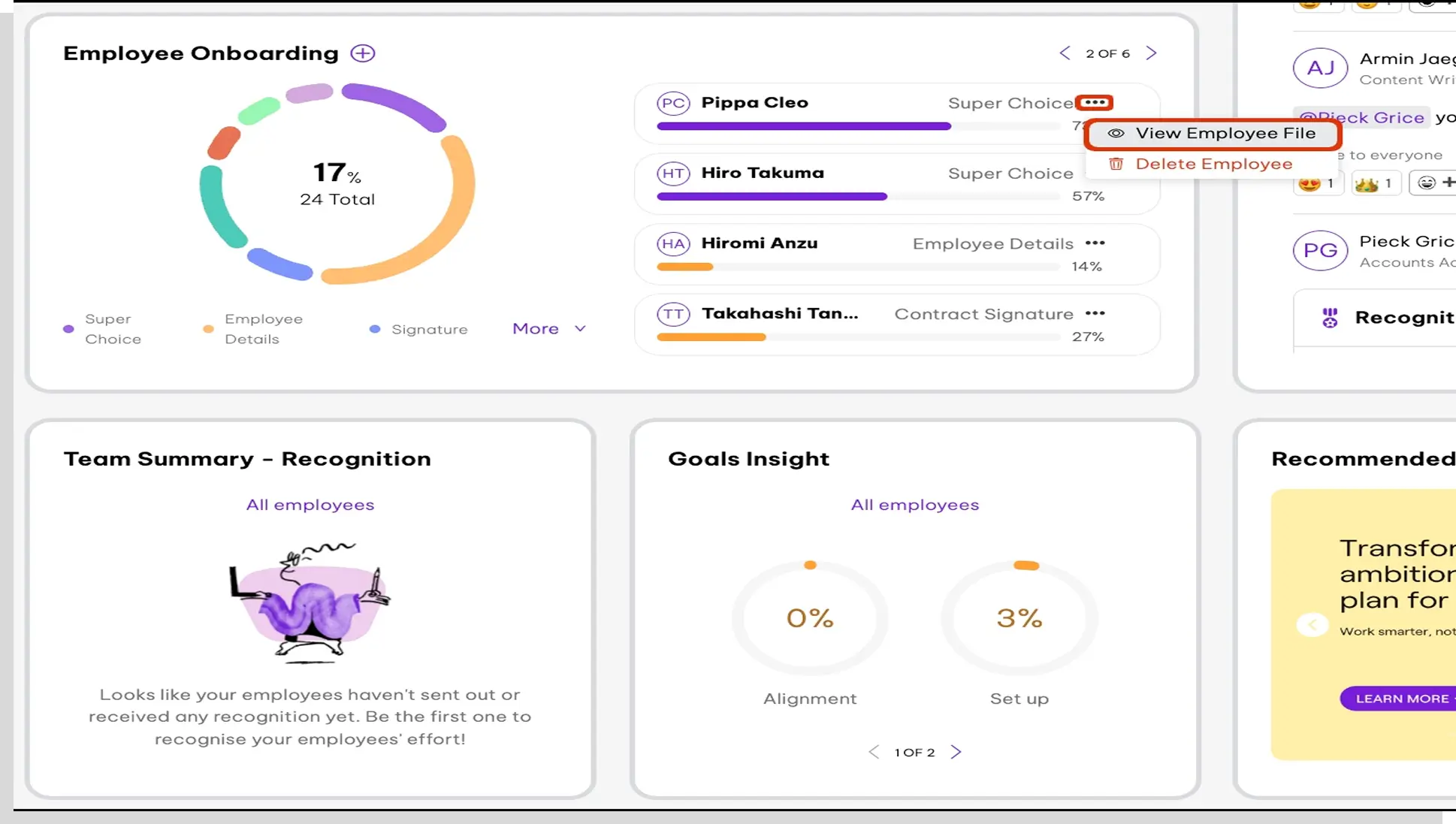
Employment Hero is an HR and payroll platform built around a wide employee engagement ecosystem, where onboarding is one piece of a much larger self-service suite rather than a standalone focus. It's strongest in Australia and the UK, so Southeast Asian teams should weigh localization carefully before choosing it for onboarding compliance specifically.
Employment Hero Key Features
- Onboarding inside a broader self-service portal: New-hire tasks, document collection, and welcome workflows sit alongside payroll, leave, and claims in the same employee portal.
- Employee self-service reduces admin load: New hires complete much of their own setup, personal details, tax forms, bank information, cutting back-and-forth with HR.
- Wide platform coverage beyond onboarding: Recruitment, performance, and reporting all live in the same ecosystem, useful if onboarding is just the entry point to a longer HR relationship.
Employment Hero Pricing
| Plan | Details |
|---|---|
| HR Premium | From USD $10 per employee per month, subject to a USD $100 minimum monthly contract |
| Malaysia guidance | Around RM8 to RM12 per employee per month, with a RM160 to RM240 monthly minimum |
Where Employment Hero Shines
- Onboarding fits into a genuinely wide HR platform. Recruitment, onboarding, performance, and payroll all live in one ecosystem rather than bolted-together tools.
- Self-service cuts routine admin. New hires handle much of their own paperwork, freeing HR from manual data entry.
Where Employment Hero Falls Short
- Payroll and HR aren't fully unified. Payroll was acquired separately, which creates friction between onboarding workflows and the payroll module, including a separate login.
- Weaker localization in Malaysia and Singapore. Local support depth and compliance coverage can be inconsistent, and implementation typically takes around six months, longer than most tools on this list.
Employment Hero Customer Reviews
Employment Hero holds 4.4 out of 5 on Capterra from 239 reviews. One Capterra reviewer noted that "the platform is user-friendly and makes managing HR tasks much more efficient."
Who Employment Hero Is Best For
- HR-first organizations: Teams that want a broad ecosystem with onboarding included as part of a wider self-service platform.
- Companies based in Australia or the UK: Where Employment Hero's localization and support depth are strongest.
HiBob: Best for Culture-First Teams Wanting a Polished Onboarding Experience
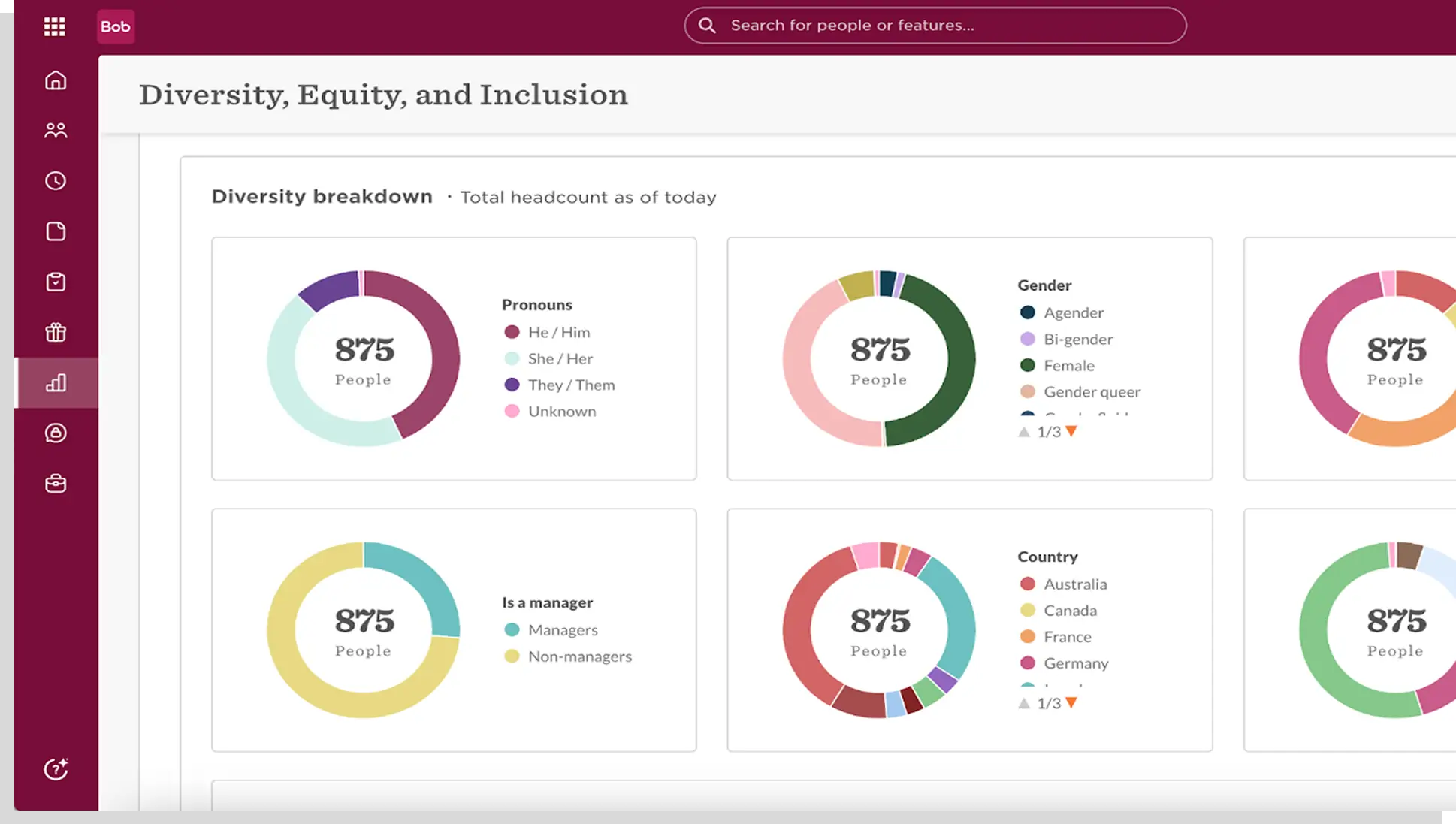
HiBob (Bob) is a global HRIS aimed at modern, culture-driven companies, typically 100 to 5,000-plus employees, that treat onboarding as part of the broader employee experience rather than just a compliance task. It carries the most complete engagement feature set on this list, recognition, internal messaging, and a social feed layered into the new-hire journey.
HiBob Key Features
- Social onboarding experience: New hires get introduced through a company social feed, recognition tools, and internal messaging, designed to build connection faster than a checklist alone.
- Structured onboarding workflows: Task assignment and document collection sit alongside the social layer, so onboarding doesn't sacrifice structure for polish.
- Deep learning and development suite: Certification tracking, course catalogs, and skills matrices mean onboarding can extend directly into structured training, a genuine differentiator versus most tools here.
HiBob Pricing
| Plan | Details |
|---|---|
| Pricing model | Quote-based, no published rate |
| Typical range | Roughly $16 to $25 per employee per month, plus a 10-20% implementation fee |
Where HiBob Shines
- Onboarding doubles as culture-building. Recognition, internal messaging, and social feeds give new hires a sense of the company before their first review even happens.
- Strong learning and development follow-through. Certification tracking and course catalogs mean onboarding training doesn't dead-end after week one.
- High overall satisfaction. HiBob holds 4.6 out of 5 on Capterra from 179 reviews and 4.5 out of 5 on G2.
Where HiBob Falls Short
- No native Malaysia or Singapore payroll. Onboarding data doesn't connect to local statutory payroll without a separate provider, a real gap for Southeast Asian teams.
- Pricing isn't transparent. Quote-based pricing plus an added implementation fee makes it harder to budget for onboarding rollout upfront.
HiBob Customer Reviews
One Capterra reviewer, Ben E., an owner in publishing, described Bob as "a solid HRIS system that can manage HR processes effectively," adding that "the system is user-friendly and easy to navigate."
Who HiBob Is Best For
- Global and multi-national companies: 100 to 5,000-plus employees that don't need Malaysia or Singapore statutory payroll built in.
- Culture-first HR teams: Companies that want onboarding to double as an introduction to company culture, not just paperwork.
altHR: Best for Malaysian SMEs Pairing Onboarding With Local Payroll
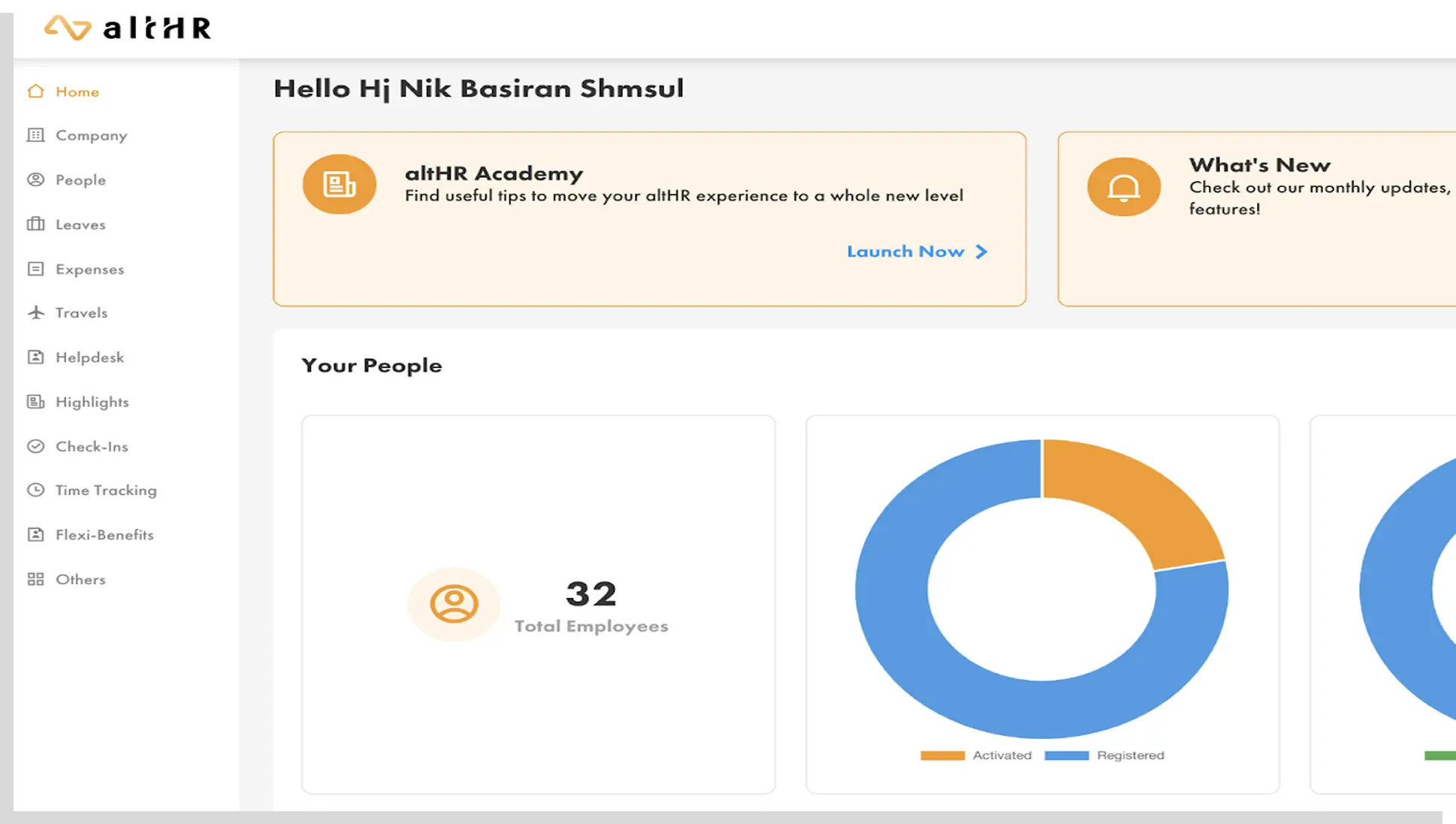
altHR is a Malaysian HR platform combining a real onboarding module, checklists, task assignment, and pre-boarding, with local payroll compliance and a genuine performance suite. It's a strong fit for Malaysian SMEs that want onboarding, leave, and performance in one local tool without paying for enterprise features they won't use.
altHR Key Features
- Pre-boarding before day one: New hires get access to onboarding material ahead of their start date, reducing first-day overload.
- Digital onboarding checklists: Task assignment and document collection are built out properly, not a bare-bones checklist.
- Performance tools carry onboarding forward: OKRs, KPI tracking, and 360-degree feedback sit right after onboarding, so new hires move into a structured performance rhythm quickly.
altHR Pricing
| Plan | Details |
|---|---|
| Pricing | From RM8 per employee per month, custom quote based on company size and modules |
Where altHR Shines
- Genuine pre-boarding and checklist coverage. Onboarding isn't a token feature bolted onto payroll, it's built out with real task assignment and pre-boarding.
- Malaysian-first compliance from day one. New hires' statutory setup, EPF, SOCSO, EIS, PCB, HRDF, is handled natively without a separate integration.
- Performance tools pick up right after onboarding. OKRs and 360-degree feedback give new hires a structured path forward, rather than a gap after their first month.
Where altHR Falls Short
- No Singapore payroll support. Built for Malaysia only, so companies onboarding hires in Singapore need a second tool.
- No pulse surveys or eNPS. New-hire sentiment can't be tracked through built-in survey tools, a gap if continuous feedback during onboarding matters.
altHR Customer Reviews

Who altHR Is Best For
- Malaysian SMEs: Teams that want onboarding, leave, and performance in one local platform without Singapore payroll needs.
- Performance-driven HR teams in Malaysia: Companies wanting onboarding to flow directly into OKR-based performance tracking.
Darwinbox: Best for Enterprise Onboarding Across Asia at Scale
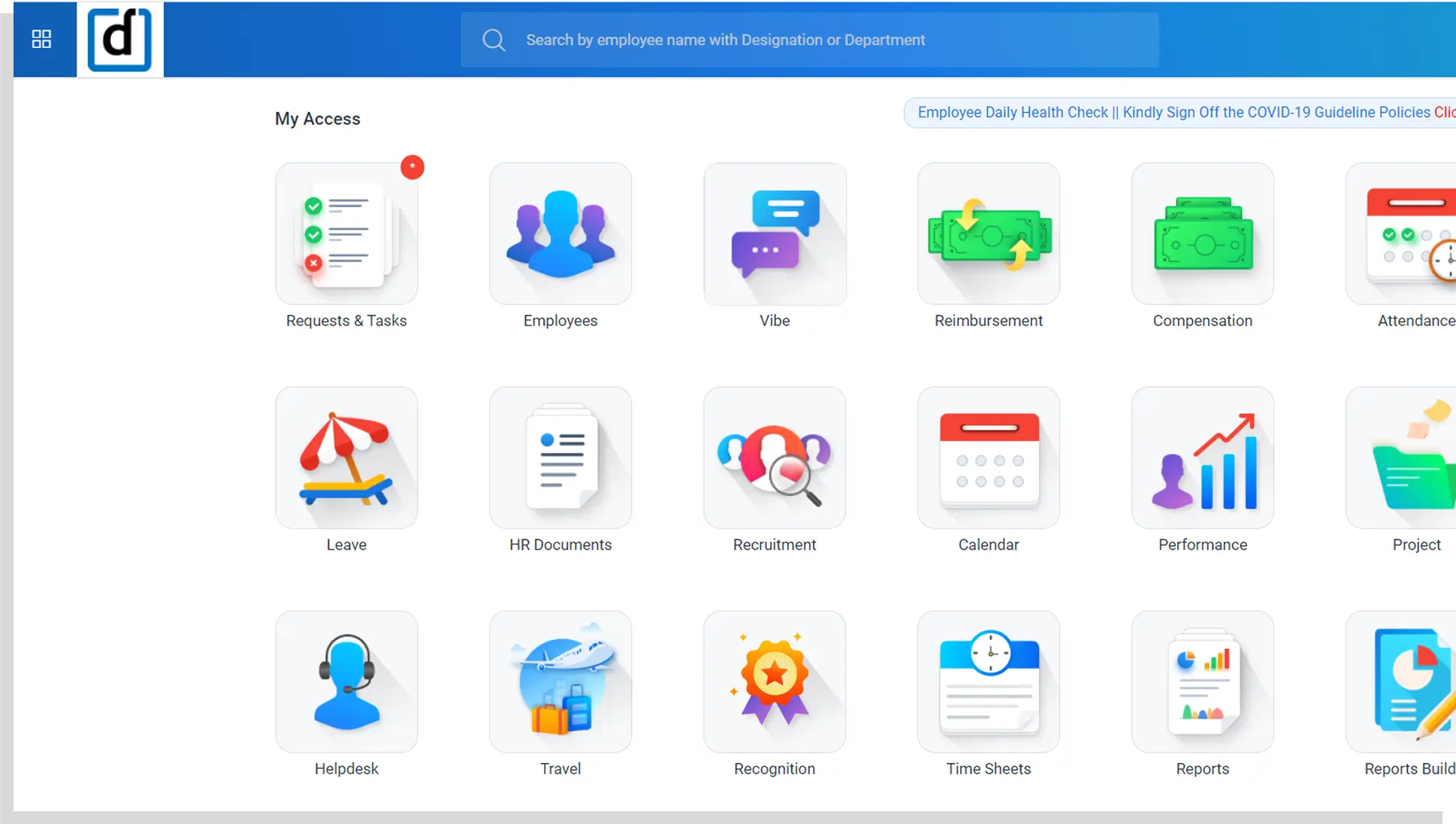
Darwinbox is an enterprise HR platform built for larger organizations across Asia, with onboarding designed to handle multi-entity, multi-language, multi-currency rollouts. It's a stronger fit for companies with bigger teams and formal implementation budgets than SMEs onboarding a handful of hires a month.
Key features: Digital onboarding workflows that span multiple entities and languages, native Malaysia and Singapore payroll (a genuine differentiator versus global enterprise platforms), and predictive people analytics that track onboarding-to-retention patterns at scale.
Darwinbox Pricing
| Plan | Details |
|---|---|
| Enterprise | Custom quote, premium tier, typically out of reach for SMEs and smaller mid-market companies |
Where Darwinbox Shines
Rolling out onboarding across multiple countries and languages without needing separate systems per market, and native MY/SG payroll that most global enterprise platforms lack.
Where Darwinbox Falls Short
Malaysian compliance depth is only partial (EA Form and LHDN e-filing support are incomplete), and the platform is genuinely overbuilt for organizations under about 500 employees.
Darwinbox Customer Reviews
Darwinbox holds 4.4 out of 5 on G2 from 183 reviews.
Who Darwinbox Is Best For
Large enterprises and regional organizations across Asia onboarding hires across multiple countries, with the budget and implementation capacity to absorb enterprise pricing.
QuickHR: Best for Singapore SMEs Standardizing Onboarding Paperwork

QuickHR is a Singapore-first HR platform whose strongest onboarding-adjacent features are document management and e-signature, useful for companies that care most about getting new-hire contracts and paperwork handled cleanly and on record.
Key features: Document management with e-signature for new-hire contracts, contract management tied to employee records, and native Singapore payroll (CPF, SDL, IR8A, IR21) that new-hire data flows into directly.
QuickHR Pricing
| Plan | Details |
|---|---|
| Modular pricing | From S$5 per employee per month |
Where QuickHR Shines
ISO 9001:2015 certification adds credibility for compliance-sensitive procurement, and e-signature plus contract management genuinely simplifies new-hire paperwork.
Where QuickHR Falls Short
No dedicated onboarding checklist or pre-boarding module beyond document collection, and no performance management tools to carry a new hire forward after their first weeks.
QuickHR Customer Reviews
Who QuickHR Is Best For
Singapore SMEs that prioritize clean, compliant new-hire paperwork over a full onboarding workflow suite.
How to Choose the Right Digital Onboarding Software
The right choice depends less on feature counts and more on what happens to onboarding data after day one. Here's what to weigh before committing.
Does It Connect to Payroll and Leave, or Just Collect Documents?
Some platforms treat onboarding as a document-collection exercise: contracts signed, forms filed, done. Others use onboarding as the moment new-hire data gets set up across payroll, leave, and attendance automatically. The second approach saves real admin time in the weeks after a hire starts, not just during onboarding week itself.
Benjamin Croc has pointed out that a new joiner's onboarding "in the end it's like 50 tasks... but the tasks are so different, they seem so disconnected that you don't think of onboarding as a process, but actually it's the most important process." Software that treats those 50 tasks as connected, not scattered, is the one worth paying for.
"in the end it's like 50 tasks... but the tasks are so different, they seem so disconnected that you don't think of onboarding as a process, but actually it's the most important process."
Everything HR.
One login
From payroll to onboarding, brioHR gives you everything you need in one place. Built for busy teams. Backed by people who care.
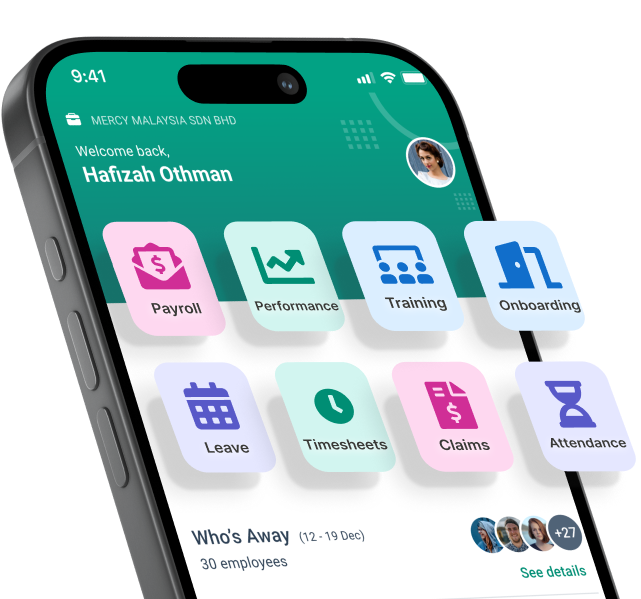
brioHR's pre-boarding portal syncs new-hire data directly into payroll and leave and time-off setup, so nothing needs re-entry after the first week.
How Much Pre-Boarding Does It Actually Support?
Waiting until day one to hand a new hire their welcome material is a wasted opportunity. Platforms that support genuine pre-boarding, access to material three or four days before the start date, see meaningfully better new-hire engagement than tools that only activate on day one.
Look for a platform that lets HR schedule pre-boarding communication in advance rather than manually emailing documents ahead of time. This alone removes a surprising amount of first-week friction.
Does Onboarding Lead Into Performance Management, or Dead-End?
Onboarding shouldn't be a standalone module that ends after week two. The best platforms carry new hires directly into performance management, goal setting, check-ins, and eventually 360-degree feedback, without requiring a separate tool or manual handoff.
Tools like OmniHR and altHR do this well by pairing onboarding with a genuine performance suite. Platforms that stop at document collection leave HR to manually track what happens next, which is exactly the kind of admin work good software should remove.
How We Selected These Digital Onboarding Platforms
We evaluated each platform against three criteria: feature depth specific to onboarding, transparency around pricing, and how onboarding data connects (or doesn't) to the rest of the HR stack.
Feature Depth Beyond Basic Checklists
We prioritized platforms with genuine pre-boarding, sequenced task assignment, and document collection over tools that only offer a bare checklist. A digital onboarding tool should reduce admin work, not just digitize a paper form.
Pricing Transparency
Every tool in this comparison has a published starting price or a clearly marked custom-quote model. We avoided platforms that hide pricing behind a sales call with no public reference point at all.
Integration With Payroll, Leave, and Performance
We weighted platforms higher when onboarding data flowed automatically into payroll, leave, and performance tools without manual re-entry. This is the difference between software that looks good in a demo and software that actually saves time three months into using it.
Start Your Onboarding Transformation With brioHR
If your team is hiring regularly across Malaysia or Singapore and wants onboarding connected to payroll, leave, and performance instead of living in its own silo, brioHR is built for exactly that. The pre-boarding portal, sequenced checklists, and automatic payroll handoff mean new hires start their first day already set up, not waiting on HR to catch up.
If your priority is a global culture-first onboarding experience without local Southeast Asian payroll needs, HiBob is a genuinely strong alternative. If you're a Malaysian SME wanting onboarding paired tightly with local compliance and performance tools, altHR is worth a serious look too.
Conclusion
- brioHR is built for teams hiring regularly across Malaysia or Singapore that want onboarding connected to payroll, leave, and performance instead of living in its own silo.
- The pre-boarding portal, sequenced checklists, and automatic payroll handoff mean new hires start their first day already set up.
- HiBob is a genuinely strong alternative for a global culture-first onboarding experience without local Southeast Asian payroll needs.
- altHR is worth a serious look for Malaysian SMEs wanting onboarding paired tightly with local compliance and performance tools.