Building a High-Performance Workforce: CEO Benjamin Croc Shares Insights on BrioHR’s New Training Module

Upskilling and reskilling have become buzzwords in the corporate world, with organisations scrambling to retain top talent and attract new hires. Central to this strategy is the implementation of effective training programs. However, simply investing in training is not enough; ensuring its effectiveness requires a structured approach. This is where a robust training management system becomes crucial.
Benjamin Croc, the Co-Founder and CEO of BrioHR, offers valuable insights into this challenge and unveils BrioHR’s groundbreaking solution designed to empower organisations to optimise their training initiatives.
Importance of Training and Development
Q: Why do you believe continuous learning and development are critical for companies, particularly in the ASEAN region, and how has the importance of employee upskilling evolved in the current economic landscape?
Benjamin: Continuous learning and development are absolutely crucial, especially in today’s fast-paced world. We’ve seen a significant shift where employees no longer view learning and development (L&D) as just a checkbox for “something they had to do” but as an integral part of their career growth.
It’s not just about upskilling and reskilling anymore; it’s also about keeping employees engaged and retaining top talent. Many employees leave their jobs because they don’t see enough professional development opportunities.
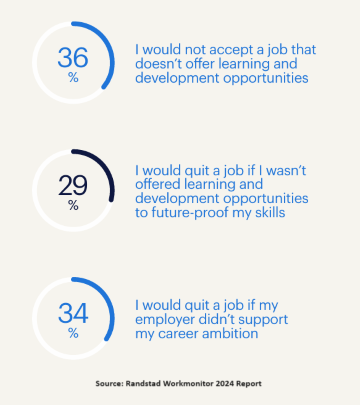
Q: What are some of the key challenges companies face when it comes to training and development?
Benjamin: There are a couple of main challenges companies face:
- Visibility and Organisation: Many companies lack a centralised system for managing training programs. This makes it difficult to track budgets, attendance, training records and training effectiveness. It can also be challenging for employees to find the training opportunities they need.
- Content & Resources: Even if they have a good system, some companies struggle to find relevant and engaging training content. This can be especially challenging for smaller companies that may not have the resources to develop their own content.
BrioHR's training module is designed to address both of these challenges.
Q: How can continuous learning impact a company’s adaptability and growth?
Benjamin: Continuous learning has a major impact on a company's ability to adapt and grow in several ways:
- Employee Engagement and Retention: By investing in L&D, companies can show employees they are committed to their professional development. This can lead to higher employee engagement and retention, which is critical for growth.
- Improved Skill Sets: Upskilling and reskilling your workforce ensure your employees have the skills and knowledge they need to be successful in their roles. This can lead to increased productivity and innovation.
- Staying Ahead of the Curve: The world of work is constantly changing. Think about the transition from paper-based systems to computers just a few decades ago. Today, the need to master AI-based tools is just as critical. The gap between those who can leverage these tools and those who can't is growing rapidly. Companies that invest in L&D are better positioned to adapt to new technologies and trends, ensuring they don't get left behind.
By providing ongoing training opportunities, companies can equip their employees with the skills they need to thrive in the ever-evolving business landscape.
BrioHR’s New Training Module
Q: What motivated BrioHR to develop a dedicated training module?
Benjamin: We've always seen ourselves as a partner for our clients. We listen to their needs and feedback, and then we take action. There was a clear need for a better way to manage training budgets, attendance, and track training paths. Companies also wanted a way to communicate their investment in training to employees and potential recruits.
At the same time, they were frustrated with existing training tools that were clunky and didn't integrate well with other HR systems.
So, we decided to take a different approach. We reviewed and structured all the valuable input we received, and then we developed a dedicated training module as part of our all-in-one BrioHR platform. This way, the training module is natively integrated with all our other HR modules, providing a seamless and user-friendly experience for both HR teams and employees. We believe this integrated approach is what truly sets our training module apart.
Q: How does this new training module address the specific needs of HR teams when it comes to managing employee learning and development?
Benjamin: One of the biggest challenges HR teams face is the lack of visibility into available training programs. Many companies don't have a centralised system for managing training, which makes it difficult for employees to know what training is available and for HR to track progress and measure ROI.
BrioHR's training module addresses this head-on by providing a central platform for managing all aspects of training. This includes:
- Improved Visibility: HR teams can create a training catalog that includes both internal and external training options, online and in-person courses. This ensures that employees are aware of all the training opportunities available to them. Detailed information about each training course is also available for them to view.
- Streamlined Workflows: The module provides HR teams with real-time data on training activity from registration and approval to attendance tracking to budget management - significantly reducing the administrative burden on HR. HR can use the data to track employee progress through specific training paths, and measure the ROI of training programs. For example, the system can track how many employees have completed a particular course, how much it cost to deliver the training, and employee files are updated with the training records.
By providing a centralised platform with improved visibility and streamlined workflows, the training module helps HR teams to manage the whole training process and make more informed decisions about employee learning and development.
Functionality and Benefits
Q: How does the training module help organisations manage their training budgets more effectively?
Benjamin: The module allows companies to define training budgets at the company and department level. This provides greater visibility into how training budgets are being used and helps to ensure that resources are allocated effectively. Our module also enables the creation of detailed reports to visualise training efforts across the organisation, making it easier to communicate results to stakeholders, including potential candidates.
Q: Could you elaborate on how the training catalog works and how it benefits both employees and HR departments?
Benjamin: The training catalog is a central library of all training courses offered by the company. It functions as a one-stop shop for both HR and employees:
- For HR: HR can easily add new courses to the catalog, manage enrolment permissions, and set course prerequisites. The system can also handle various training formats, including internal and external providers, online and in-person options. Each course description can include details like location, duration, trainer information and any required materials.
- For Employees: Employees can browse the catalog to find relevant training opportunities that align with their career goals and development needs. The system allows them to easily see course descriptions, get a preview of training documents, duration to complete, register for training, and track their progress.
Overall, the training catalog streamlines the training discovery and enrolment process for everyone involved.
Q: How can companies leverage the tracking and reporting features to gain valuable insights into their training effectiveness?
Benjamin: BrioHR's training module goes beyond simply managing training logistics. The built-in tracking and reporting features which are exportable, combined with BrioHR being a one-stop HR platform that includes a Performance Management module, provide even more valuable insights into the effectiveness of your training programs. The system tracks time and money invested in training at various levels (company-wide, department-specific, and individual employee). This data can be used to:
- Identify Skill Gaps: By analysing training completion data, you can identify areas where employees may lack the necessary skills or knowledge. This allows you to target future training programs more effectively.
- Track Progress: The system tracks employee progress through specific training paths, allowing you to see how individuals are developing over time. Here's where BrioHR’s Performance Management module comes in. By integrating training data with employee performance data, you can gain a more holistic view of how training programs are impacting employee skills and overall performance.
- Measure ROI: By combining training costs with data on employee performance improvement, you can calculate the return on investment (ROI) for your training programs. This helps you determine which programs are delivering the most value for your company.
This integrated approach to learning and development allows companies to make data-driven decisions about their training investments.
Q: The module offers training path creation with mandatory and optional training. How does this benefit the organisation in structuring employee development?
Benjamin: At BrioHR, empowering our HR clients is a key priority. The training module reflects this philosophy by providing flexibility in structuring employee development programs.
Balancing Compliance and Employee Choice: The training module caters to the need for both mandatory and optional training. This allows companies to ensure compliance with industry regulations while also fostering employee development.
- Prioritising Compliance: Certain industries, like healthcare and food and beverage, have strict regulations that employees must adhere to. The module makes it easy to designate specific training programs as mandatory, ensuring all employees complete essential compliance training before they begin working or interacting with customers. For instance, in the F&B industry, all employees are required to complete a mandatory food safety course before they can start handling food or working in the kitchen. This ensures compliance with relevant health and safety regulations.
- Employee Choice and Growth: Once the mandatory training foundation is established, the system allows companies to offer a variety of optional training opportunities. These programs may be recommended by the managers or selected by the employees themselves to help them develop new skills, enhance their knowledge, and pursue career goals. For example, an F&B company might offer optional training on specific cuisines, wine pairings, or customer service techniques. This empowers employees to take ownership of their professional development and growth.
By providing a comprehensive approach that balances compliance with employee choice, the training module helps organisations build a strong and well-rounded workforce.

Q: Many companies offer a mix of internal and external training opportunities. How does the module streamline the process for managing both types?
Benjamin: The training catalog provides a comprehensive view of all available courses, whether internal or external. Employees can easily identify and register for courses, while HR can analyse the usage and impact of different types of training through detailed reports. This holistic view allows companies to leverage the strengths of both approaches:
- Internal Expertise: Companies can leverage the knowledge and experience of in-house experts by incorporating internal training programs into the catalog.
- External Resources: The system also allows for the inclusion of external training providers, offering access to specialised skills and knowledge that may not be readily available within the company.
By providing a centralised platform for managing all training opportunities, the module eliminates the need for separate systems or spreadsheets, streamlining the process for both HR and employees.
Q: Employee engagement is key to successful training initiatives. How does the module encourage employee participation in training programs?
Benjamin: A key factor in successful training initiatives is employee engagement. Many companies struggle with low participation rates because employees are unaware of available training or the process is cumbersome. BrioHR's training module addresses this challenge in several ways:
- Improved Visibility: The central training catalog ensures that employees are aware of all the training opportunities available to them.
- Easy Access: Employees can easily browse the catalog, register for training, and track their progress through a user-friendly interface.
- Transparency: The system provides clear descriptions of each training program, including objectives, content, and trainer profiles.
By making training programs more visible, accessible, and transparent, the module encourages employees to take ownership of their professional development.
Impact and Future Outlook
Q: How do you foresee the training module impacting companies in the ASEAN region over the next few years?
Benjamin: BrioHR's training module offers significant benefits for companies looking to build a future-proof workforce, and this is not only in ASEAN. Here's how I see it impacting businesses in the future:
- Dual Focus on Offensive and Defensive Strategies: The training module goes beyond simply keeping employees' skills current. It empowers companies to adopt a two-pronged approach to learning and development:
- Offensive Strategy: By providing opportunities for employees to develop new skills and knowledge, companies can stay ahead of the curve. This "offensive" approach ensures they have a workforce equipped to push boundaries, innovate, and drive future growth.
- Defensive Strategy: The platform also helps companies maintain a competitive edge by ensuring employees possess the skills necessary to adapt to industry changes and keep pace with evolving competitor strategies. This "defensive" strategy prevents them from being left behind in a dynamic business environment, regardless against more adaptable competitors or new companies with less legacy.
All-in-all, I think our training module has a major impact on each company and employee at an individual level, and that by extension it also has an impact at the macro level for ASEAN companies.
Q: What future enhancements or additional features can we expect in BrioHR’s training module?
Benjamin: Although BrioHR is used and loved by thousands of companies, we never consider any part of it to be "finished". Every component of our HRMS, including the training module, is constantly evolving based on feedback from our clients and information from HR experts across the ASEAN region and beyond. This focus on continuous improvement ensures we offer the most effective solutions for our clients.
Naturally, the training module will continue to evolve. While it already significantly aids companies in developing a strong training and development culture, there's always potential to enhance its capabilities even further. BrioHR's unique strength lies in our integrated suite of modules. This allows us to push the boundaries of cross-module data analysis, generating even richer insights. Additionally, we're constantly exploring how to leverage AI, which is already a core part of our platform, to further enhance the system.
Take Action Now!
Q: What advice would you give to leaders who are hesitant about investing in training and development?
Benjamin: You probably have heard about this online meme where someone asks the CEO “what if we invest money in training our employees and they leave?” to which the CEO replies “what if we don’t, and they stay?”.
Clearly not offering ways for employees to become better, more skilled at their job, more informed about the evolution of the industry they evolve in, able to use the latest tools and technologies, is a recipe for disaster. Companies not doing that will be stuck at where they are, which is today, or sometimes for some, yesterday. Then very simply they will be outdone by others - incumbents who do invest, or new companies who are native with the latest technologies.
As I shared in one of my posts published on LinkedIn, every single corporate leader I talk to only has those words when talking about the key challenges: attracting the best, developing them, and retaining the best.
It is very clear that investing in L&D achieves the three, way more than flashy office and foosball tables.
Q: How can companies get started with implementing BrioHR’s training module to ensure they are getting the most out of their training investments?
Benjamin: Everything about BrioHR is easy to understand and implement. So, my advice is to give it a try. Start small, but start building the habit of using it to formalise your training. Companies not using BrioHR are likely either managing training manually or not at all. So, take advantage of BrioHR's user-friendliness to digitise and centralise your training information. It's a game-changer compared to manual management. Feel free to engage with us as well to express your needs and contribute to the future evolution of the module.
In terms of resources, we provide a wealth of them, as it's a foundational value of BrioHR. As a key partner to companies in the ecosystem, we offer a range of resources, from blog posts and articles to help you understand the intricacies of a sound L&D framework with the right tools. We also have a dedicated live support team that goes above and beyond to assist our clients in getting the most out of BrioHR and finding any information they need. Additionally, we partner with players across the entire ecosystem to continually expand the avenues for companies in the region to up their game, backed by proven frameworks and qualified experts.
Q: Is there anything else you would like to share about BrioHR’s vision for the future of HR management?
Benjamin: Learning and Development (L&D) is a perfect illustration of BrioHR's vision, even though it's just one piece of the puzzle. When we embarked on this journey years ago, our goal wasn't simply to create another HR software program. We envisioned BrioHR as a positive force within the HR ecosystem.
Our vision from the outset, and one that we are proud our clients endorse, was to revolutionise HR software. We wanted to move away from clunky, single-user focused programs that were boring and hindered adoption. Instead, we envisioned a user-friendly, colourful, and all-in-one platform that would not only streamline HR tasks but also foster company-wide adoption and boost employee engagement through its everyday usability.
This vision extends beyond the training module. Our entire suite, including onboarding, performance management, and more, seamlessly integrates with core HR functions like leave management, time-off requests, expense claims, payroll, time management and attendance. This creates a singular, unified experience that dramatically simplifies the lives of HR professionals. By freeing up their time and energy, BrioHR empowers HR teams to leverage our library of "turnkey best practices" modules. Ultimately, this focus on user experience and best practices helps people and, in turn, companies, reach their full potential.
Eager to bring your workforce to their full potential? Find out more information about our Training Module here or request for a demo.
Related article:
The Importance of Continuous Learning and Development in the Workplace
Why Training Fails: Understanding and Overcoming the Pitfalls